
Ben Feringa wins Feynman Prize
Prof. Ben Feringa has won the Feynman Experiment Prize for pioneering the control of molecular motion. The prize is awarded for excellence in experimentation to the researchers whose recent work has most advanced the achievement of Feynman’s goal for nanotechnology: molecular manufacturing, defined as the construction of atomically-precise products through the use of molecular machine systems.
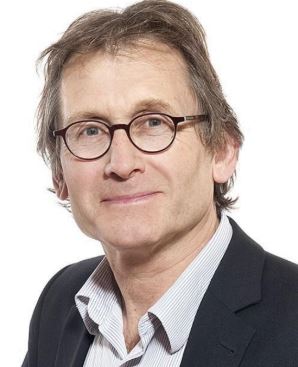
Ben Feringa (1951) is professor of synthetic organic chemistry at the University of Groningen and was awarded the Nobel Prize in Chemistry in 2016. He received the prize together with Jean-Pierre Sauvage (France) and Sir James Fraser Stoddart (UK) for their work on the development of molecular machines. Feringa has achieved breakthroughs in various fields of chemistry, including organic synthesis, catalysis, supramolecular chemistry and nanotechnology. His research performance is so exceptional that he is generally regarded as one of the world’s most creative and productive chemists.
About the Feynman Prizes
Since 1993 the Foresight Institute in San Francisco annually awards three Feynman Prizes: the Feynman Prizes in Theory and Experiment, and the Distinguished Student Award. Named in honor of the renowned physicist Richard Feynman, the prize celebrates his groundbreaking vision for science, by recognizing exceptional contributions that advance nanotechnology.
More news
-
17 September 2026
NWO-KIC funding for new route to sustainable biocatalysts
-
15 September 2026
Enzymes break down textile fibres into useful resources
-
10 September 2026
Searching for the first generation of stars