
Island birds reveal surprising link between immunity and gut bacteria

A team of scientists that includes Professors Jan Komdeur and Hannah Dugdale from the University of Groningen and is led by the University of East Anglia (UEA) have uncovered a hidden link between gut health and the immune system — all thanks to the Seychelles warbler, a small songbird found on Cousin Island in the Seychelles. Their work sheds light on how immune systems in animals — including humans — and communities of beneficial gut bacteria evolve together.
FSE Science Newsroom | Text University of East Anglia / René Fransen
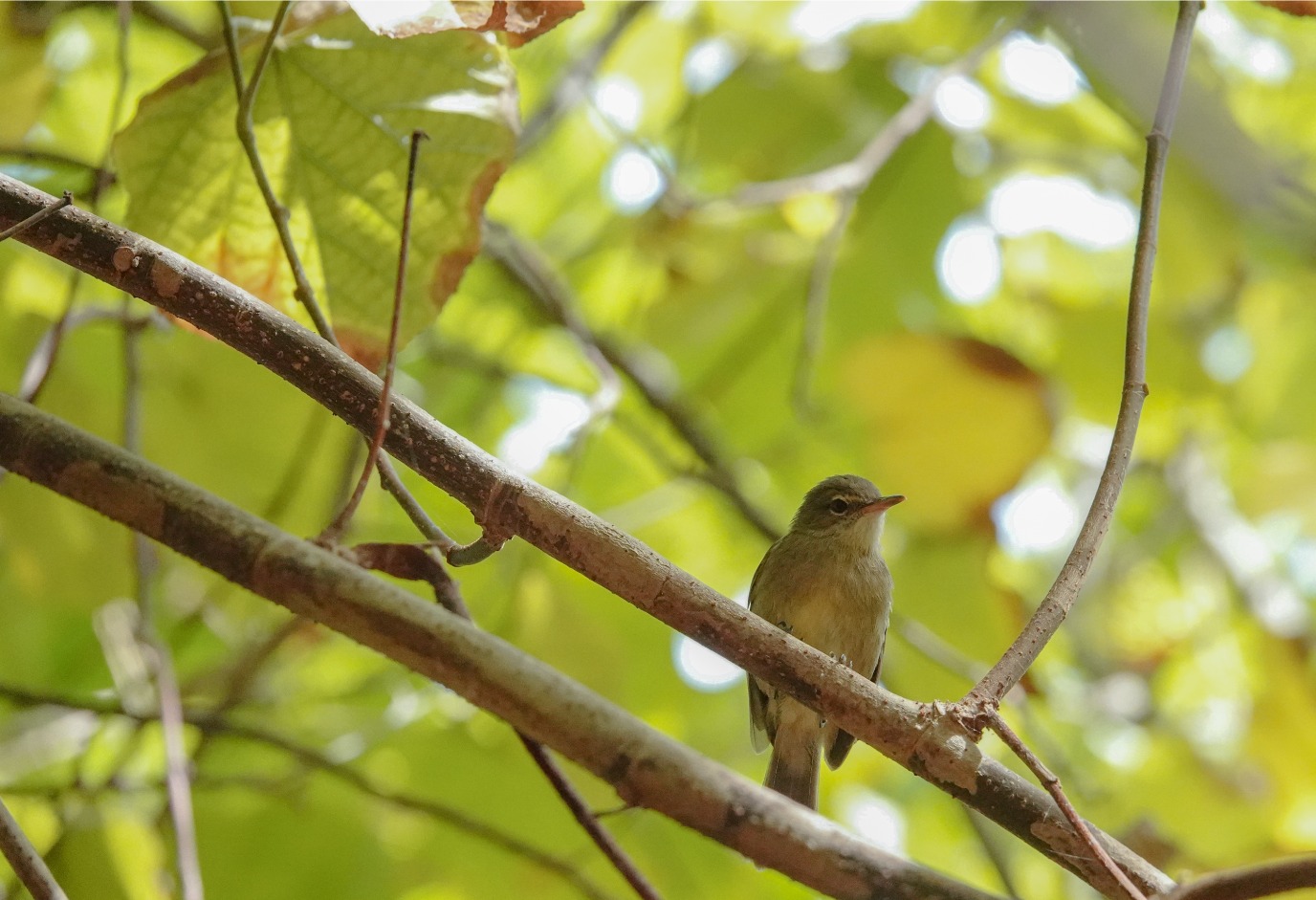
Cousin Island is a small and isolated island from where the warblers never leave. All of the island’s warblers are fitted with coloured leg rings, allowing researchers to track their behaviour, health, and genetics over many years. This creates conditions similar to those of a laboratory population, but in a completely natural setting.
The longest-running field study
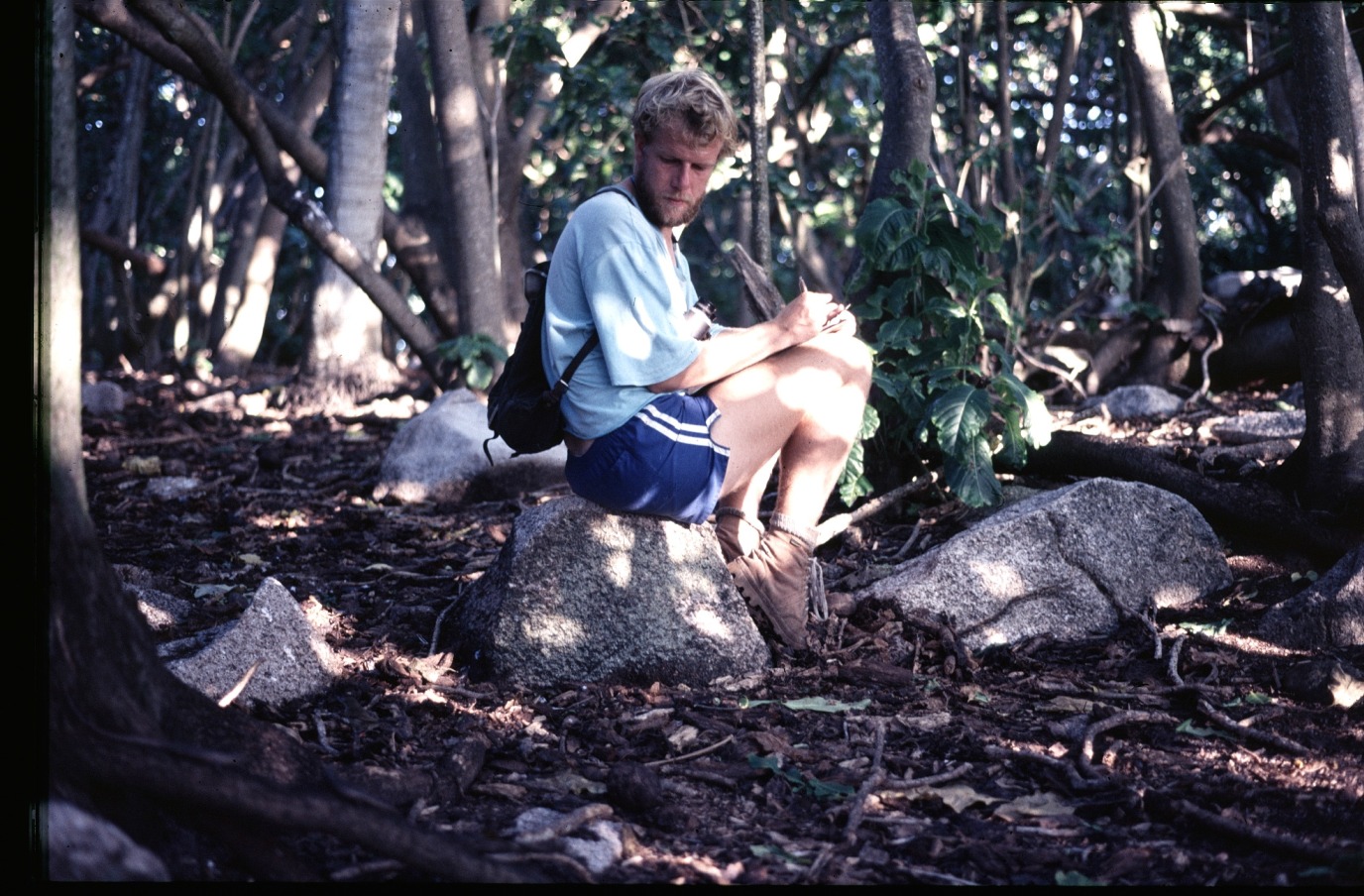
‘It gives us the best of both worlds,’ says Professor Richardson from the UEA. ‘We can study animals living natural lives, with natural diets and gut bacteria, while still being able to collect detailed data on known individuals.’ This natural laboratory was originally created by Jan Komdeur, who began studying the warblers in 1985.
‘At 42 consecutive years, it is now one of the longest-running field studies, covering a large variety of key areas of research, including climate change, conservation, evolution of social behaviour, genetics, and aging,’ he remarks.
For this latest study, scientists collected the birds’ poo to analyse their gut bacteria. They found that an individual’s immune system may help determine which microbes can live in its gut, while those microbes in turn help support and train the individual’s immune system.
Investigating possible mechanisms
The study focuses on a group of genes that play a central role in immune defence in most vertebrates, including humans: the major histocompatibility complex (MHC). By studying wild birds in their natural environment, the researchers showed that variation in these immune genes is closely associated with both the makeup and the function of gut bacteria. In this way, immune genes help shape the gut microbiome in wild animals, with potential beneficial impacts on health and survival.
‘As the birds never leave the island, we know that if we don't see a bird for a year, it must have died and not just gone elsewhere,’ explains Hannah Dugdale. ‘Seychelles warblers with more diverse immune genes have an improved survival probability. And now this research links immune gene diversity with the gut microbiome function, although further work is required to investigate possible mechanisms.’
‘This work helps us to better understand how immune systems and gut microbes evolve together, and we would expect to see a similar process in humans,’ says Dr Chuen Zhang Lee, who carried out the work as part of his PhD project at the UEA. Importantly, the project was not limited to identifying which bacteria were present. ‘We also looked at what those bacteria are actually doing. For example, whether they are involved in metabolism, nutrient processing, or defence against viruses and other infections.’
Influence immune function
This allowed the team to go beyond a simple catalogue of microbes and begin to understand how immune genes may shape the gut microbiome in ways that affect host health and survival. The findings show that immune genes shared by all vertebrates interact closely with gut bacteria. Lee: ‘Our work suggests a two-way relationship. Immune genes influence the gut microbiome, and the microbiome feeds back to influence immune function.’
Although the study was carried out in birds, the researchers stress that the underlying biological mechanisms may be shared widely across animals, including humans. As a result, the findings may help inform future research on immunity, gut health, and disease.
Reference: Chuen Zhang Lee, Sarah F. Worsley, Charli S. Davies, Jan Komdeur, Falk Hildebrand, Hannah L. Dugdale and David S. Richardson: Host immunogenetic variation and gut microbiome functionality in a wild vertebrate population. Microbiome, 12 March 2026
More news
-
15 October 2026
Bluetooth leaves the door open to espionage
-
05 October 2026
How a swarm of mini-robots could save our infrastructure
-
01 October 2026
10th anniversary of Ben Feringa’s Nobel Prize