
Three FSE researchers receive NWO Vidi grants
The Dutch Research Council (NWO) has awarded Vidi grants to three researchers from the Faculty of Science and Engineering: Dr Tim Lichtenberg, Dr Sanne Moorman and Dr Zoé Christoff. With the grants, each researcher will further develop an innovative line of research and build or expand their own research group. Each Vidi grant is worth a maximum of EUR 850,000.
Vidi is part of the NWO Talent Programme and is aimed at talented researchers who have several years of research experience after obtaining their PhD. Four colleagues from other faculties of the University of Groningen received a Vidi grant.

Hazy worlds around tiny stars: could the most common planets harbour hiddenatmospheres?
Dr Tim Lichtenberg
Most planets in the universe orbit small, cool stars called M-dwarfs. Recent space telescope observations suggest these planets may lack atmospheres, making them barren rocks. However, new data shows that M-dwarf planets likely form from material much richer in carbon than our Solar System. Carbon-rich planets could develop thick, hazy atmospheres that are hard to detect with current methods. This project will build computer models to simulate how such carbon-rich planets evolve and predict what telescopes should observe, helping determine whether these common worlds could support conditions for life.
Lichtenberg is an assistant professor at the Kapteyn Astronomical Institute, where he leads the Forming Worlds Lab. His research focuses on how planets form and evolve, and on the conditions that may make a planet habitable.

Zebra finches learning their song from video screens?
Dr Sanne Moorman
In our digital society, we engage more with screens than ever. Yet, live interactions lead to better learning outcomes, including in speech acquisition. In this project, researchers test whether this happens because learners are more attentive when they are involved in live interactions. Birdsong learning in zebra finches has many parallels with human speech acquisition. In zebra finches, attention will be measured when learning from a live bird or a video screen, by observing behavioral and physiological parameters, measuring and altering neuronal activity, and comparing song learning outcomes. Thereby, this project will identify how attention affects vocal learning outcomes.
Moorman is an assistant professor in the Groningen Institute for Evolutionary Life Sciences. Her research focuses on auditory-vocal learning and memory, including how the brain learns, stores and adapts vocal behaviour.
Similarity and information flow in social networks
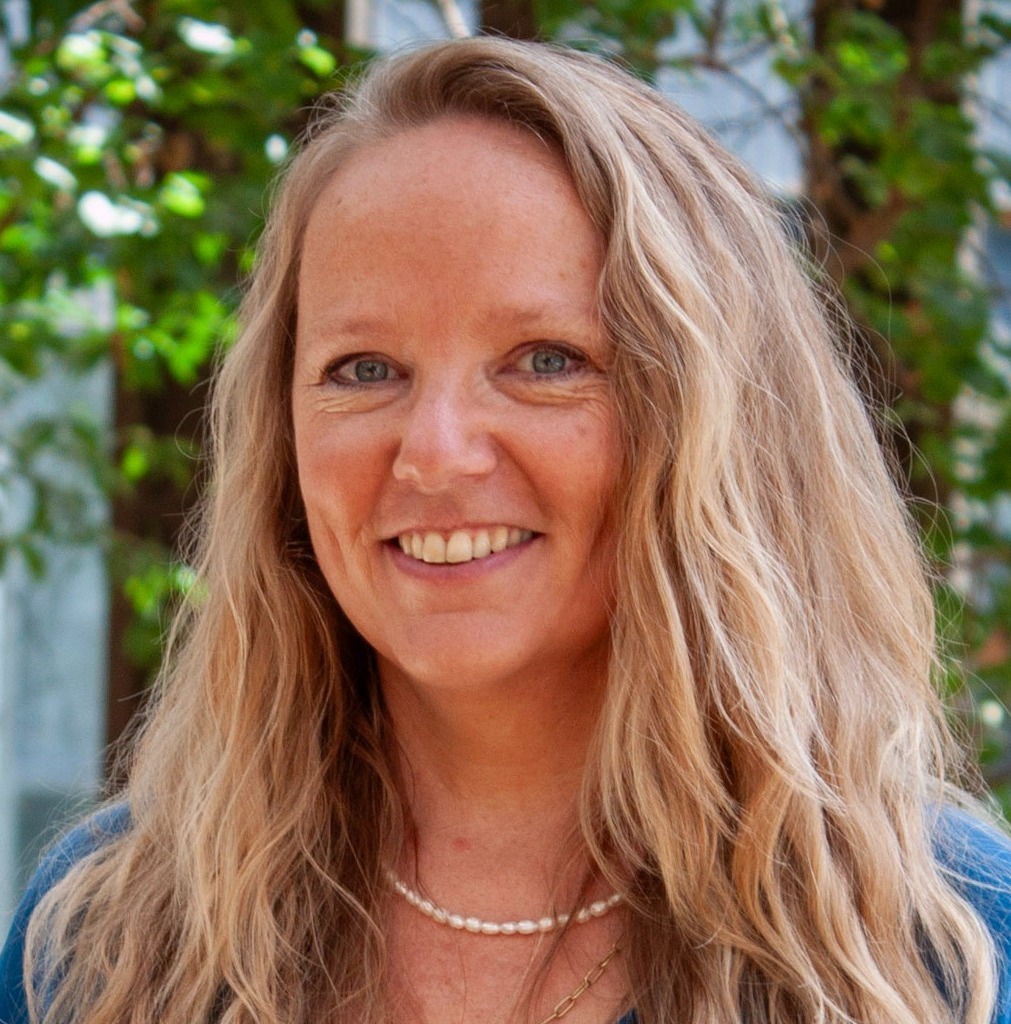
Dr Zoé Christoff
Our online experience is increasingly similarity-driven. On social media, we connect with people whose interests, opinions, and socio-economic backgrounds are similar to ours. Under their influence, we often become even more similar to these connections. At the same time, recommendation algorithms suggest content similar to what we have previously engaged with. Together, these mechanisms influence who interacts with whom and which information becomes visible online. This project studies how such combined similarity processes shape the flow of information in social networks. By developing formal models, the researchers will identify the structural conditions under which communities can reliably form true beliefs.
Christoff is an assistant professor in Artificial Intelligence at the Bernoulli Institute for Mathematics, Computer Science and Artificial Intelligence. Her research examines how social networks, collective decision-making and democratic processes influence one another.
About the Vidi grant
Vidi is one of three grants in the NWO Talent Programme, alongside Veni and Vici. The programme supports researchers at different stages of their academic careers: Veni targets researchers who have recently obtained their PhD, Vidi supports experienced researchers in developing an independent research line, and Vici enables senior researchers to build their own research group.
More information
More news
-
22 October 2026
Seven UG and UMCG researchers awarded Vidi grant
-
22 October 2026
KNAW Early Career Award for two UG researchers
-
22 October 2026
How someone with bad intentions could employ AI