
Four NWO Sustainable Science Fund projects
Four projects involving researchers from the University of Groningen (UG) and University Medical Center Groningen (UMCG) have been awarded EUR 50,000 each through the NWO Sustainable Science Fund. These initiatives, linked to the FSE Green Labs team, target key areas to reduce the environmental footprint of research practices such as training, behavioural interventions, lab infrastructure and resource use.
This funding aligns with UG's Sustainability Roadmap (2021-2026), which integrates sustainable development across research, education and operations to achieve carbon neutrality by 2030—exemplified by efforts like fossil-fuel-free transport, circular waste management and sustainable tendering.
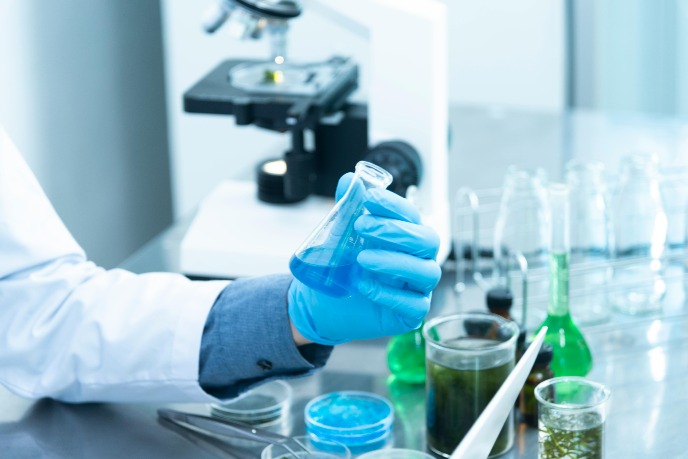
Training Sustainable Research Practices: An Ethics- and Intervention-Oriented MOOC for PhD Researchers
Project Partners: Matt Drury, Thomas Freese, Melina Aarnikoivu (Faculty of Science and Engineering, UG)
Tom Spits (Center for Information Technology, UG)
PhD researchers are at the forefront of shaping the future of scientific research, including its environmental and social impacts. This project will develop an open, massive open online course (MOOC) designed to help PhD researchers across STEM disciplines understand sustainability as an ethical issue. Participants will learn to identify sustainability hotspots in their research and design practical interventions to reduce environmental impacts while maintaining research quality. By combining ethical reflection with hands-on tools and real-world examples, the course empowers researchers to become agents of change in their fields.
Behavioral Interventions for Sustainable Science
Project Partners: Ellen van der Werff, Brian Wagner (Faculty of Behavioural and Social Sciences, UG)
Michael Lerch, Tjalling Canrinus (Faculty of Science and Engineering, UG)
Nils Elzinga (Green Office, UG)
While researchers work to advance planetary health, the environmental impact of research itself, through waste and energy use is often overlooked. This project focuses on helping researchers, starting with those in chemistry, adopt pro-environmental behaviors. The team will develop an online tool for research teams to set sustainability goals and create ambassador toolkits to inspire peers and organizations to reduce the environmental footprint of their research practices.
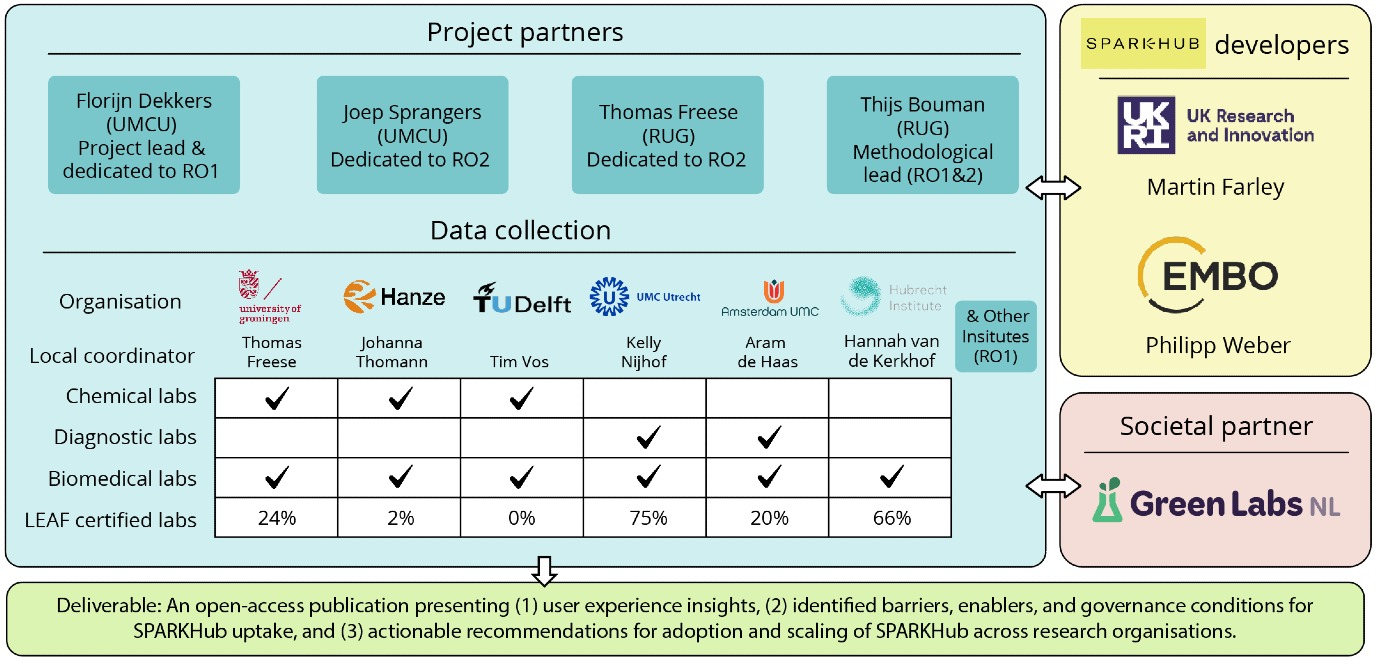
Implementing SPARKHub for Sustainable Research: A National Pilot Study
Project Partners: Thomas Freese (Faculty of Science and Engineering, UG)
Members of Green Labs NL
Scientific research is vital for societal progress but comes with a significant environmental footprint. This project will pilot SPARKHub, an open-access European platform designed to help organizations assess, improve, and certify the sustainability of their research practices. The pilot will involve biomedical, chemical, and diagnostic research environments across six Dutch organizations. By combining practical pilots with system-level analysis, the project will provide actionable recommendations for researchers, institutions, and funders to support the adoption and scaling of SPARKHub.
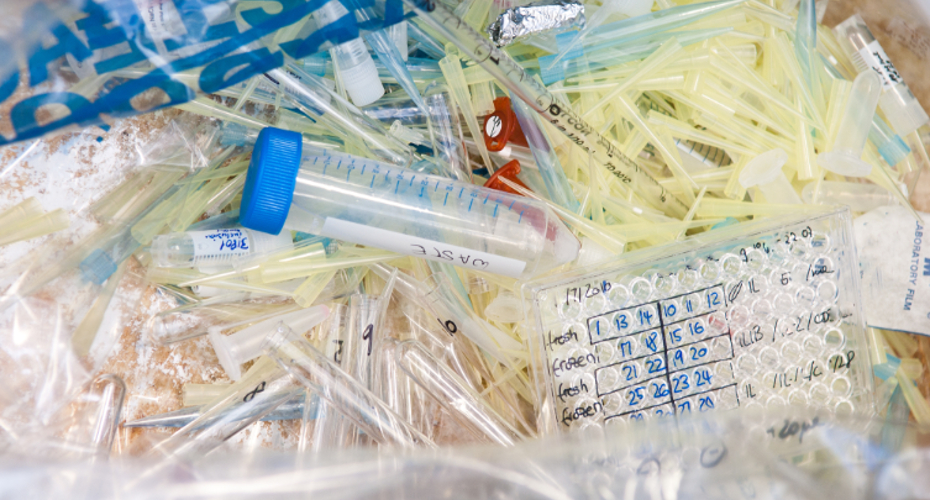
Impact Assessment of Laboratory Disposables in Life Sciences Research
Project Partners: Krista Bosgra, Schelto Kruijf, Renate Kat (UMCG)
Bart Noort (Faculty of Economics and Business, UG)
Aram de Haas, Eke Snoeren (Amsterdam University Medical Center)
Laboratories in life sciences research generate significant environmental footprints, primarily due to the consumption of disposable products. This project aims to validate and optimize a methodology developed within university medical centers to assess the environmental impact of laboratory disposables. By collaborating with partners such as the University of Groningen, Sanquin, Naturalis, and RIVM, the team will ensure the method is applicable to a broader range of research organizations. The improved methodology will be made publicly available to help institutions monitor and reduce their environmental impact.
About the NWO Sustainable Science Fund
Launched by NWO and the Dutch Climate Research Initiative (KIN), the Sustainable Science Fund supports projects advancing sustainable research practices. It addresses ecological footprints from travel, energy, data, and materials, promoting efficiency, risk reduction, and leadership in climate transitions. These UG/UMCG projects align with institutional efforts to integrate sustainability across academia.
More news
-
17 September 2026
NWO-KIC funding for new route to sustainable biocatalysts
-
15 September 2026
Enzymes break down textile fibres into useful resources
-
10 September 2026
Searching for the first generation of stars