
‘We don’t need experiments’
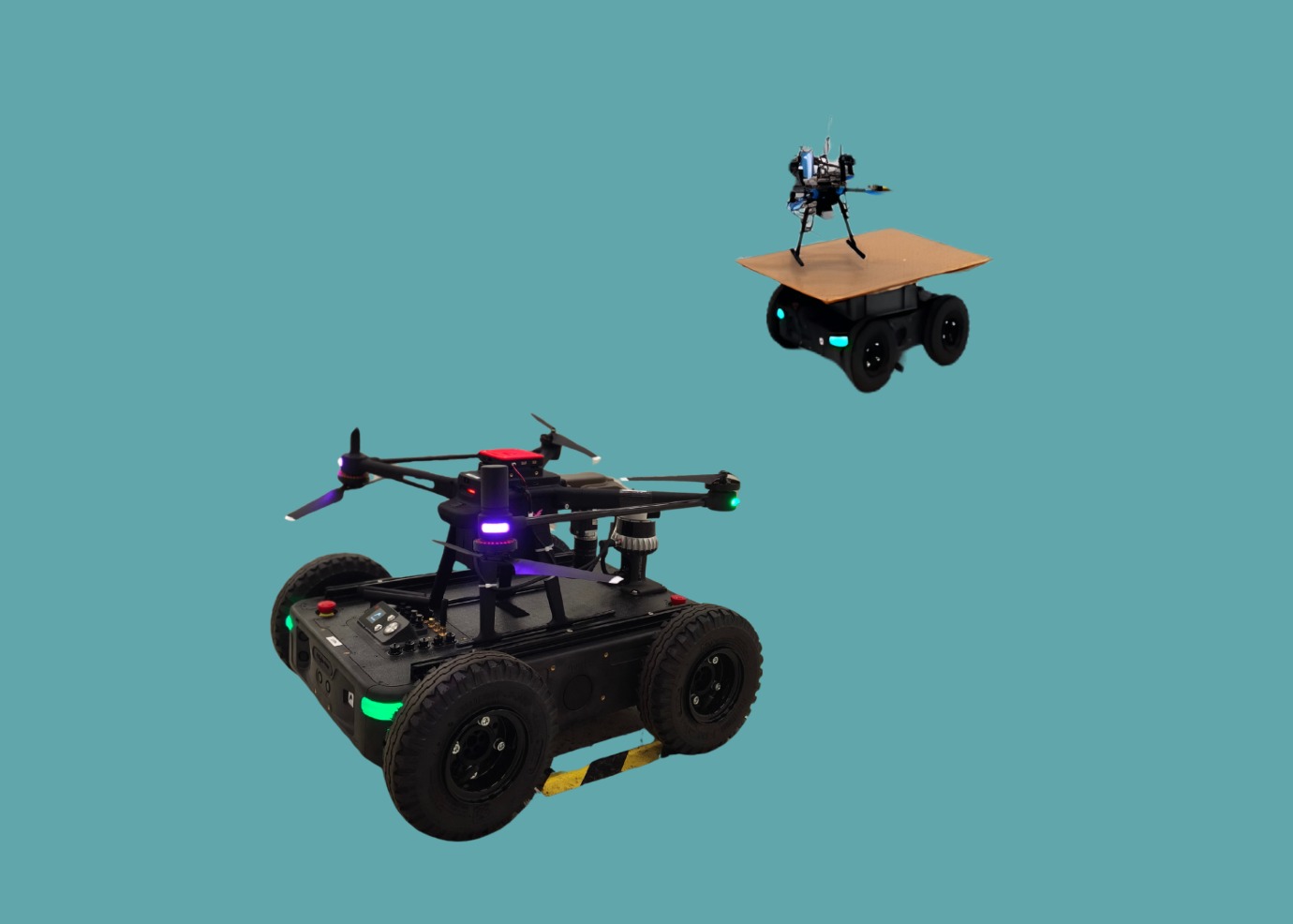
Bayu Jayawardhana controls robots with mathematical formulas. ‘Our field is actually very closely related to artificial intelligence,’ says Jayawardhana, Professor of Mechatronics and Control of Nonlinear Systems at the University of Groningen. ‘But instead of using self-learning machines, we describe very precisely how a system is put together and then develop the required maths to control the system.’ Jayawardhana and his team will do exactly that in the new project FARMLAB, in which various types of agricultural robots work together to monitor crops in real time.
FSE Science Newsroom | Charlotte Vlek
The branch of mathematics that Jayawardhana is using for his robots is called Systems and Control. Jayawardhana: ‘You’ll find applications of systems and control in CD players manufactured by Philips and in the lithography machines of chip manufacturer ASML.’ Since the turning of a CD and the movements of the chip machines can be considered mathematical systems, these can be captured in formulas. That brings us to the next question: how to control this movement, so that the CD is read exactly on the lines and that the chip is manufactured accurately?
The movements of a robot can also be described as a system: certain control (input) leads to a movement of the robot (output) and that, in turn, requires a new, updated control (feedback). If it concerns a group of robots that work together, it all becomes a little bit more complex.
Cybernetics
Jayawardhana’s field used to be called cybernetics: the study of complex systems using control and feedback. These systems could be biological (human or animal behaviour) or technological (the control of a device). That field has produced many developments, including neural networks, which are currently very important for machine learning. Jayawardhana: ‘But that is exactly what we don’t do; we don’t work with self-learning machines. Systems and control has explicitly branched off from that: we first describe very precisely how a system is put together. Based on that, we develop the mathematical equations required to control the system.’
Robots that work together
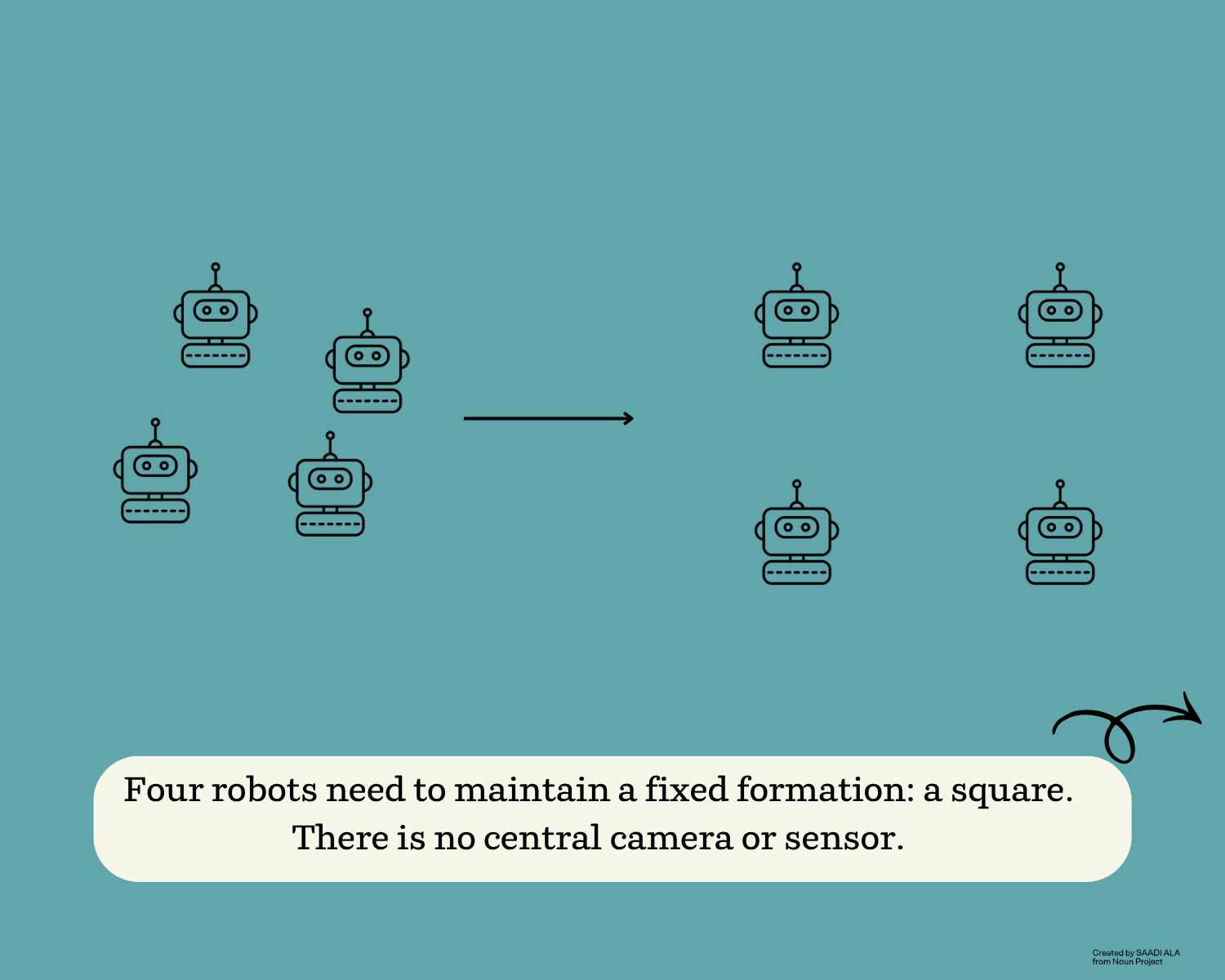
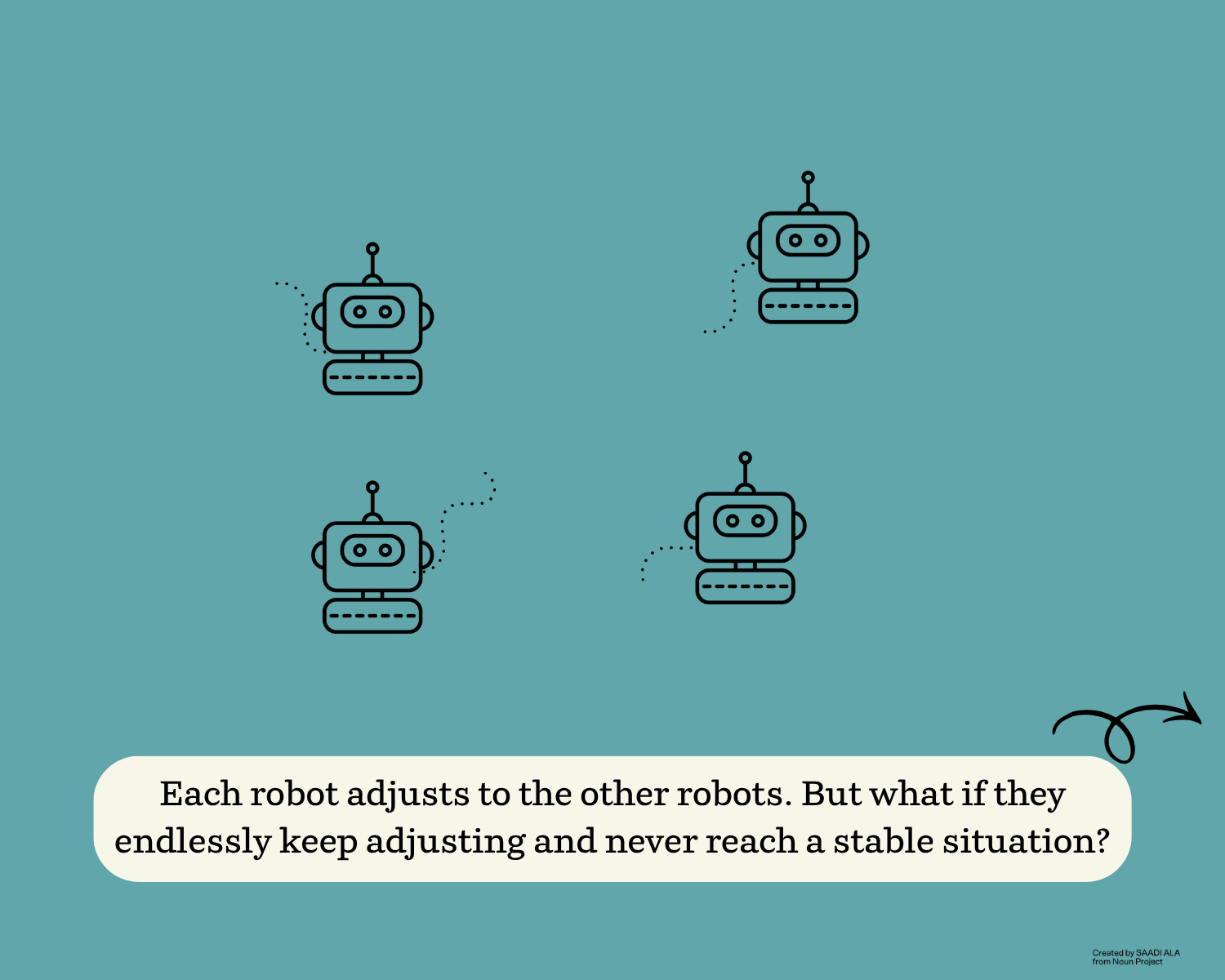
‘Think, for example, of four robots that have to move in a set formation. This means that they must always keep the same distance from each other – for example in the corners of a square,’ says Jayawardhana. That is quite a tricky problem if there is no central camera that records the robots’ positions; every robot measures its own distance to another robot and adjusts where necessary. The danger is that the robots get stuck in a perpetual dance: as soon as one robot moves to get to the right position, others will respond to that. This way, they will never form a stable square.
The robot formation problem
‘Suppose you buy four different robots at an electronics store,’ says Jayawardhana. ‘And you want to let them move in a set formation, or even get them to stand still, for example in the corners of a square. And all without using a central camera that observes all robots from above.’
Each robot has, therefore, its own observations and has to use these to respond to the other robots – a little forward, a little backward, a little to the left, a little to the right – but the other robots also respond to that moving robot. Then it is very well possible that they will never achieve a stable situation, for example because they continue to correct small measurement errors.
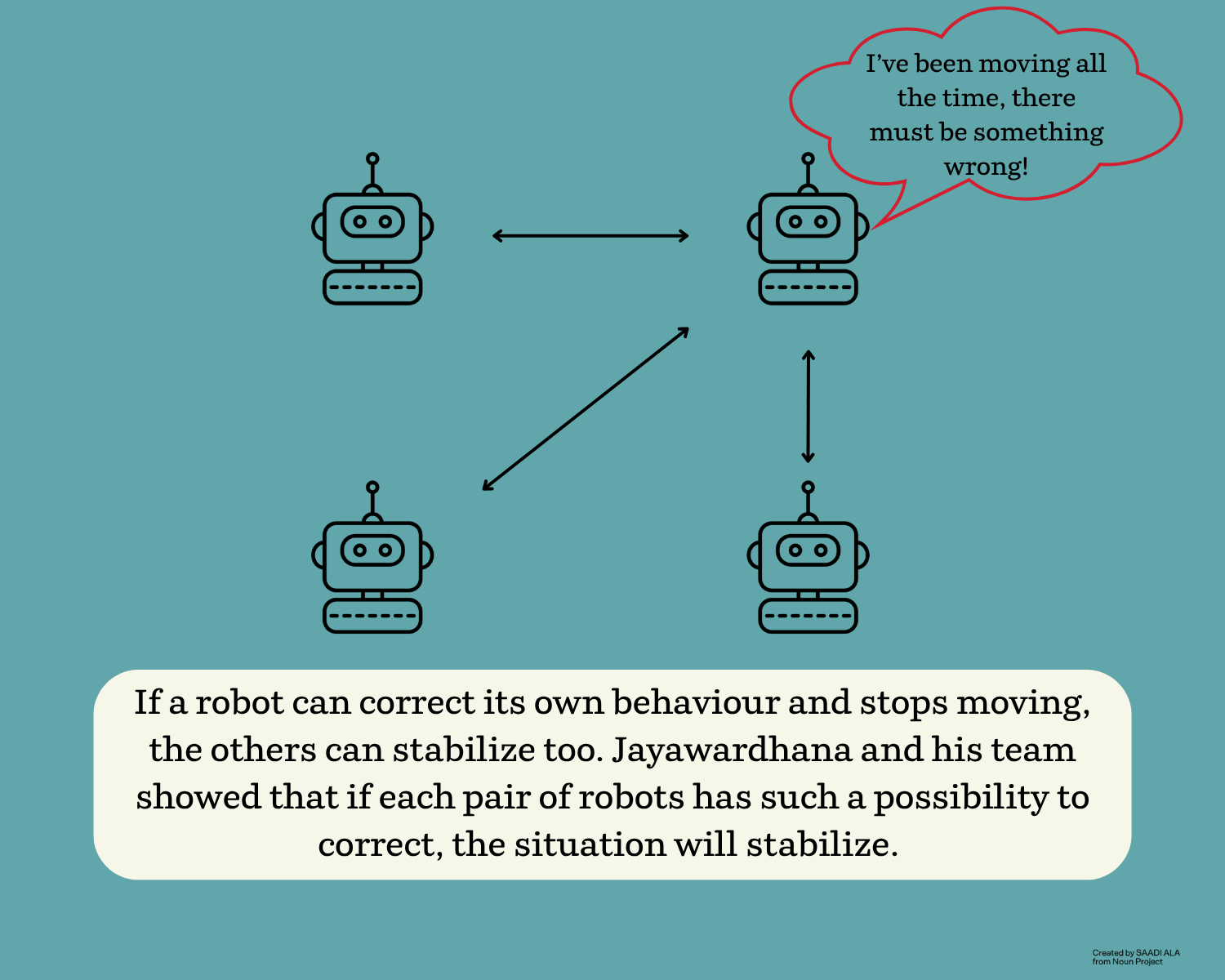
Ten years ago, Jayawardhana and his team solved the problem: a robot can correct its own behaviour using a so-called estimator. This way, a robot that continually makes minimal corrections will ultimately stand still. ‘This isn’t a decision that such a robot takes,’ explains Jayawardhana. ‘It’s a programmed action.’ Jayawardhana showed that when one of each pair of robots that must stay a certain distance apart is equipped with an estimator, the formation will stabilize.
Jayawardhana: ‘My group has solved that problem about ten years ago, at least for cases where all robots have the same type of sensor. We provided mathematical proof that our solution will always lead to a stable situation. The current challenge is to do this also for robots with sensors that all measure something different.’
And that is what Jayawardhana’s latest project FARMLAB is about: the coordination of different types of robots. An interdisciplinary group is working on a team of a land-based robot and a number of drones that can monitor the fields of an agricultural farm in real time. The thought behind this is that by collecting information about the growth and health of the plants, farmers can use a more targeted approach to applying pesticides or fertilizers.
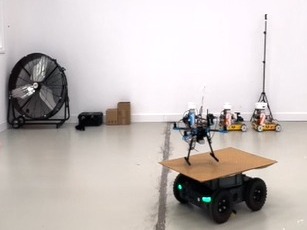
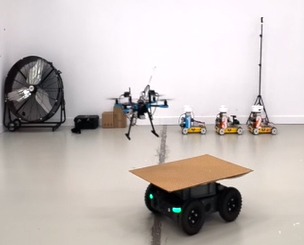
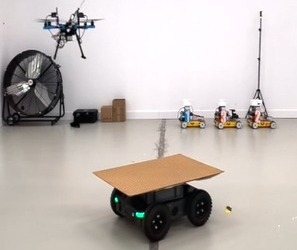
The beauty is that our field doesn’t need big experiments, or huge amounts of data
Such agricultural robots might make you think of AI rather than mathematics, and indeed AI certainly plays a part, for example in image recognition. Which plants are weeds and which are the actual crop? What does a diseased plant look like? But that is not what Jayawardhana will be working on: he will develop the required mathematics to coordinate the movements of drones and land-based robots.
Jayawardhana: ‘The beauty is that our field doesn’t need big experiments, or huge amounts of data. We only need one simulation in which we can show the movements of a robot, and we only do this for illustrative purposes. Because we already know that it works, based on the maths.’
Read more:
The University of Groningen is among the world leaders in the field of Systems and Control. At the Jan C. Willems Centre for Systems and Control, researchers from the University are working on the mathematics behind a wide range of applications, such as high-tech manufacturing processes or a knee prosthesis.
Electrical engineer Ming Cao tackles the ethical, legal, and societal aspects surrounding AI, as head of the ELSA Lab for Technical Industry.
A robotic arm in a factory that repeatedly executes the same movement: that’s a thing of the past, states Ming Cao. Researchers of the University of Groningen are collaborating with high-tech companies to make production processes more autonomous.
More news
-
17 August 2026
Hubble solves merger mystery from Milky Way’s early years
-
16 July 2026
Veni-grants for 21 UG researchers
-