
Proteins cluster in cells for faster performance

Cells can be thought of as cities, with factories, a transport system, and lots of building activity. An international team led by scientists at the University of Groningen studied cells growing under different conditions and measured the speed of molecule transport. They found that some conditions led to changes in the mobility inside the cells, caused by the clustering of proteins that produce the building materials for growth. It could be that clustering enables the proteins to produce those building blocks more efficiently.
FSE Science Newsroom | René Fransen
The research started with a seemingly simple question. How much movement is there within a cell? ‘We provided bacteria with different nutrients and this resulted in different growth rates,’ explains Matthias Heinemann, Professor of Molecular Systems Biology. Movement was measured by inserting tiny (40 nanometres) fluorescent particles in the cells that could be tracked under the microscope. ‘To our surprise, we found that particle movement under different conditions could vary by a factor of three.’
The scientific literature could not explain this observation. By analysing the cell content, the scientists found a correlation between movement of the fluorescent particles and the number of proteins that are involved in the production of amino acids. ‘More of these proteins meant less movement inside the cell,’ says Heinemann. ‘This led us to the question of why this happens. Our hypothesis was that these proteins form clusters that act as obstacles to movement inside the cells.’
Microcompartments
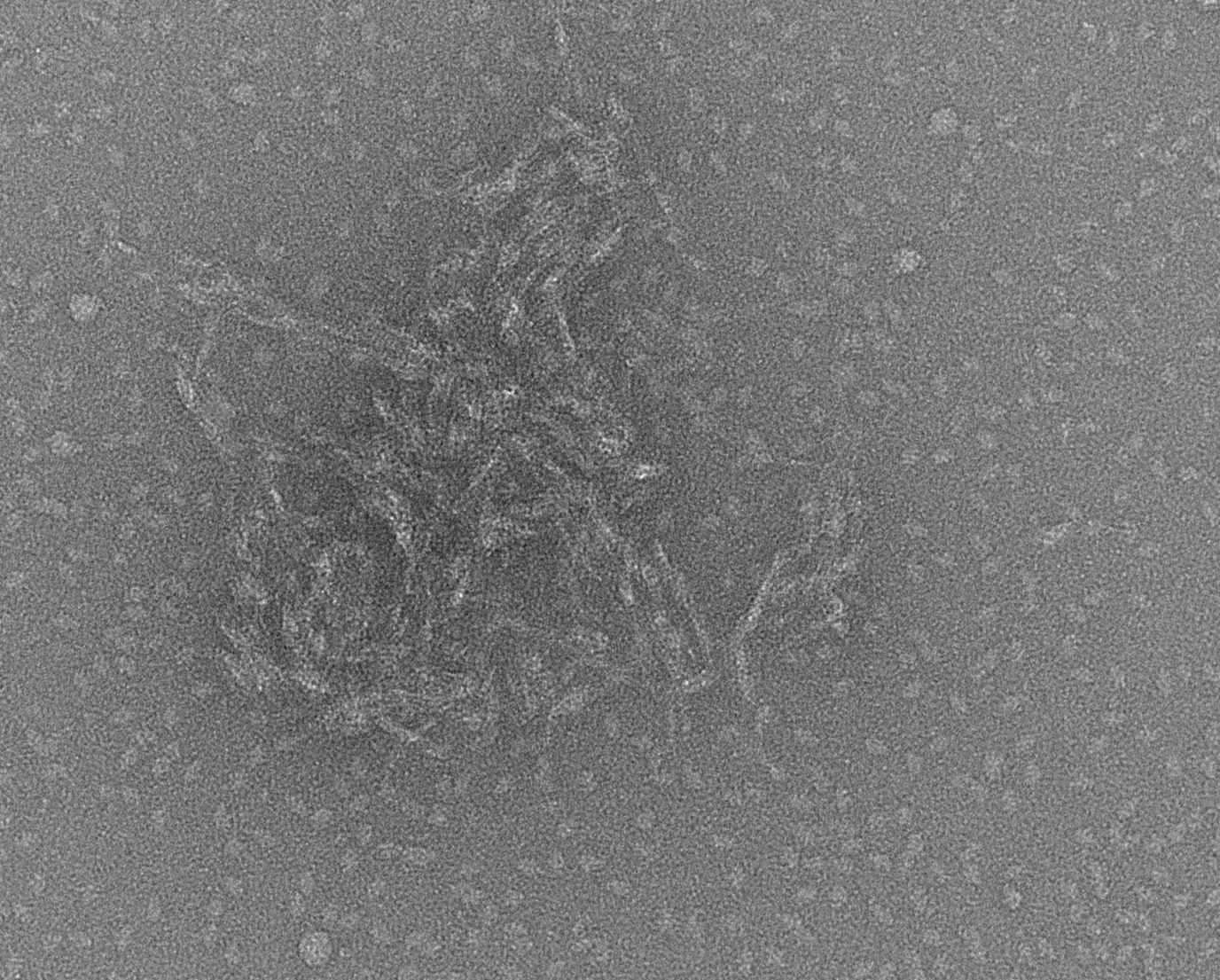
Microscopic studies in cells and electron microscope studies of these proteins in a test tube confirmed this hypothesis: proteins involved in amino acid production did form clusters, which reduce movement inside the cells. The next question was why they do this. ‘We used Machine Learning to analyse differences between amino acid-producing proteins and other cellular proteins.’ It turned out that the first were more hydrophobic, which gives them a tendency to cluster in aqueous environments, such as the inside of cells.
The initial question about movement inside cells now became the question of why amino acid-producing proteins are hydrophobic. Since proteins make up roughly half of the dry matter inside cells, the production of amino acids – the building blocks of proteins – is crucial during growth. ‘The synthesis of amino acids involves between five and ten different steps, all mediated by different proteins,’ explains Heinemann. ‘It means that having all those proteins together in clusters would make sense.’ His hypothesis is that the clusters form microcompartments, like an assembly line in a factory. This could make the different steps of amino acid production more efficient.
Design of cell factories
The discovery, which started with a curiosity-driven question about movement inside cells, could have practical applications, Heinemann says. ‘We might use this to design efficient cell factories. For instance, if we want to increase production of certain substances inside cells, we should make the proteins involved hydrophobic.’
Reference: José Losa, Matthias Heinemann et al: Condition-dependent amorphous protein agglomerates control cytoplasmic rheology. Molecular Cell, 10 April 2026
More news
-
25 September 2026
NASA selects infrared space telescope PRIMA featuring Dutch technology
-
-
24 September 2026
Arjan van der Schaft receives IEEE Control Systems Award