
Getting to grips with the workhorses of our body

Genes may be crucial to many aspects of life, but proteins are what make our bodies tick. Identifying exactly which proteins are important to health and disease would be a major breakthrough in science. Giovanni Maglia has created a vital tool to achieve this: single-protein sequencing with nanopores. This tool has the potential to revolutionize health monitoring by showing what is happening in our cells and tissues. To bring this tool to the market, Maglia started the company Portal Biotech. On 5 January, he received the FSE Impact Award from the Faculty of Science and Engineering.
FSE Science Newsroom | René Fransen
You may have heard how a mutation in a gene can cause disease. To be precise, genes do not cause disease; they merely supply the information for our cells to produce proteins, which are the actual culprits. A mutated gene leads to the production of a faulty protein, which distorts the actions of other proteins in the body, possibly leading to disease. To complicate matters, humans have some 20,000 genes, which can produce around 100,000 different protein forms, and at least 10 times more variants can be made by chemical modifications that occur after the proteins have been made (post-translational modifications). Although it may seem strange, many genes can be used to produce several different proteins. Once they have been made, proteins can be modified in a variety of ways.
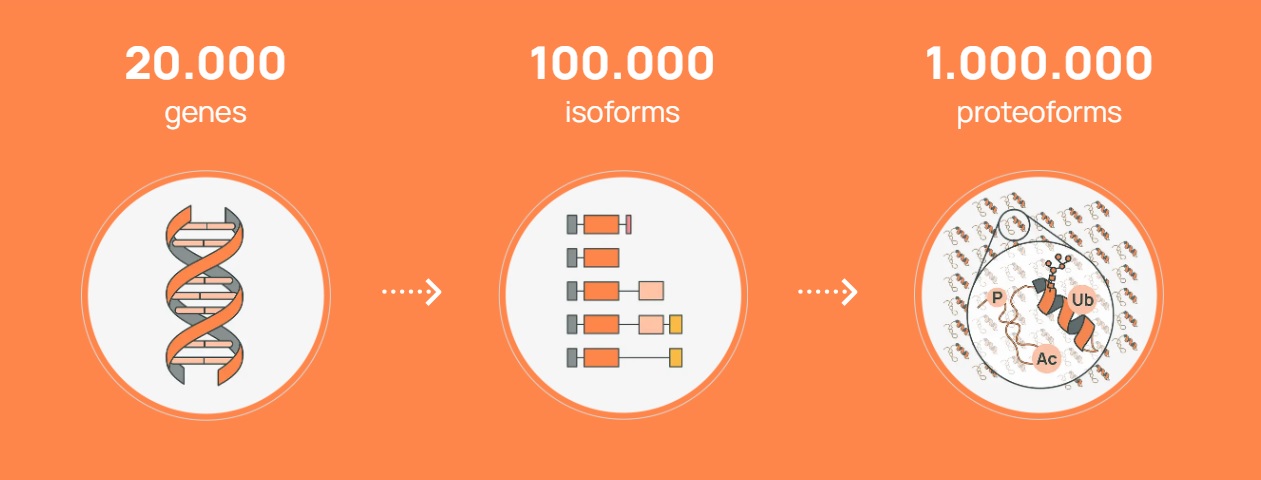
Analysis of individual proteins is the only way to capture the true diversity
Pinpoint the culprits
'Proteins are important to our health. They are the workhorses of our cells,’ asserts Giovanni Maglia, a professor of Chemical Biology. Although scientists have analysed human genes in detail, they have only rudimentary knowledge about our proteins. The standard method for identifying which proteins are present in our bodies involves a technique known as mass spectrometry. In essence, the technique analyses fragments from proteins and traces them back to specific proteins. As Maglia explains, however, ‘this is like looking at the average properties of hundreds of people at a concert.’
Maglia wants to be able to analyse each individual protein. Amongst other applications, this would make it possible to pinpoint the real culprits in case of a disease. ‘The analysis of individual proteins is the only way to capture the true diversity,’ he explains. To do this, Maglia had to find a way to ‘read’ each protein by looking at the building blocks of which it is made. There are some 100,000 different proteins; however, all of them have various configurations of only 20 basic building blocks, known as amino acids.
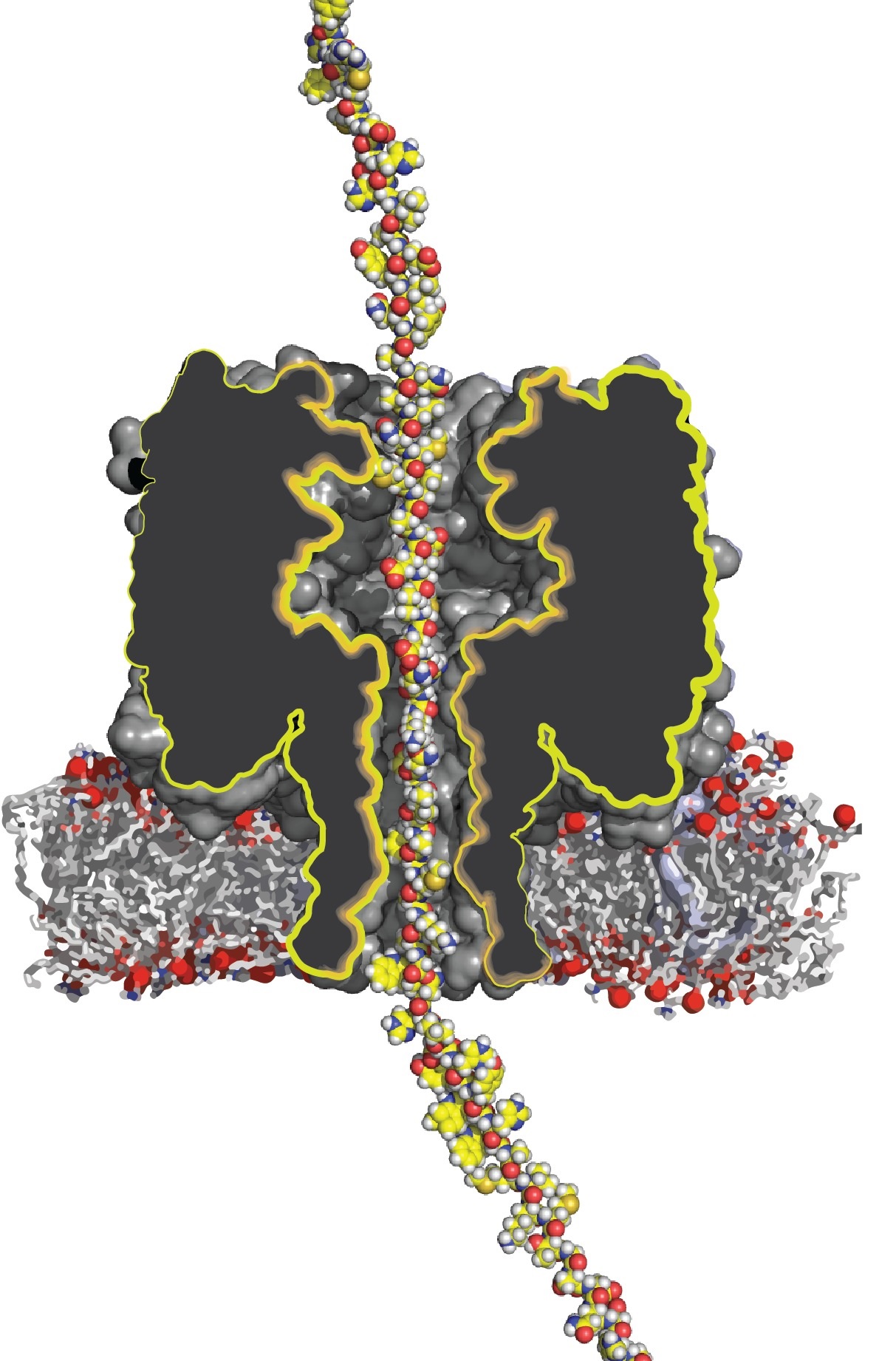
Pushing spaghetti through a pinhole
To read information from the building blocks, Maglia sends the protein, which resembles a long strand of spaghetti, through a tiny hole known as a nanopore. Based on existing techniques that measure what goes through a nanopore, Maglia developed a system that can push unfolded proteins through nanopores and then identify the amino acids – the building blocks – as well as any modifications that have been made to them.
Getting proteins to move through a nanopore was not an easy feat. As Maglia explains, ‘It’s a bit like pushing cooked spaghetti through a pinhole.’ Eventually, he found a solution to this problem by using an electric field to produce a fluid flow (electro-osmotic flow, EOF) through the nanopore. Maglia compares this to the wind propelling a sailboat. This EOF can be strong enough to overcome the opposing electrophoretic forces generated by the charged amino acids passing through the nanopore, thus inducing the transport of the flexible polymer across the nanopore. Maglia and his team engineered the EOF to be this strong three years ago. ‘At that point, we knew we had a path towards a product.’
Single-molecule protein sequencing
Portal Biotech will offer handheld devices and a bench set for the easy identification of proteins for a variety of applications. In academic laboratories, they could be used for such purposes as studying how post-translational modification affects the function of proteins. In industry, they could be employed to characterize complex biomolecules, such as antibodies or molecules that can mimic those that are developed in our bodies. These could be used to develop treatments for cancer and autoimmune diseases.
Eventually, it might be possible to develop devices for sequencing or identifying proteins and small molecules for health monitoring, even in real time. Just as the body measures proteins and other molecules and uses this input to regulate all kinds of processes in the body, the nanopores could be used to create an ‘artificial pancreas’ that regulates blood sugar for diabetics, amongst other possibilities. ‘This should keep us busy for the next 10 years.’
A report on the award ceremony can be found on the FSE news page.
More news
-
17 September 2026
NWO-KIC funding for new route to sustainable biocatalysts
-
15 September 2026
Enzymes break down textile fibres into useful resources
-
10 September 2026
Searching for the first generation of stars