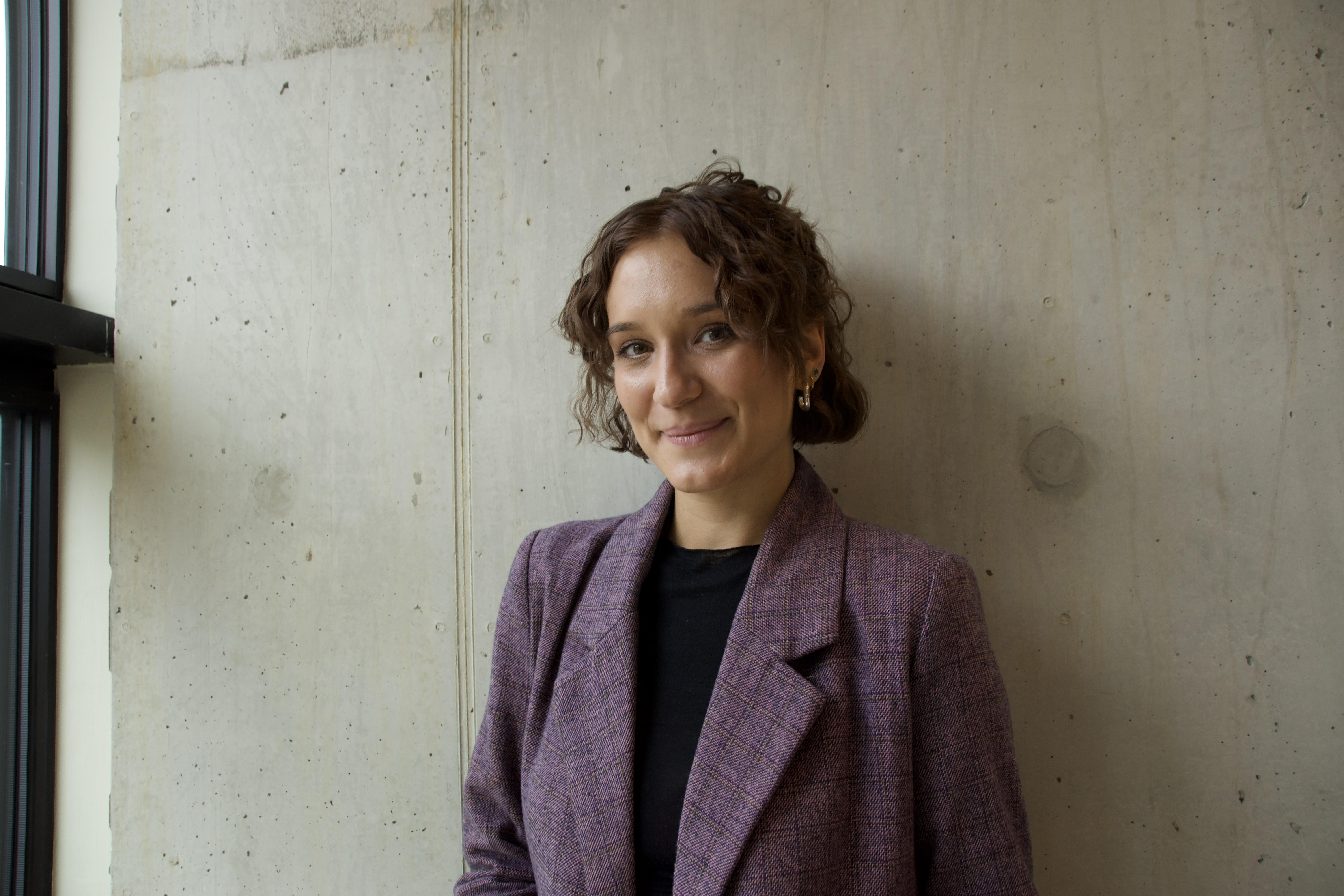
Ready to turn your ideals into action? With Global Responsibility & Leadership, you can shape your own path while keeping your eyes on the future. Mix and match courses that fit your passions and gain the skills to build a more inclusive, sustainable, and respectful society.
✔️ Inspired by the UN Sustainable Development Goals: global challenges, local solutions
✔️ Learn to think critically and shape the world you aspire to
✔️ Choose your major: "Politics, Philosophy & Economics", "Ecology, Energy & Climate", "Culture, Psychology & Global Health"
Leeuwarden is a vibrant student city and the capital of Fryslân, deeply engaged with sustainability, social innovation and the UN Sustainable Development Goals. As the only Dutch city in the UN Global Compact Network, it actively promotes fair trade, inclusion, circular economy and climate action. With local partners, community initiatives and real-world challenges to explore, Leeuwarden offers a place to critically study and contribute to meaningful global change.
Year 1: Foundation
Your first year is designed to ground you in the essentials of global responsibility and leadership, preparing you for deeper exploration ahead. You will develop key research skills and dive into the basics of politics, sustainability, and psychology, all while discovering which major aligns with your passions. This year is your chance to establish a strong knowledge base, sharpen your academic tools, and sample foundational subjects to confidently choose your path.
| Semesters | ||||
|---|---|---|---|---|
| CoursesCourse Catalog > | 1a | 1b | 2a | 2b |
| Explaining Human Behaviour (5 EC) The course aims at understanding human behaviour within the context of individual, social, cultural and environmental factors. We will examine how these factors influence people's behaviour, cognition, and thinking as well as the way people make choices. We will cover basic research methods and theories from social psychology (social cognition, social influence, group processes etc.), giving a clear insight into the social psychological perspective and methodology. In addition, we will talk about those classical social psychology experiments, which will hopefully be a great source of inspiration for you to design similar approaches and experiments in the future. In particular, the course will address the Sustainable Development Goals of 3 (good health & well-being), 5 (gender equality), 7 (affordable & clean energy), 10 (reduced inequalities), 11 (sustainable cities & communities), 12 (responsible consumption & production), 13 (climate action), and 16 (peace, justice and strong institutions). | ||||
| Information Technology for Interdiscplinary Studies (5 EC) Information Technology (IT) for Interdisciplinary Studies offers a unique blend of digital literacy, IT methods for scientific research, and technology integration in the social sciences and humanities. | ||||
| The Earth System (5 EC) The Earth System course provides students with a solid grounding in the dynamics of our planet. Special attention is paid to the pressing environmental challenges facing the 21st Century. The course provides the necessary concepts and analytical tools to link specific local issues to a global framework. The course lectures will be supplemented by practical exercises, and a group project where you will further research a current environmental issue and present your findings. | ||||
| Introduction to Global Health (5 EC) Introduction to Global Health is one of the foundation courses, aiming to introduce students to basic concepts, theories and challenges of global health. Throughout the course, students learn about the historical development of health and improve their understanding on socioeconomic, political and structural factors that shape health as a quality of life. | ||||
| Language and Culture (5 EC) This course offers an overview of key concepts in language and culture, with a focus on applying them to offer deeper understandings of current events. For example, we may explore the topic of race through an analysis of worldwide #BlackLivesMatter activities, or gender and sexuality through trans-rights movements, or religious diversity through speaking with experts in shamanism. By using concepts from the scientific fields of linguistics and anthropology, we will interpret international events from a fresh perspective and see how language and culture saturate human affairs. | ||||
| Politics, Power and International Responsibility (5 EC) This course is an introduction to international relations and international organisations. Students gain clear insight into the political perspective and the concept of power. Topics such as governments and non-state actors, responsibility, accountability, geopolitical developments, global governance and political theory are all addressed. | ||||
| (Major) Elective Course 1 (5 EC) | ||||
| Introduction to Sustainable Energy Transition (5 EC) This course will help students understand the dynamics of energy transition, including issues of climate change, development and sustainability. It will address the necessary structural changes in our energy systems and conceptions of energy. Students will gain insight into different models of transition and the connections between technologies, resources, governance, economics, behaviour and the culture of energy at different scales. | ||||
| Principles of Economics (5 EC) This course covers the fundamentals of micro- and macroeconomics. The microeconomics part of the course covers economic decision-making by individuals and firms, and the determination of quantities and prices of goods. The macroeconomics part of the course covers issues such as economic growth, trade and inequality. This course offers a unified approach, combining the two fields (micro- and macroeconomics) offering students insights into the interaction between individuals, households, firms, and governments, functioning at different levels of the society. | ||||
| (Major) Elective Course 2 (5 EC) | ||||
| Qualitative Methods (5 EC) In this course, students learn to execute and report on a complete qualitative research project. To this goal, students go through the qualitative research cycle, comprising the design cycle, the data collection cycle, and the analytic cycle. Students start with formulating a SDG-related research question, and after critically engaging with the literature, they design their research instrument, collect and analyse data, and finally write and present a research report. When collecting data, interviews will be used (but in the course, there is also attention for focus group discussion and observation). The students also work on weekly assignments, group discussions, and literature presentations. | ||||
| Statistics I (5 EC) Statistics I introduces students to foundational concepts and techniques in statistical analysis, with a strong emphasis on understanding and interpreting real-world data. The course covers descriptive statistics, core principles of sampling and probability, and introduces methods for statistical inference. | ||||
Year 2: Focus on your major
Your second year centres on your chosen major, allowing you to select courses that match your academic interests and help you build a specialised profile . It also emphasises the real-world application of knowledge through the Living Lab. Majors available for Global Responsibility & Leadership students are:
| Semesters | ||||
|---|---|---|---|---|
| CoursesCourse Catalog > | 1a | 1b | 2a | 2b |
| (Major) Elective Course 3 (5 EC) | ||||
| Personal Leadership Lab (5 EC) The Personal Leadership Lab (PLL) invites you for a 8 week intensive journey into self-discovery. The focus is on personal development and specifically, on exploring how you relate to yourself, others, and the planet. You will be challenged to take an active role in shaping a space of collective reflection and mutual trust, where each can find a voice and improve their understanding of themselves. We will reflect on essential topics such as altruism and compassion, the power of emotions and habits, listening and compromise, and more fundamentally, on what being human means to each one of us. Beyond leadership trainings emphasising a skill-based approach, the PLL focuses on cultivating principles and the right mindsets. It is therefore anchored in the philosophy of liberal education. | ||||
| Statistics II (5 EC) Statistics II is a course designed specifically for second-year students pursuing UCF's bachelor's program in Global Responsibility & Leadership (GRL). In this course, you will apply essential statistical methods and techniques to analyze and interpret data related to climate, energy, environment, public health, and economic development. | ||||
| (Major) Elective Course 4 (5 EC) | ||||
| (Major) Elective Course 5 (5 EC) | ||||
| Ethics and Global Responsibility (5 EC) Have you ever wondered what's wrong, if anything, with the herd immunity strategy to handle the global pandemic? How to repair historical injustices inflicted on colonised countries? What do we owe to people living with severe disabilities? The ethics course will tackle these questions and many more, related to the ethical norms that ought to govern our collective life. Students will be introduced to major ethical theories and challenged with thorny ethical dilemmas. Together we will discuss a wide range of topics, from animal rights, queer politics, privacy and security to post-colonialism. We will do so by listening to thinkers from various backgrounds and by arguing with each other. | ||||
| (Major) Elective Course 6 (5 EC) | ||||
| (Major) Elective Course 7 (5 EC) | ||||
| Living Lab (10 EC) The University College Fryslân (UCF)'s Living Lab (LL) concept is a co-creation process between students, researchers, and public and/or private organisations. LLs are an opportunity to develop new ideas, products, services and business models that solve societal challenges. The aim of the LL is to integrate academic and experiential (non-academic) knowledge, using transdisciplinary collaboration. Based on project descriptions provided by private and public stakeholders from the region and abroad (the host organisations), students identify a problem relevant to their research interests and capacities. Together with their academic supervisor, students then translate this into a question which is suitable for academic research. They identify the relevant connecting disciplines, apply academic or scientific theory, come up with a suitable methodology, collect and analyse data, and provide answers to the research questions or hypotheses. Students report the results of the findings by way of providing recommendations for the stakeholder. The LL will address at least one of the Sustainable Development Goals per project, depending on the project. The LL teaches students to apply theoretical knowledge to a practical situation therefore contributing to students' mastery of integrated and applied learning. | ||||
| (Major) Elective Course 8 (5 EC) | ||||
| (Major) Elective Course 9 (5 EC) | ||||
Year 3: Connecting the dots
Your Capstone Project , or bachelor's thesis, is a research project on a topic of your choice . It may be carried out in collaboration with a partner organisation and include fieldwork abroad, depending on your interests and with your supervisor's approval. You may also choose to present your Capstone Project in a creative format that reflects your personal strengths and vision.
| Semesters | ||||
|---|---|---|---|---|
| CoursesCourse Catalog > | 1a | 1b | 2a | 2b |
| Minor (30 EC) | ||||
| (Major) Elective Course 10 (5 EC) | ||||
| (Major) Elective Course 11 (5 EC) | ||||
| Capstone Bachelor Thesis and Portfolio (10 EC) The Capstone is the academic culmination of the GRL degree and consists of the bachelor thesis and a portfolio. It is the biggest leadership challenge of the third year. By the end of the semester, you will showcase your mastery of knowledge and intellectual skills in your semi-independent research, as well as your development of personal and social responsibility in the portfolio. You complete the Capstone in the final two terms of year three. You will be rewarded with 10 EC. Your overall grade is based on your bachelor thesis (70 percent) and a grade for your Portfolio (30 percent). | ||||
| (Major) Elective Course 12 (5 EC) | ||||
| (Major) Elective Course 13 (5 EC) | ||||
40 hours of class and self-study per week on average
| Programme options |
|---|
| Culture, Psychology and Global Health (major) Understand how human behavior affects global health challenges, and discover how to improve both individual and community well-being through behavior change. |
| Politics, Philosophy and Economics (major) Dive into the world of politics, philosophy, and economics to understand how societies make decisions, and how you can influence them for the better. |
| Energy, Ecology and Climate (major) Explore how earth, energy, and climate interact, and find ways to protect our planet and its inhabitants from climate change. |
Study abroad is optional in Year 3
| Specific requirements | More information |
|---|---|
| previous education |
VWO or HBO-propedeuse diploma or Colloquium doctum
|
| additional subject |
English: VWO English with min. final grade 7 or one of the certified English tests. Disclaimer: as of 1st September 2023, Maths A or B (or their international equivalent) is not longer an entry requirement for this programme. |
| Curriculum Vitae (CV) |
in English |
| language test |
|
| (motivation-) letter |
Motivatiebrief of video in het Engels. Meer info: https://www.rug.nl/cf/university-college-fryslan/admissions-and-finance/26-27-criteria-for-university-college-fryslan-selection-procedure-documents.pdf |
Students with Dutch diploma have to apply via Studielink.nl and submit their necessary documents via online form sent by the Admissions Officer. After uploading all the required documents the Admissions Board will inform you if you're deemed admissible based on our admission criteria. Even if you don't meet all of our admission requirements, you are encouraged to submit your application, since each application is reviewed on individual basis.
Global Responsibility & Leadership is a selective programme. That means applicants are chosen based on their entry requirements, as well as the motivation letter / video and CV.
| Type of student | Deadline | Start course |
|---|---|---|
| Dutch students | 01 January 2027 | 01 February 2027 |
| 01 May 2027 | 01 September 2027 | |
| EU/EEA students | 01 January 2027 | 01 February 2027 |
| 01 May 2027 | 01 September 2027 | |
| non-EU/EEA students | 01 November 2026 | 01 February 2027 |
| 01 May 2027 | 01 September 2027 | |
| 01 November 2027 | 01 February 2028 |
| Specific requirements | More information |
|---|---|
| previous education |
International Equivalent of the Dutch VWO Diploma or HBO-propedeuse diploma |
| additional subject |
Proficiency in English (read the list of the accepted English test and exemptions below) Disclaimer: as of 1st September 2023, Maths A or B (or their international equivalent) is no longer an entry requirement for this programme. |
| Curriculum Vitae (CV) |
in English |
| language test |
|
| (motivation-) letter |
Letter of Motivation or a Video Presentation in English. For more info, please take a look at the following document: https://www.rug.nl/cf/university-college-fryslan/admissions-and-finance/26-27-criteria-for-university-college-fryslan-selection-procedure-documents.pdf |
| other admission requirements |
For more information about international equivalency, certificates, exceptions and more: www.rug.nl/cf/ucf |
| Exam | Minimum score |
|---|---|
| C1 Advanced (formerly CAE) | C1 |
| C2 Proficiency (formerly CPE) | C2 |
| IELTS overall band | 6.5 |
| IELTS listening | 6 |
| IELTS reading | 6 |
| IELTS writing | 6 |
| IELTS speaking | 6 |
| TOEFL internet based | 90 |
Students have to apply via Studielink.nl and submit their documents via the Progress Portal of the University of Groningen. After uploading all the required documents the Admissions Board will inform you if you're deemed admissible based on our admission criteria. Even if you don't meet all of our admission requirements, you are encouraged to submit your application, since each application is reviewed on individual basis.
Global Responsibility & Leadership is a selective programme. That means applicants are chosen based on their entry requirements, as well as the motivation letter / video and CV.
| Type of student | Deadline | Start course |
|---|---|---|
| Dutch students | 01 January 2027 | 01 February 2027 |
| 01 May 2027 | 01 September 2027 | |
| EU/EEA students | 01 January 2027 | 01 February 2027 |
| 01 May 2027 | 01 September 2027 | |
| non-EU/EEA students | 01 November 2026 | 01 February 2027 |
| 01 May 2027 | 01 September 2027 | |
| 01 November 2027 | 01 February 2028 |
| Nationality | Year | Fee | Programme form |
|---|---|---|---|
| EU/EEA | 2026-2027 | € 5343 | full-time |
| non-EU/EEA | 2026-2027 | € 17200 | full-time |
Practical information for:
After Year 1, the programme offers students multiple ways to apply their knowledge and engage in research projects with local impact.
A central feature of the GRL programme is the Living Lab
projects, where students collaborate with senior
researchers, fellow students, and private or public stakeholders on
real-life challenges affecting organisations, local governments, or
companies.
Beyond the Living Labs, Campus Fryslân provides opportunities
to become a student researcher by participating in ongoing projects
related to the Frisian Flagships and the Sustainable Development
Goals (SDGs).