
More stable solar cells and a three-layer ink
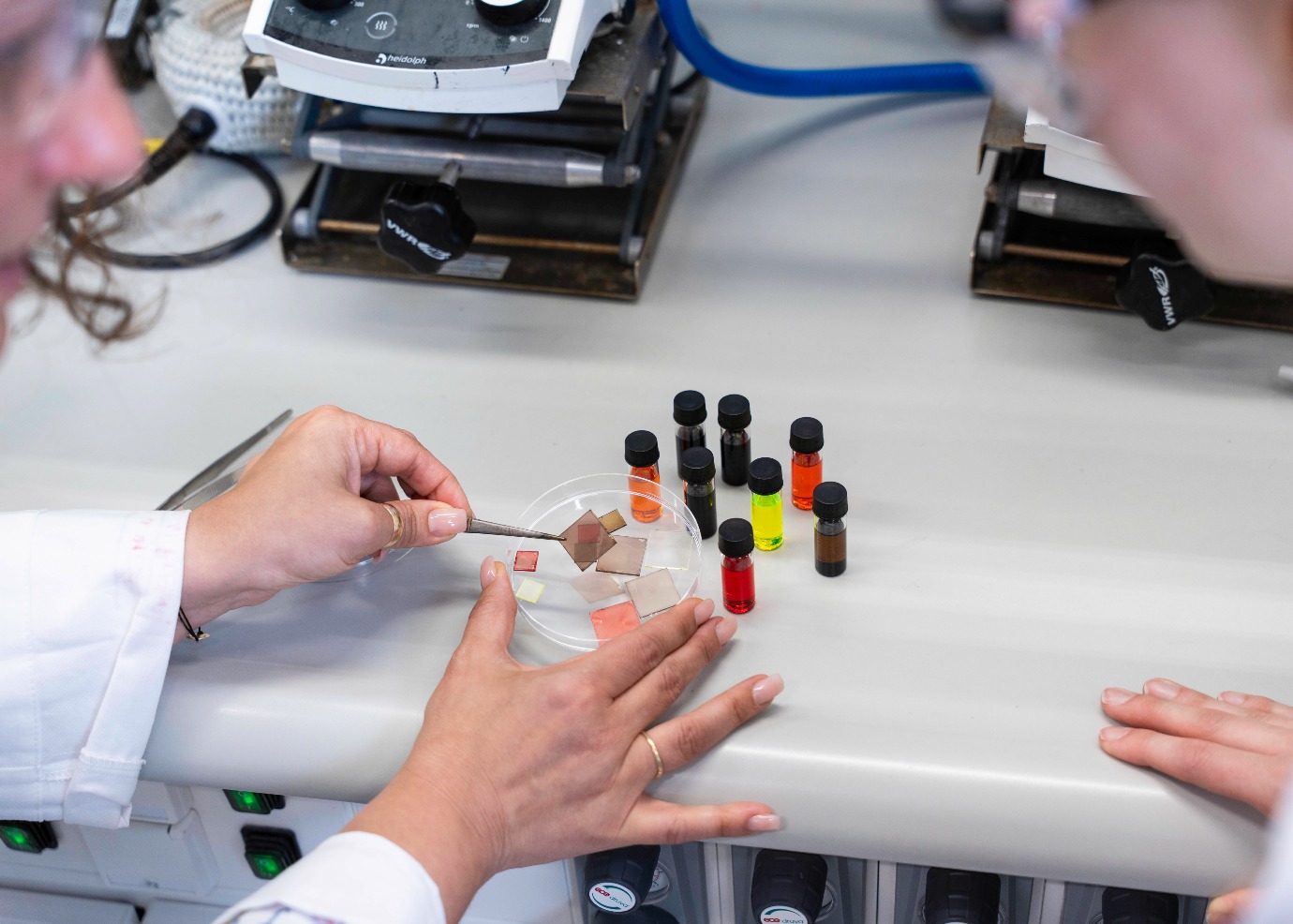
Solar cells made of perovskites are easy to produce, work in low light conditions, and are even able to function as a thin, flexible layer on your backpack, tarpaulin, or flexible display. Despite their many good qualities, perovskites are not ideal: they easily disintegrate when they come into contact with air or water and they currently contain toxic lead. Chemist Loredana Protesescu of the University of Groningen is working on more stable, lead-free perovskites and has recently received a grant to develop an ink that contains all components needed for a solar cell, such that it only needs to be applied to a surface before use.
FSE Science Newsroom | Text Charlotte Vlek | Photography AV-services RUG
‘Perovskites are easy to manufacture, but they also easily disintegrate,’ Protesescu reports. ‘They easily dissolve, similar to salt in water.’ For that reason, the perovskites in solar panels that are currently on the market are sealed in a plastic covering. Their fragility has everything to do with the internal connections in the material, Protesescu explains. It’s a crystal structure that has only weak connections between the atoms of the structure.
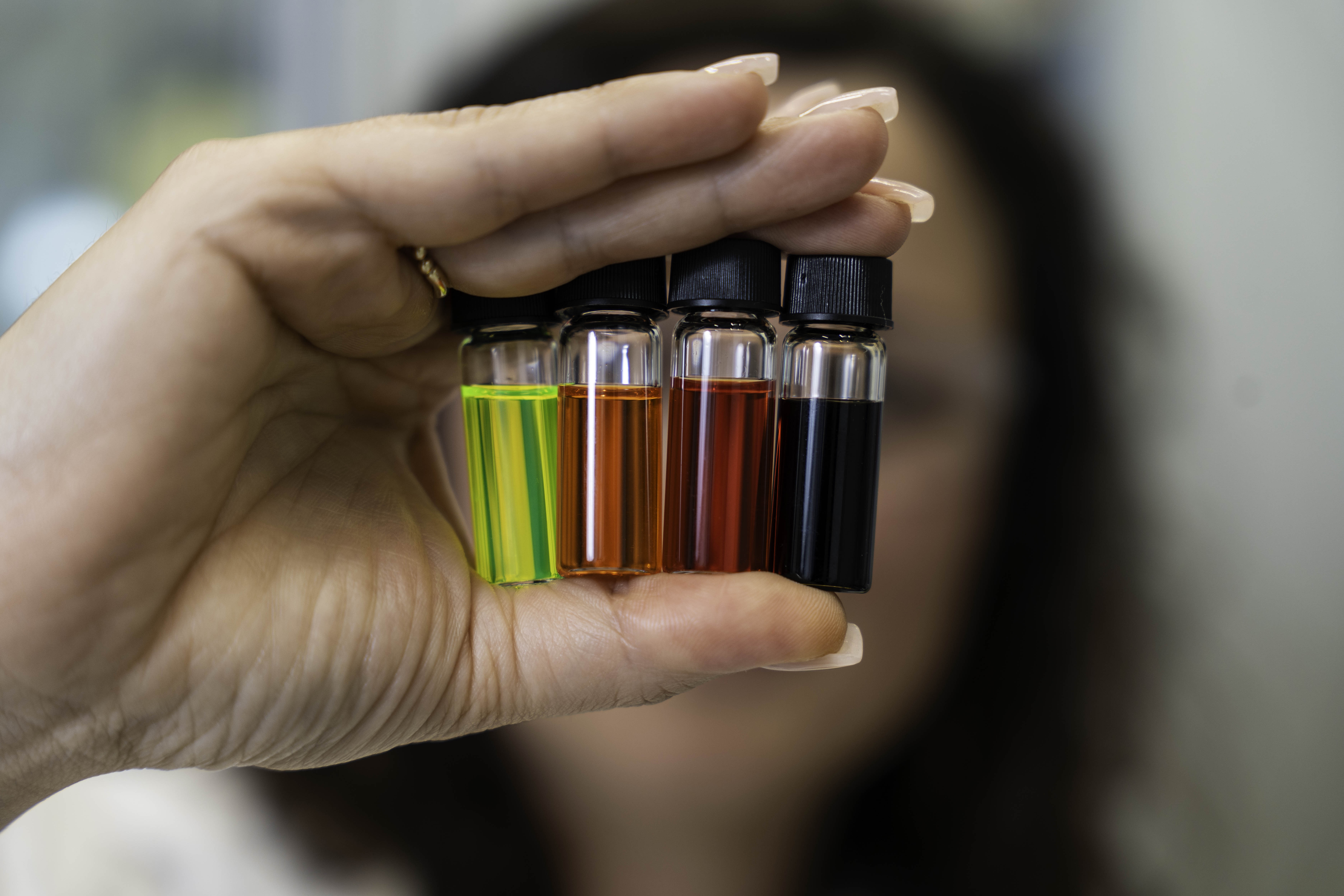
Searching for a greener protective layer in solar cells
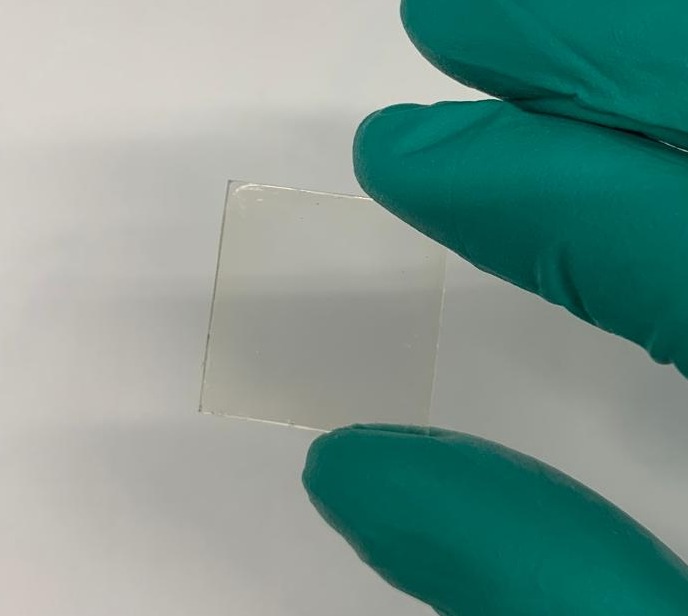
All solar panels have a plastic protective layer below their glass top layer. This is the case for perovskites, but also for the solar panels on your roof. This layer is there to protect the active materials against the elements while allowing for some expansion or mechanical impact.
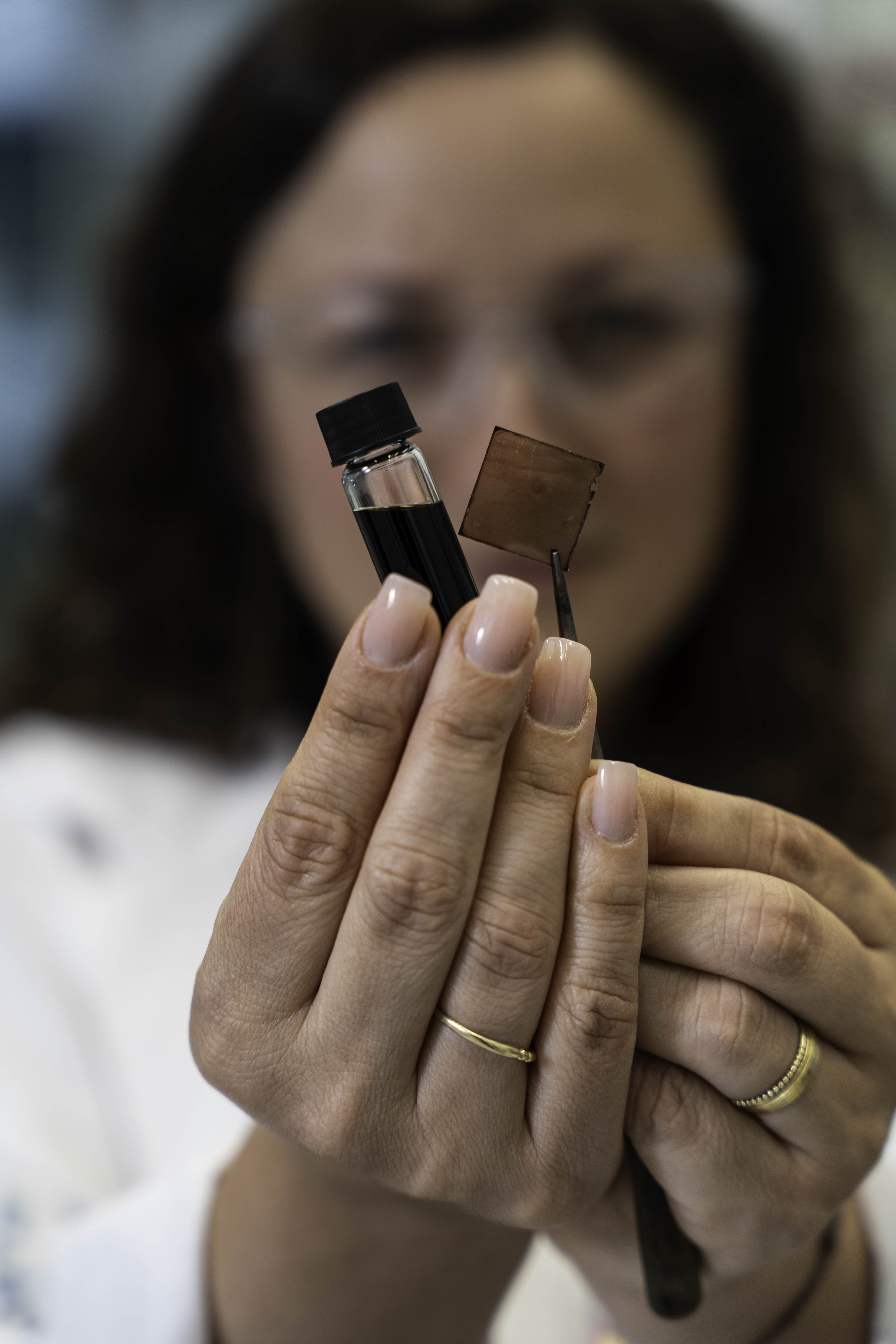
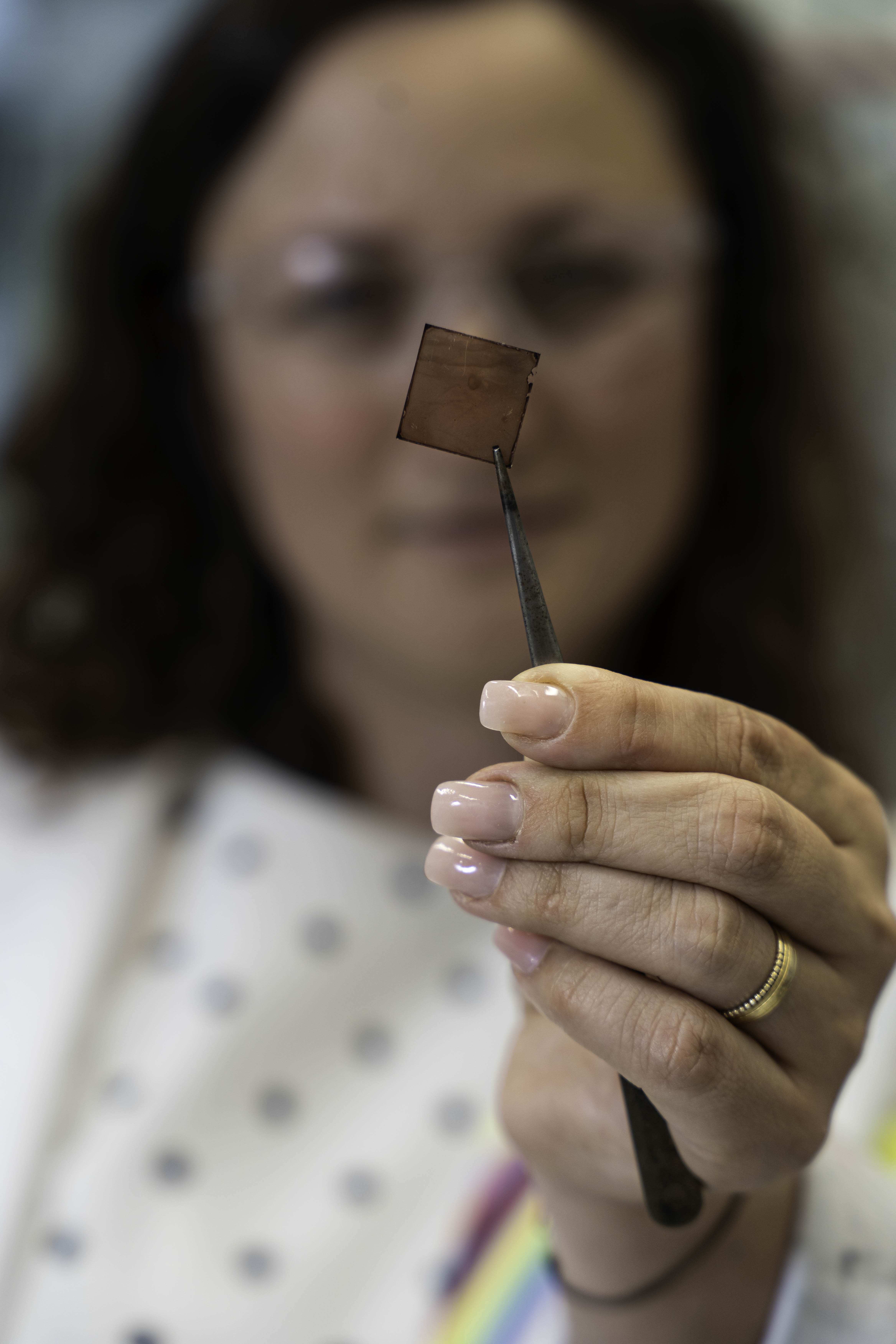
Currently, the protective layer in solar panels is made of EVA, a fossil-based, foam-type plastic. ‘It’s the type of material that we know from yoga mats, or from those puzzle mats for kids,’ explain Marta Castelnovo and Dina Maniar, chemists at the University of Groningen. Under supervision of Maniar, PhD student Castelnovo is searching for a greener alternative for EVA: something bio-based and easier to recycle.
Such an alternative needs to satisfy several criteria: it should not conduct heat or electricity, it needs to protect the solar cells against UV light and water, it also needs to be transparent and impact-resistant. And at low temperatures, the material should not become brittle. Castelnovo and Maniar are aiming their search at alternatives that consist of two building blocks – as is the case with EVA – such that by varying the proportions of the building blocks, they can control the desired properties of the material.
Castelnovo has now developed a bio-based material with ‘rubbery’ properties based on sugars, such as residual products from the food industry or wood. ‘This is a real step forward,’ Maniar reports. ‘This material has good UV-protective properties, it’s water-resistant, stable at high temperatures, and it also protects against mechanical impact. But we are not finished yet, because we want to work towards something that is self-healing when it breaks and that can easily be recycled.’ Castelnovo and Maniar will continue working on that in the coming years.
Perovskites – a family of materials with a similar structure
In 1839, German mineralogist Gustav Rose discovered a new mineral in the Ural Mountains, which he named perovskite, in honour of his Russian colleague Lev Perovski. This original perovskite consists of a cube shape with titanium on the corners, oxygen in the middle of each face, and calcium at the centre of the cube. It turned out that similar crystals can be produced from different ions in the same ABX3 formula. The name ‘perovskite’ came to refer to the family of materials with a similar crystal structure. The lead-halide perovskites that do so well in solar cells have lead on the corners and a chloride, bromide or iodine ion in the middle of each face.
Material scientists have developed different types of perovskites, which can be used in a range of applications such as microelectronics, solar cells, and light-emitting diodes (LEDs).
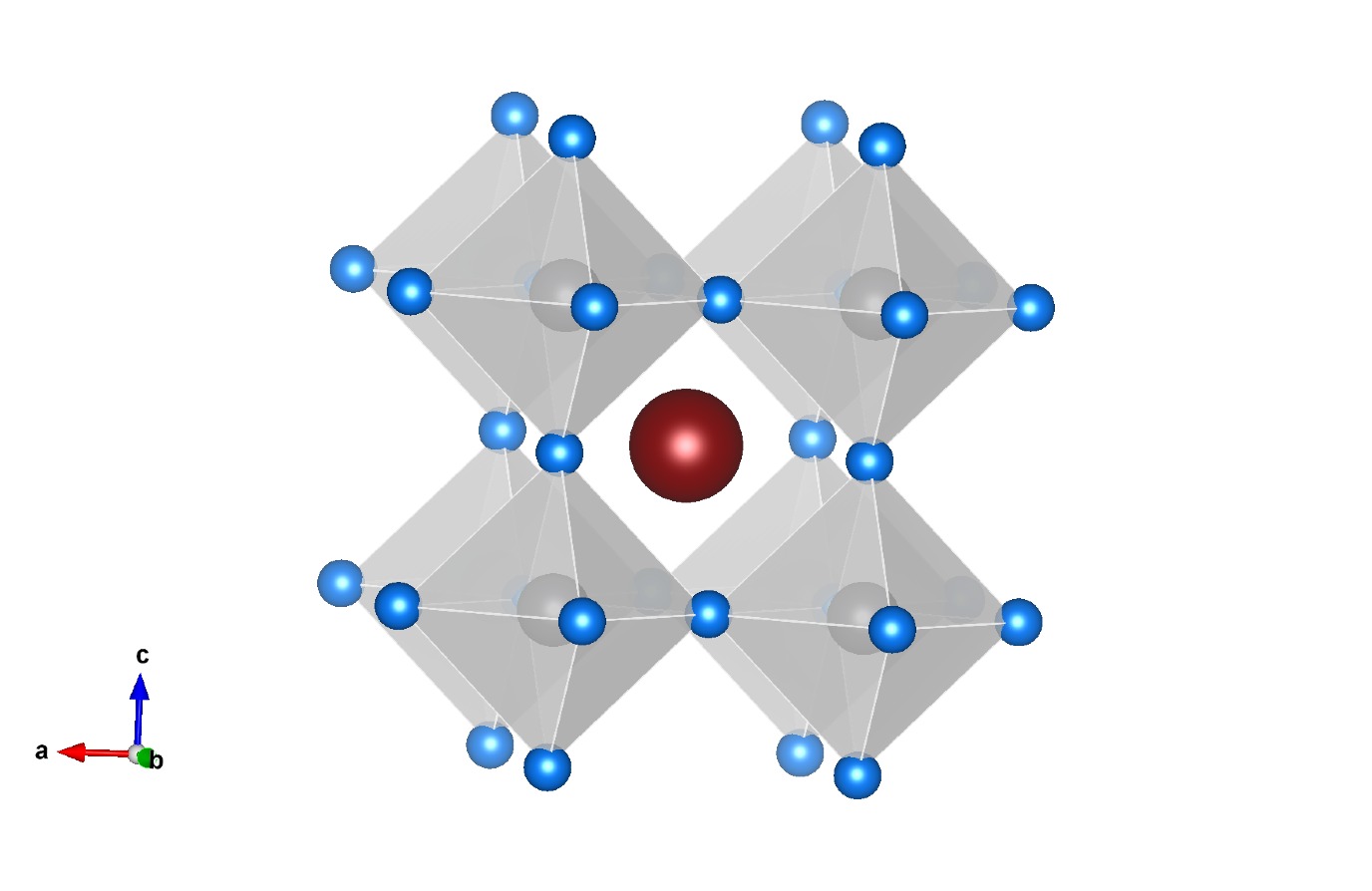
Though the term perovskite originally refers to a mineral with a specific structure (see text box), we also use the term perovskite to refer to the family of materials with a similar structure. By searching for other atoms that could fit into the same structure, Protesescu and her colleagues are developing new perovskites that are more stable while maintaining the same positive properties.
Lead vs tin
A good candidate to make perovskites lead-free is tin. Recently, Maria Loi, professor at the University of Groningen, presented lead-tin perovskites that convert light into electricity with an efficiency of 25.9 per cent. ‘This is currently the state of the art in the field,’ says Protesescu, who works closely with Loi. Protesescu is working on tin-based perovskite nanostructures and her PhD student Julia Kraft was able to successfully replace all lead atoms by tin.
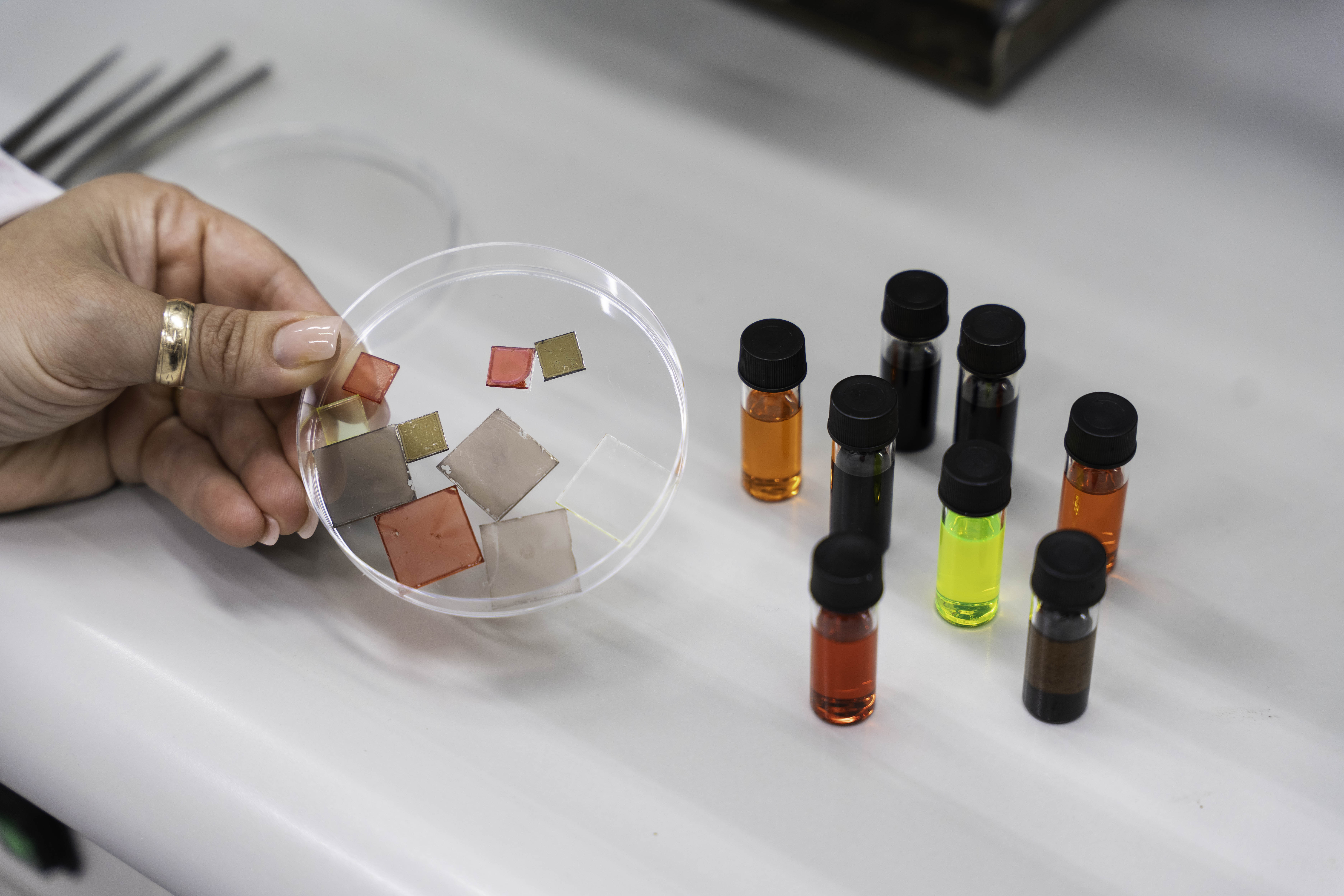
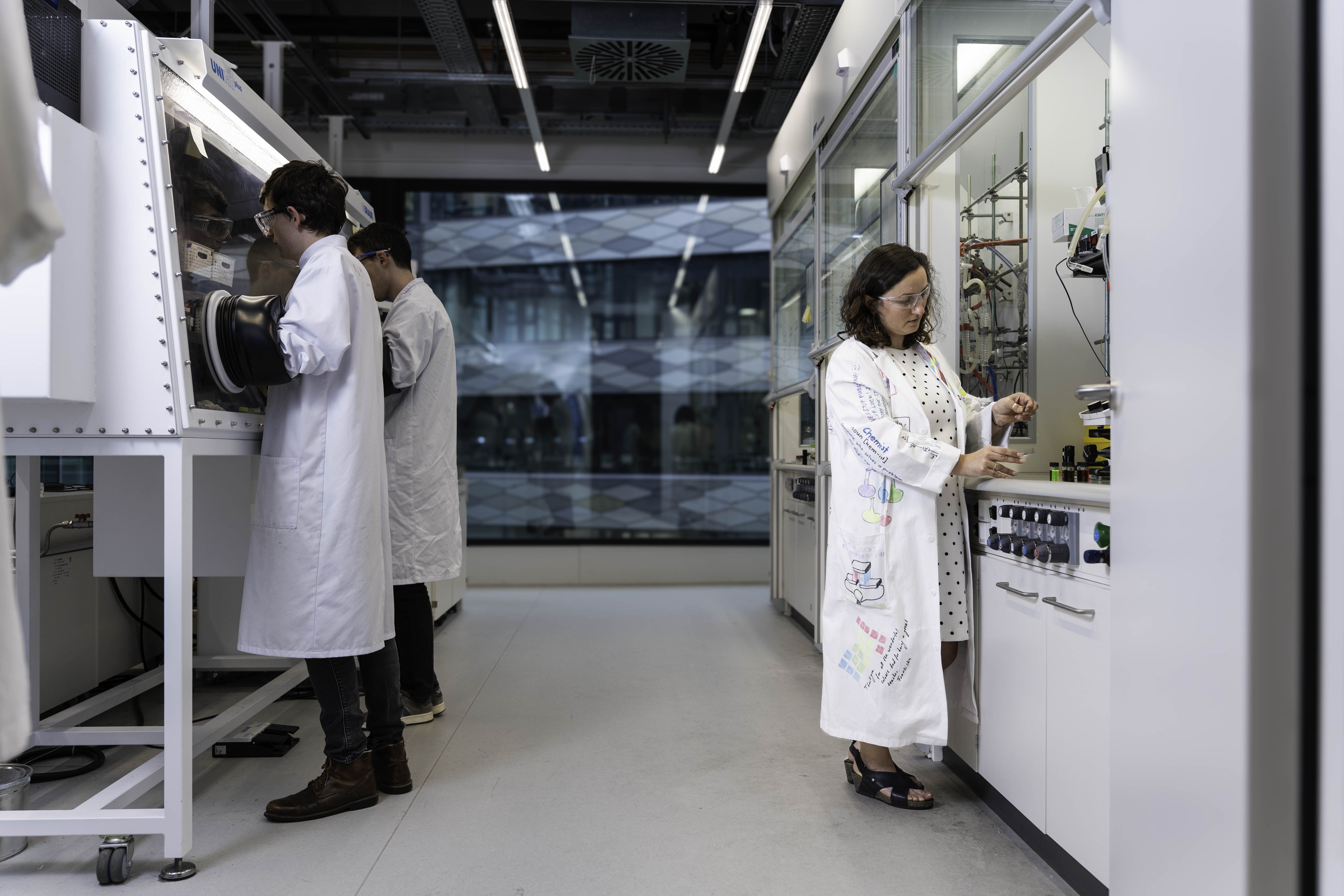
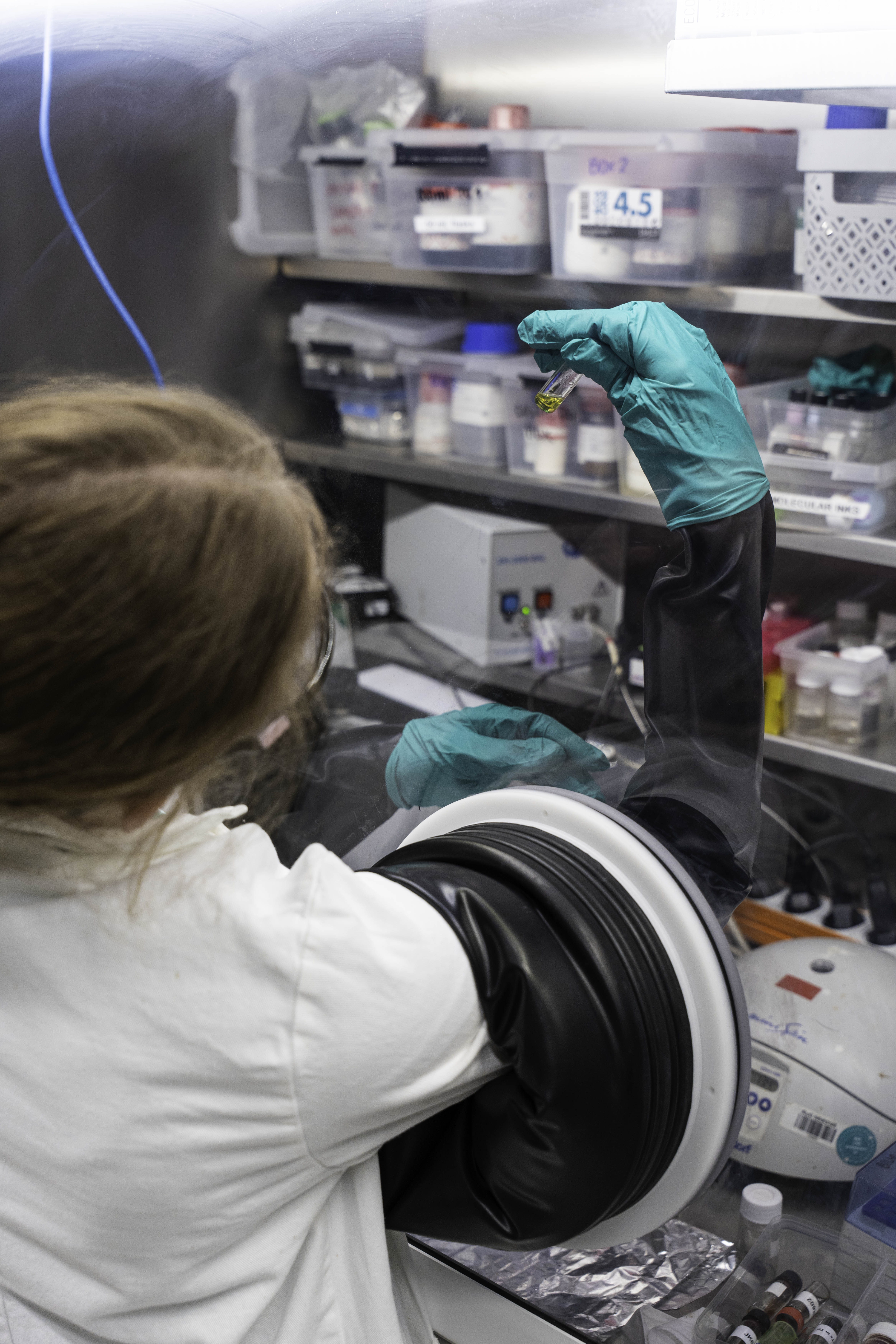

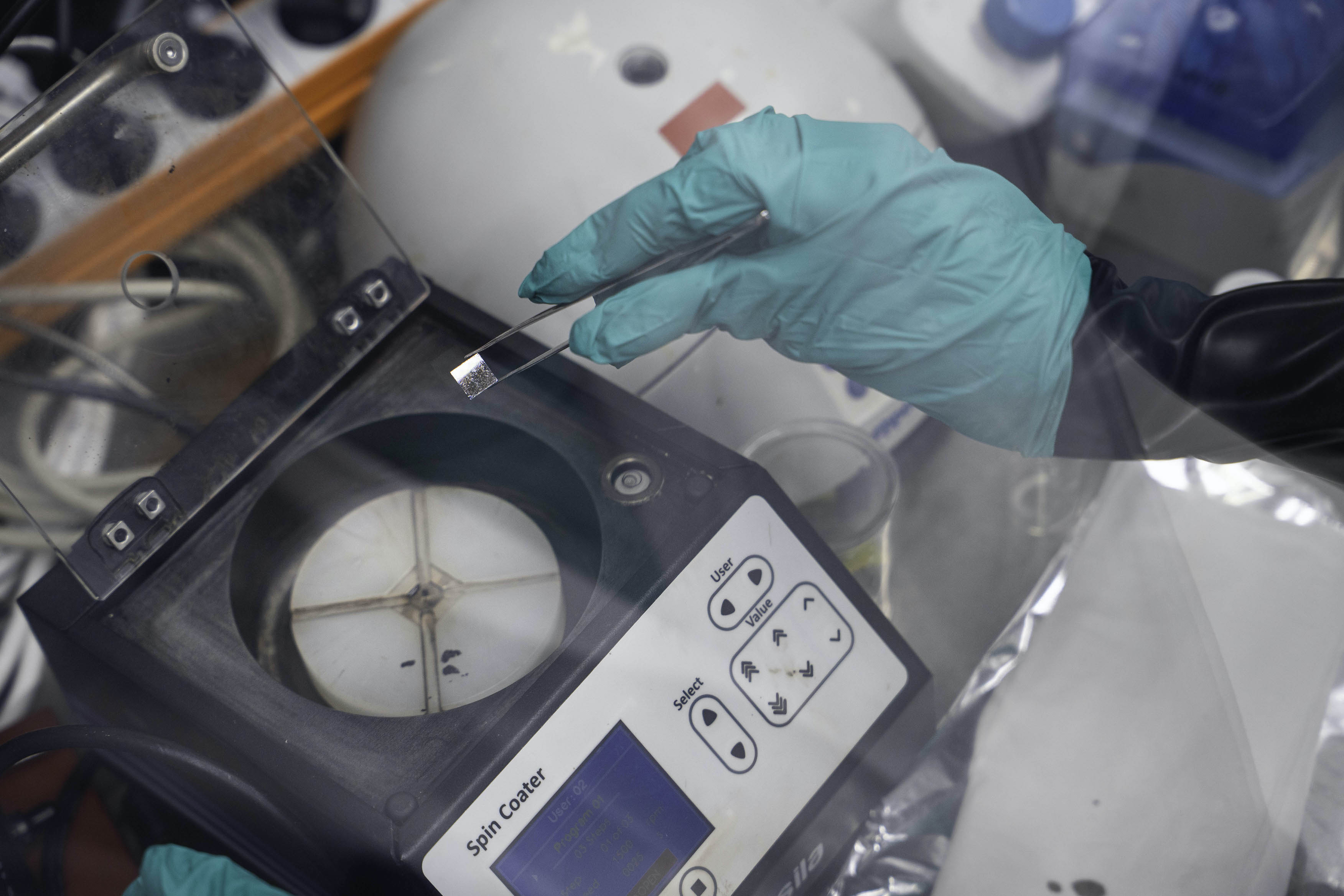
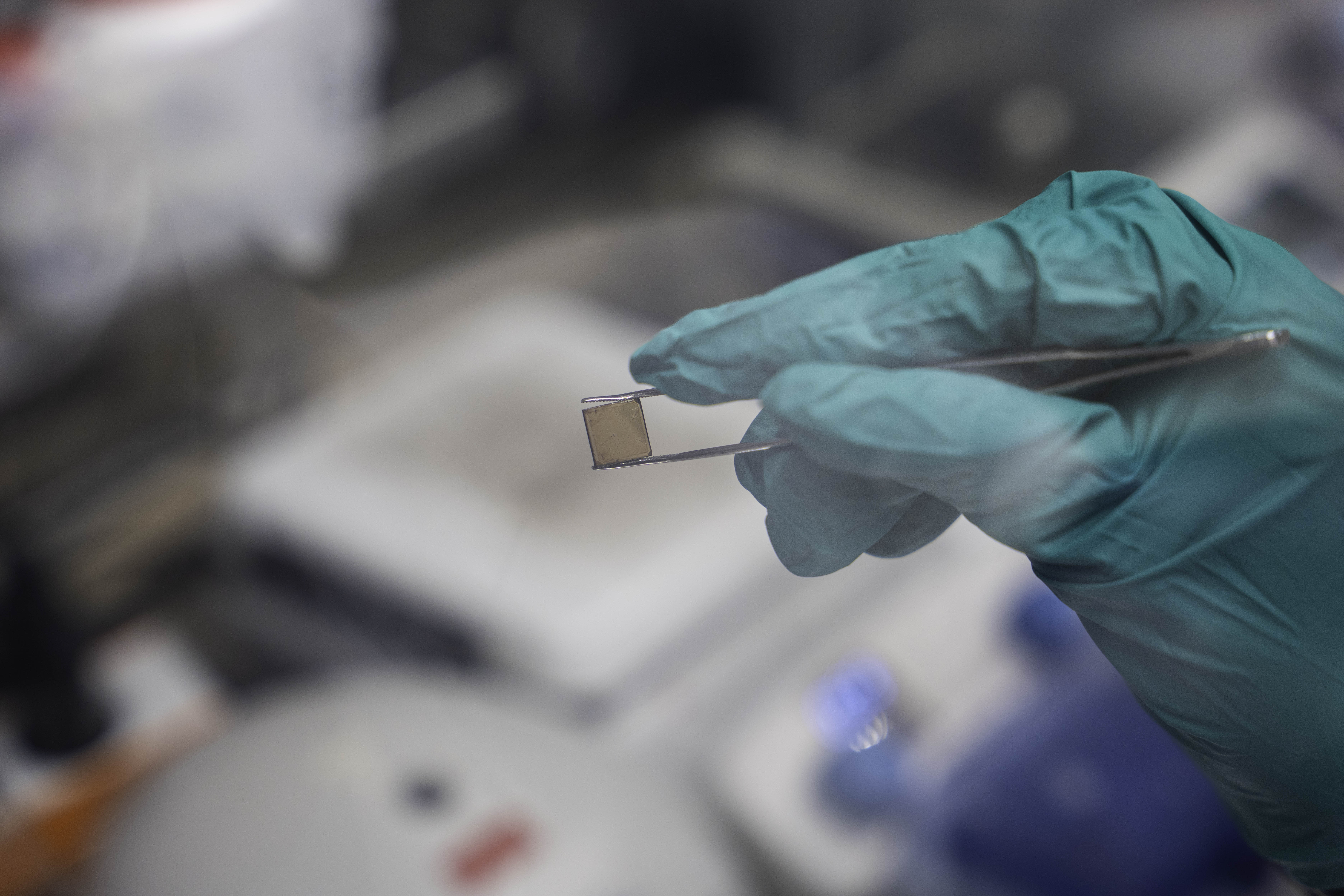
‘The next step is to go from a single crystal to an entire solar cell,’ Protesescu explains. Because her work focuses on the nanoscale, her group develops new perovskites in the lab and studies their properties, such as structure, stability, and its response to light. To see how these perovskites perform in real-world applications — for example LEDs, solar cells, or photodetectors — Protesescu turns them into thin films of nanocrystals. She then builds these films into working devices, putting their efficiency and potential to the test.
A chemist bakes a cake
Even with a simple process you can make something quite complex
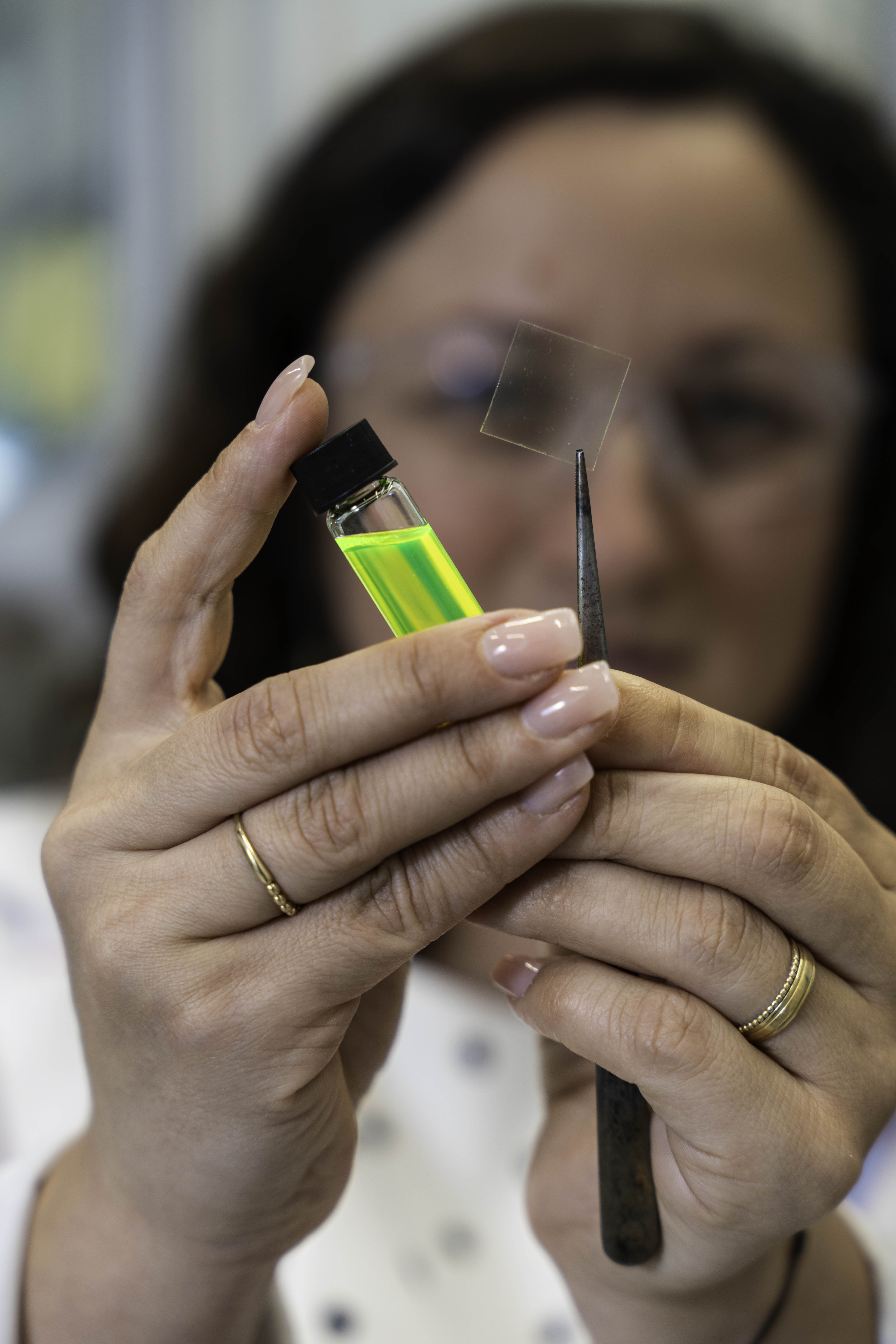
Protesescu is also going to work on a type of three-layer ink that contains the entire solar cell and all its components. To do this, she recently received a grant from NWO, which allows her to work on such an ink for the next five years. ‘A solar cell has an active layer in which perovskites convert sunlight to electric charge,’ Protesescu describes. ‘This active layer is sandwiched between two outer layers that conduct the electric charges.’ In the three-layer ink that Protesescu intends to develop, all materials for such a sandwich are already present.
The idea is that the different components of the ink all take the right position as a result of external stimuli, such as a change of acidity or temperature. ‘Just like the “magic cake” that I like to bake with my kids. I make it with a single batter, but in the oven – that needs to be at exactly 150 °C – the heavier ingredients sink to the bottom and you get a creamy middle layer and an airy top layer. So you see: even with a simple process you can make something quite complex.’
From fundamental research on new classes of materials to everyday applications: throughout her career, professor of photophysics and optoelectronics Maria Antonietta Loi has proved that this transformation doesn’t have to be difficult. Next to perovskites, she is currently focusing on quantum dots, which according to her can have very important applications in photodetector technology: ‘I expect that quantum dots devices may become soon a very important player in the detection of infrared light.’
Even in extreme circumstances, the green sulfur bacterium can still convert light into energy – and that could be a source of inspiration for a new generation of solar cells. Physicist Thomas La Cour Jansen of the University of Groningen studies how the structure of this unique bacterium allows it to harvest energy from light so efficiently.
Jan Anton Koster jokingly calls himself the ‘device doctor’. Fellow researchers from all over the world can approach this professor at the University of Groningen if they want to know why their solar cell is not as good as they had hoped.
More news
-
10 September 2026
Searching for the first generation of stars
-
10 September 2026
Wouter Vansteelant appointed Scientific Director of BirdEyes
-
08 September 2026
How do you spot a nice wool coat in a heap of discarded textiles?