
How chemistry can make robots move and feel
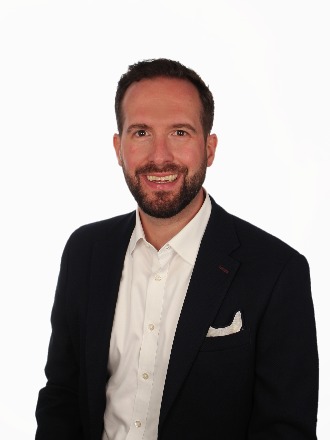
Organic chemist Michael Lerch is fascinated by ‘engineering solutions’ that can be found in nature. He is working on smart materials, such as heat-absorbing coatings to keep your house cool or coatings that absorb unpleasant odours. And he wants to make robots that move more smoothly by using smart materials that can act as a chemistry-based operating system.
FSE Science Newsroom | René Fransen
‘Smart materials are often designed by engineers, who mostly rely on available components. As a synthetic chemist, I can design and make the components I need.’ Lerch originally trained as a classic synthetic organic chemist in Ben Feringa’s lab, building molecular motors and switches. During his time as a postdoctoral researcher at Harvard University (US), he became fascinated by the way nature creates functional materials. ‘A car is made from some thirty thousand individual parts. By contrast, biological materials are made from large assemblies of cooperating cells.’
Arms that think for themselves
It may seem a bit odd for a chemist, but Lerch is fascinated by robotics. He finds the current robots big and clumsy. ‘The average robot has lots of sensors to scan the environment and actuators to move or respond, all controlled by a central computer. However, they can only execute what is pre-programmed in that central computer,’ says Lerch.
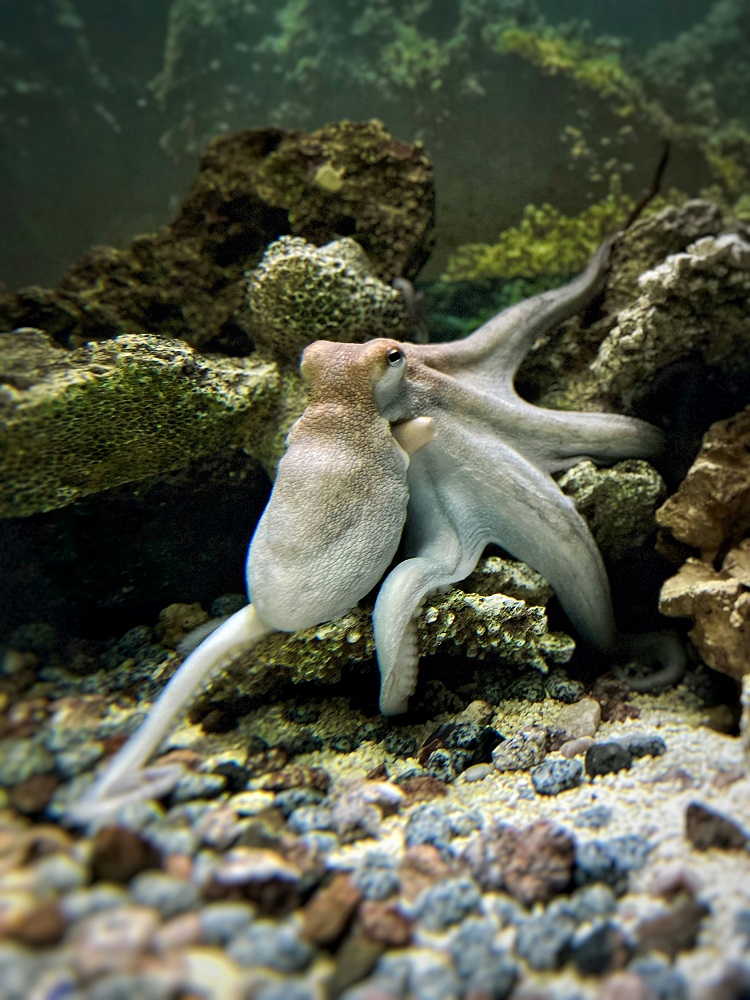
In nature, an octopus has a central brain, but its arms can ‘think’ for themselves. Humans also have decentralized systems. ‘When you stumble, a local reflex system will prevent you from falling.’ The brain may determine where we go, but those local systems keep us going. Such systems may also help robots to quickly adapt to their environment.
From chemistry council to philosophy salon
In addition to research and sustainability, Lerch is also active in policy development: ‘There are too few scientists involved in policy-making,’ he says. ‘That’s why I’m on the Advisory Board of the Dutch Chemistry Council, which promotes the interests of chemistry in the fields of academic research and education.’ He is also active in policy development at the Faculty of Science and Engineering (FSE).
Last year, Lerch co-organized the Royal Netherlands Chemical Society (KNCV) Next Generation Leaders in Chemistry summit, providing opportunities for reflection, leadership skills development, and networking. ‘I have previously hosted a number of Philosophy Salons in Switzerland, the Netherlands, and the US. I would love to create more such spaces for reflection on science.’
Moving microrobots
So how does such a decentralized system work? Lerch uses chemical reactions instead of computer chips. ‘We have, for example, molecules called mechanophores, which respond to stretching or pressure.’ These molecules will then activate a series of other reactions – a bit like a Rube Goldberg machine – to induce a specific movement. It is possible to design the reactions to store information, make calculations, or even execute a specific series of movements.
Lerch is currently able to use this chemical equivalence of a computer program to produce movement on the scale of just tenths of a millimetre. At this scale, controlling movement is quite a challenge since normal control mechanisms do not work at such a small scale. This would be useful in microrobots which are too small to accommodate computer chips. And the chemistry-based operating system could also be capable of creating a local response. For instance, when a robot hand has a sensor that detects a soft object, a locally generated chemical signal could adapt the grip strength.
An educational escape room
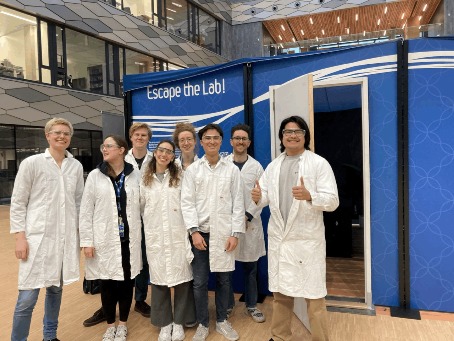
Lerch is one of a group of academics who have received grants for both research and education. He picks up a large chemistry textbook. ‘Like most educational materials in chemistry, this is full of pictures of white men.’ This led Lerch to collect stories on forgotten female chemists. ‘These stories are the backdrop for an escape room based on chemistry puzzles, which I created with a group of students.’ And he also enjoys lecturing students. ‘The best part is when I can see the penny drop and the student gets it.’
Socially engaged
And chemistry can do much more. Lerch also works on smart coatings, which might one day keep your house cool or absorb unpleasant odours. And perhaps smart paint could one day detect damage in a wall. But Lerch is also aware that chemistry – and science in general – has its dark side. ‘Research can use a lot of energy, and it produces some 2 per cent of global plastic waste.’
Green Labs in Groningen
In 2021, the Faculty of Science and Engineering (FSE) joined LEAF (Laboratory Efficiency Assessment Framework), a programme that helps scientists to conduct their lab work in a more environmentally friendly way. At the FSE, the Green Labs programme was launched as part of the LEAF project to make laboratories more sustainable. Lerch started this work together with Thomas Freese, who now has his own company, Circolide, which develops sustainable chemical building blocks with tunable properties. Freese also acts as a consultant for sustainable science. Lerch, Freese, and colleagues created a guidebook on laboratory sustainability and produced a policy roadmap for sustainable science.
Sustainability is also included in teaching on futureproof cities, through the ERASMUS+ project 'TOGETHER’. This European education project is a collaboration between the faculties of Science and Engineering, Economics and Business, and Law at the University of Groningen and colleagues from the University of Uppsala (Sweden), the University of Ghent (Belgium), the Ilia State University (Georgia), and the University of Bern (Switzerland). Lerch also collaborates with colleagues from the Faculty of Behavioural and Social Sciences to study how students can make sustainable choices in the lab.
When he started his tenure track position in Groningen, he was asked to supervise several PhD students carrying out projects aimed at making research more sustainable. ‘I have always been socially engaged, so I was eager to contribute. The project gained momentum and now, the University of Groningen has become a beacon in the Green Labs movement.’
More news
-
10 September 2026
Searching for the first generation of stars
-
10 September 2026
Wouter Vansteelant appointed Scientific Director of BirdEyes
-
08 September 2026
How do you spot a nice wool coat in a heap of discarded textiles?