
NWO grant enables Groningen researchers to make space infrastructure safer
The University of Groningen (UG) will receive EUR 368,000 as part of a major NWO-funded project to improve the tracking and characterisation of objects in Earth orbit. The Groningen contribution is led by Dr Gijs Verdoes Kleijn of the Kapteyn Astronomical Institute, with Dr Eduardo Balbinot (Kapteyn Astronomical Institute and Center for Information Technology) joining as a cooperation partner.
The project, Resident Space Object Tracking For Fusion, Inference, and Characterisation (RSO TraFFIC), is led by Dr Steve Gehly of Delft University of Technology and brings together the universities of Delft, Groningen, Leiden and Radboud, the Royal Netherlands Aerospace Centre (NLR) and the space companies Dunedain and Ecosmic. The project has received a total NWO grant of up to EUR 2.06 million and will run for a maximum of six years. The total project budget, including co-financing, is approximately EUR 2.57 million.
Improving awareness of objects in orbit
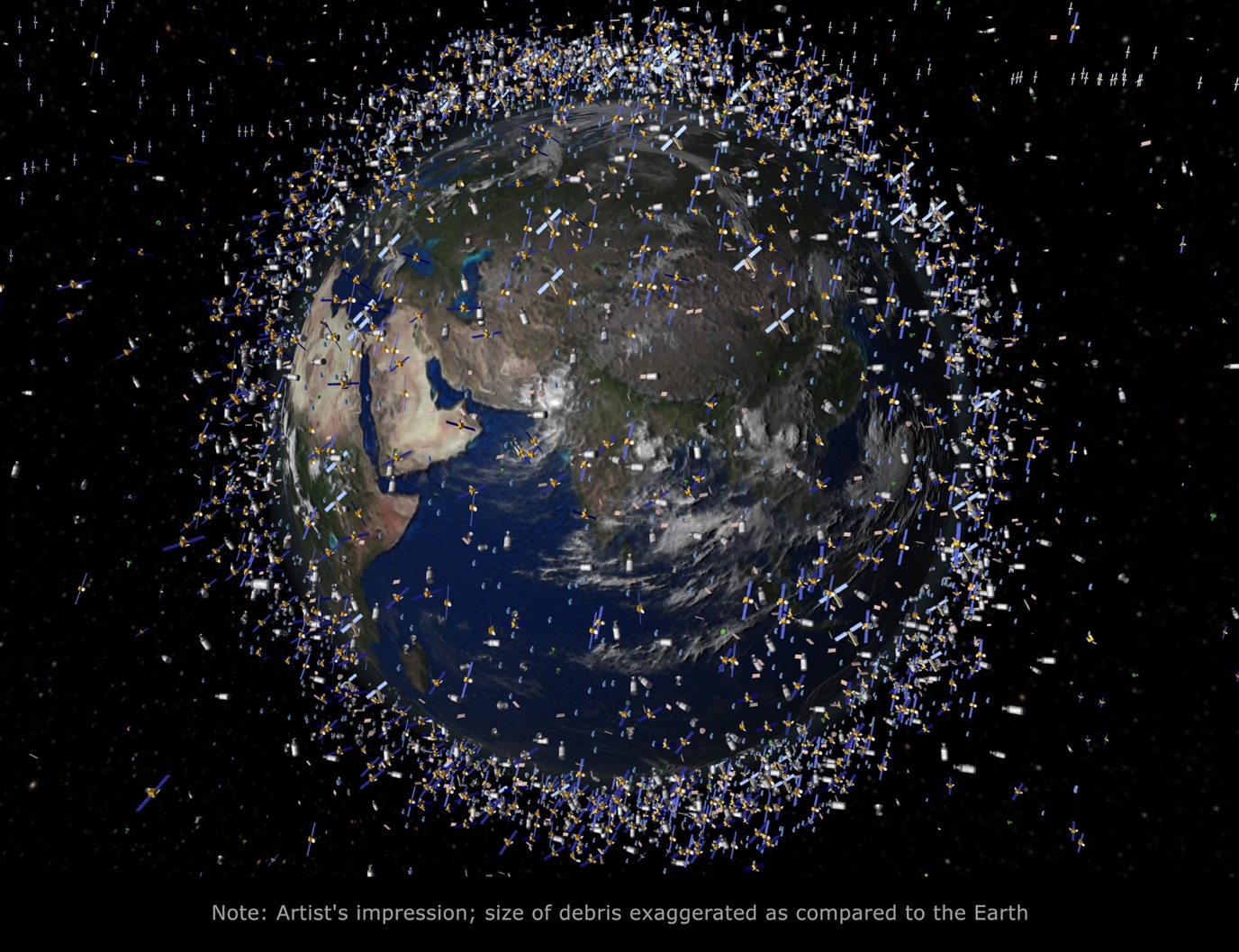
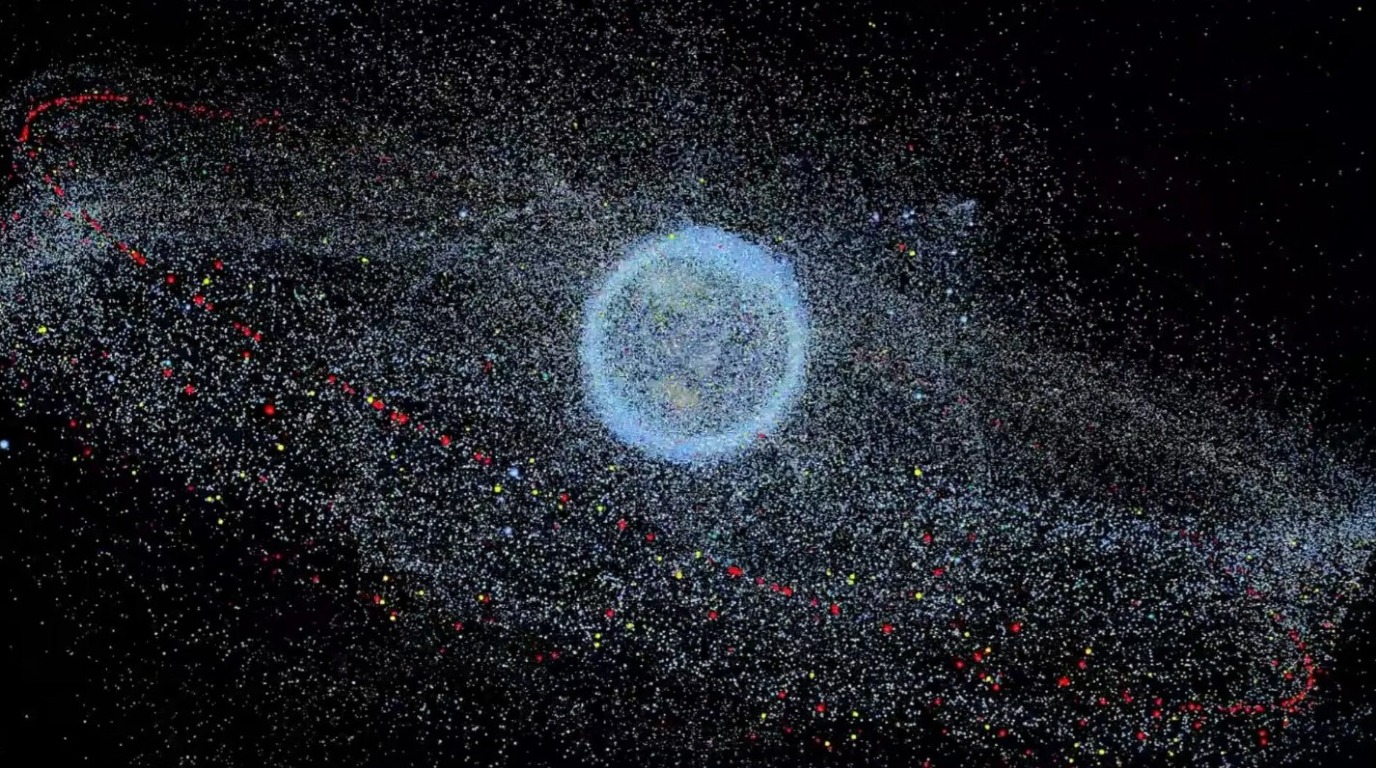
Modern society depends on space-based infrastructure, but Earth’s orbit is becoming increasingly crowded: about 40,000 objects are catalogued, two-thirds of all spacecraft ever launched have gone up in the past seven years, and more than a million untrackable fragments between one and ten centimetres—each large enough to destroy a satellite—are in orbit. This makes it more difficult to monitor what is happening in space and to prevent collisions.
The RSO TraFFIC project will address these challenges by combining data from different sensors and developing new sensing techniques and algorithms to track objects and examine the legal and governance frameworks needed to manage Earth orbit as a shared resource in a safe, sustainable and responsible way.
Groningen’s role: data and artificial intelligence
The Groningen team leads the project’s work on data management and AI-based analysis, adapting astronomical AI foundation models to recognise satellite trails in telescope images and extract signals from rapid brightness measurements. These capabilities will be built into GOOD (General Open Orbital Dynamics), an open-science platform developed jointly by Delft University of Technology and the University of Groningen. This platform will serve as the project’s central data and analysis hub and is hosted at OmegaCEN using the UG's Center for Information Technology research data-handling facilities.
Keeping track of tens of thousands of objects in orbit is fundamentally a data problem, and it looks very much like the problems we already solve for large sky surveys such as Euclid. The same infrastructure and machine-learning tools that let us map the Milky Way can help keep space safe.
Towards safer and more sustainable space operations
The project is expected to contribute to improved space situational awareness: the ability to identify, track and understand objects in orbit. Better information about satellites and debris can help prevent collisions, support safer space operations and contribute to the long-term sustainability of the space environment.
The researchers will also consider how scientific and technological advances can be translated into practical governance and policy. In this way, RSO TraFFIC aims not only to improve the technical monitoring of space objects, but also to support the development of international standards and frameworks for responsible use of Earth orbit.
NWO and the KIC programme
The grant was awarded by the Dutch Research Council (NWO) under the KIC call Robust and resilient space infrastructure for a secure Netherlands, part of the Knowledge and Innovation Covenant (KIC) 2024–2027, which strengthens the Netherlands’ technological and scientific capacity in the space sector by supporting research into critical space technologies while also requiring attention to legal, ethical and strategic-security issues.
More information
More news
-
01 October 2026
10 years of the Nobel Prize Ben Feringa
-
01 October 2026
Making stardust in the lab
-
25 September 2026
NASA selects infrared space telescope PRIMA featuring Dutch technology