
Two ENW-Ms for new quantum materials and laser-based carbon-14 measurement
Both Dr. Roberto Lo Conte and Professor Harro Meijer receive an ENW-M grant. Lo Conte receives an M-1 of EUR 400,000 for experimental research on new quantum properties required for the design of future technologies such as quantum computers. The main scope is the realization of desired quantum properties by combining two-dimensional magnets with engineered magnetic states with superconducting substrates.
Meijer has been awarded an M-1X of EUR 798,000 for a new laser-based instrument to perform faster and easier measurements at the university's carbon-14 center. The revolutionary features of the instrument, using a new optical technique, enable continuous 14C measurements of for example CO2 emissions from coal, oil, and gas.
These are two of the sixteen applications awarded by the NWO in the Dutch national Open Competition ENW-M. The ENW M grant offers researchers the opportunity to develop creative, high-risk ideas and bring about scientific innovations in all disciplines of the Exact and Natural Sciences.
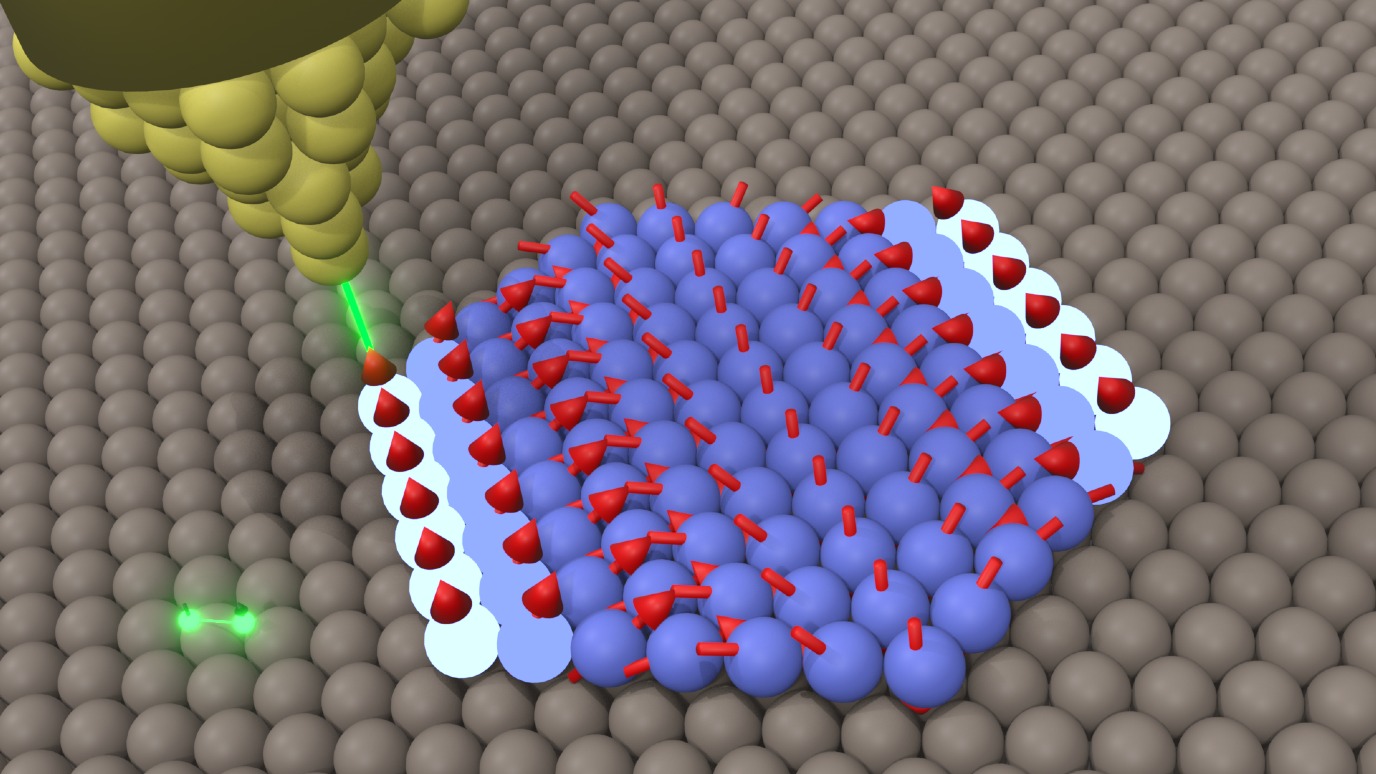
A magnetic twist on superconductors: Making the quantum materials of the future
Dr Roberto Lo Conte (RUG)
Materials with engineered quantum properties are at the core of future quantum technologies, such as quantum computers. A very promising avenue for the realization of novel quantum properties is to combine atomically thin 2D magnets with superconductors. We will first engineer unconventional magnetic states, with twisted magnetic moments, by preparing bilayers of different 2D magnets. Subsequently, we will put the engineered magnetic bilayers in direct proximity to superconducting substrates, allowing for the emergence of the desired quantum properties stemming from the interplay between magnetism and superconductivity.

Radiocarbon measurements made easier
Prof. Dr Harro Meijer (RUG)
A new, laser-based instrument makes measuring radiocarbon faster, easier and cheaper. The radiocarbon center at the University of Groningen will soon operate such a new instrument. That is good news for dating for archaeologists, and for a variety of other applications that use carbon-14. The new instrument can also be placed in a measurement station, and can then be used to continuously determine CO2-emissions from coal, oil and gas. Thereby it keeps a finger on the pulse for the energy transition.
Upon awarding an ENW-M-1X, the NWO requests an additional investment from the relevant university. In addition to this ENW-M-1X, the University of Groningen contributes EUR 210,000 for carbon-14 measurement.
More news
-
17 September 2026
NWO-KIC funding for new route to sustainable biocatalysts
-
15 September 2026
Enzymes break down textile fibres into useful resources
-
10 September 2026
Searching for the first generation of stars