
Two Groningen researchers receive NWO Open Competition Science-M grants
Jean-Christophe Billeter and Andrea Giuntoli, both researchers at University of Groningen, have received an NWO Open Competition Domain Science-M grant. Billeter receives an M1 grant of EUR 408,000 for research into how social interactions between fruit flies influence reproductive behaviour. Giuntoli is co-applicant on an M2 grant and will receive roughly EUR 400,000, for research combining molecular simulations with experiments.
Social flies and reproduction
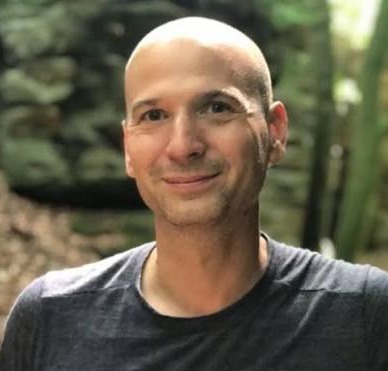
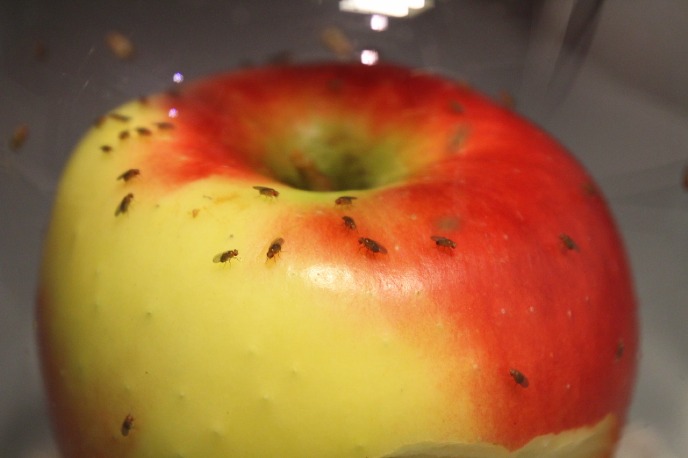
Jean-Christophe Billeter's project, of the Groningen Institute for Evolutionary Life Sciences, investigates how social interactions between fruit flies influence their reproductive behaviour. In particular, Billeter and his team will study how the presence of other flies stimulates female fruit flies to lay eggs.
Wired for Company: Decoding How Social Cues Override Environmental Signals in Drosophila melanogaster
Wired for company: Why do animals thrive in groups? Research in fruit flies reveals a surprising mechanism: the mere presence of others can reprogram fundamental physiological processes. Female flies lay more eggs when surrounded by peers, even under conditions that normally suppress reproduction. This shows an unexpected integration of social and environmental cues- companionship and light-within shared neural circuits. By mapping how the brain's clock neurons and visual pathways detect and respond to social presence, the study will uncover a novel mechanism of social modulation. These insights could redefine how we understand social influence on brain function and behavior.
Simulations meet experiments
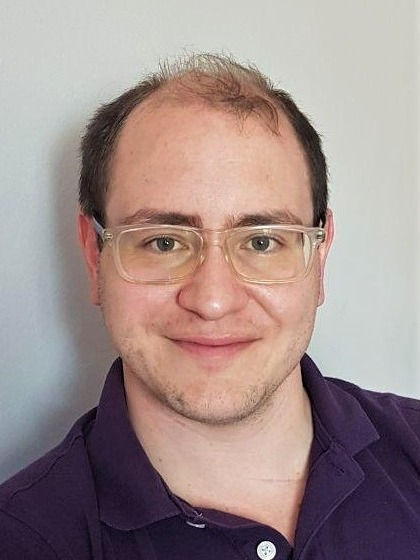
Andrea Giuntoli, of the Zernike Institute for Advanced Materials, is co-applicant on an M2 grant of approximately EUR 800,000. About half of the grant, roughly EUR 400,000, will come to the University of Groningen. The project is a collaboration with Wageningen University & Research (WUR), where the experimental part of the research will take place.
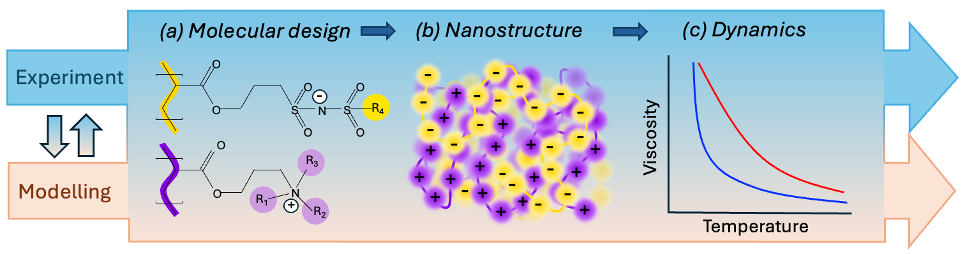
The researchers will study the same materials from both an experimental and a computational perspective. Giuntoli’s group will contribute computational models based on molecular dynamics simulations, while colleagues at WUR will carry out the experiments.
Charging up glasses: unveiling the glass transition in ionically bonded polymers
Dr Andrea Giuntoli & Prof Jasper van der Gucht (University of Groningen / Wageningen University & Research)
From window glass to modern plastics, glass forming materials play a central role in our society. This project explores a novel type of polymer glasses, based on charged polymers crosslinked by ionic bonds. By combining advanced experiments and multiscale modelling, the applicants will unravel the unusual properties of these materials. This will lead to a fundamental understanding of how charge interactions affect the glass transition, and to design rules for creating a novel generation of polymer glasses, which combine the stability and damping properties of crosslinked plastics with the recyclability and processability of window glass.
About the M-grants
The NWO Open Competition Domain Science-M programme funds curiosity-driven, high-quality fundamental research in and across the fields covered by NWO Domain Science: earth sciences, astronomy, chemistry, computer science, life sciences, physics and mathematics. Researchers can apply individually or in collaboration, and proposals may be monodisciplinary, multidisciplinary or interdisciplinary.
NWO, the Dutch Research Council, is the main national funding organisation for academic research in the Netherlands. Through its Domain Science (Exacte en Natuurwetenschappen, ENW), it supports excellent, researcher-initiated research across the natural and exact sciences.
More news
-
22 October 2026
Seven UG and UMCG researchers awarded Vidi grant
-
22 October 2026
KNAW Early Career Award for two UG researchers
-
22 October 2026
How someone with bad intentions could employ AI