
How do we keep medicines out of the environment?
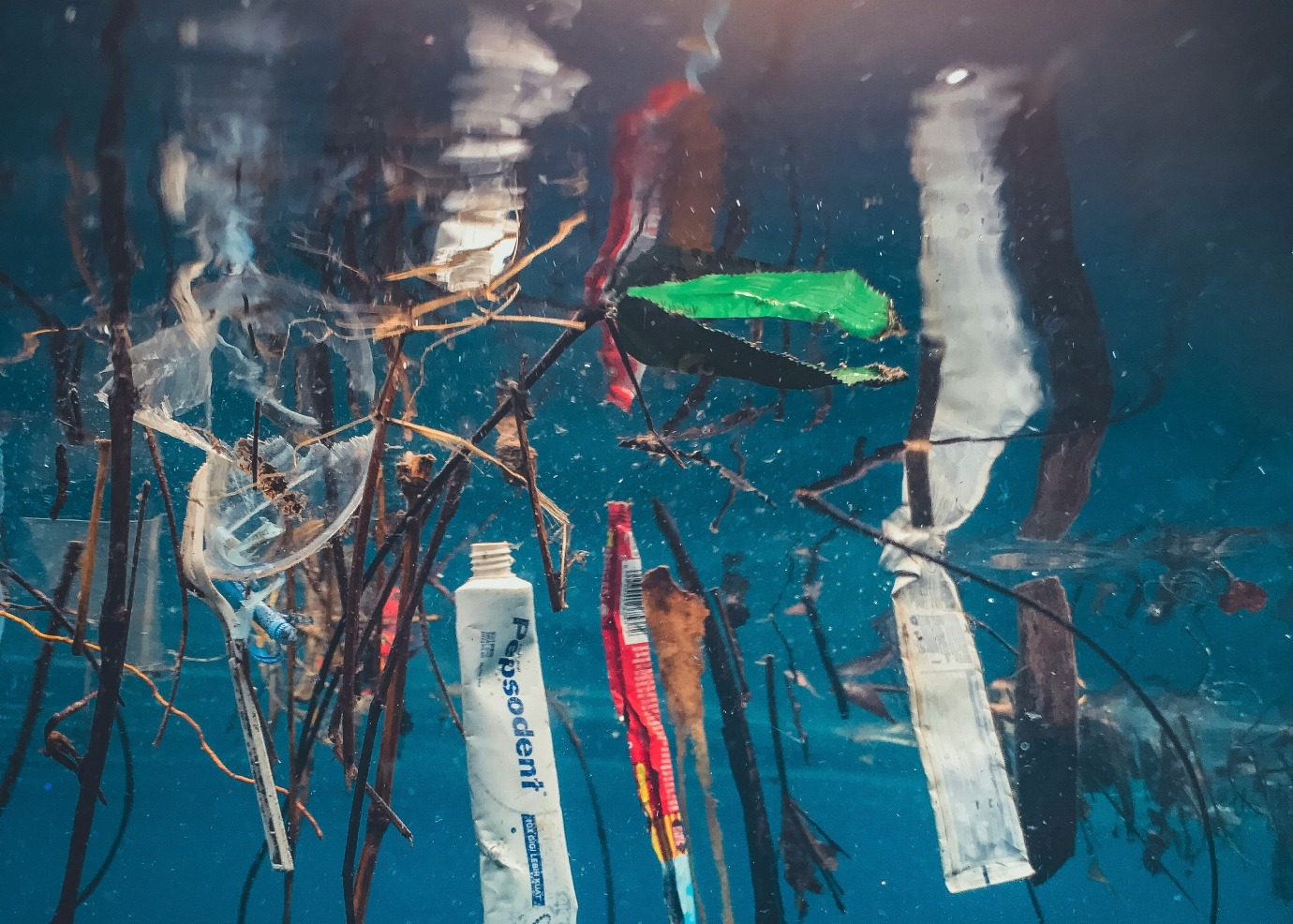
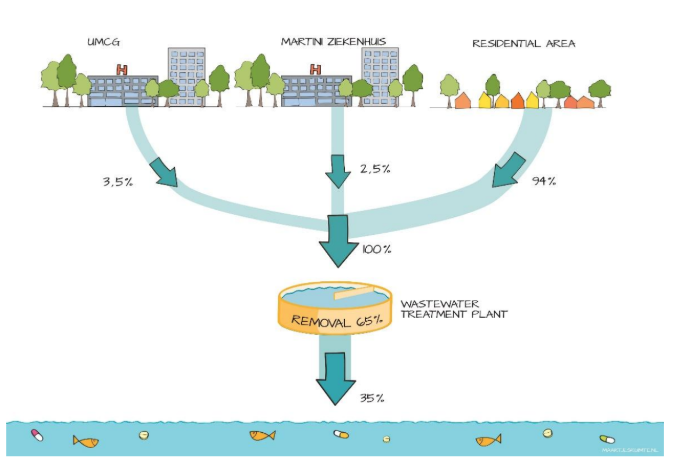
Painkillers, contraceptives, antibiotics, antidepressants – we take quite a lot of them. Once these medicines have been taken, however, the active ingredients or their breakdown products leave our bodies and enter the sewerage system through the toilet. These pharmaceutical residues ultimately reach our rivers and other surface waters, sometimes in concentrations that pose a risk to organisms in the environment. ‘Given that we share waterways in North-Western Europe, such residues from upstream countries eventually end up here’, observes Eelko Hak, professor of pharmaco-epidemiology. ‘We therefore need a collaborative European approach that brings together experts in water technology and pharmacy.'
FSE Science Newsroom | René Fransen
Medicines that end up in surface water can affect aquatic animals and plants. For example, hormones from contraceptives have an effect on the reproduction of fish, and antidepressants can change their behaviour and affect the production of eggs and sperm. Furthermore, pharmaceutical residues must be removed before surface water or groundwater can be used as drinking water, which is a costly process. The Interreg-NWE project PREWAPHARM (Prevention of pollution of Water by Pharmaceuticals) is therefore aimed primarily at reducing the volume of pharmaceutical residues in our sewerage system.
Despite their extensive knowledge of the problem, Hak and his European colleagues have yet to grasp its true magnitude. Hak explains, ‘Official measurements of water quality – for example, by the Waterboards (Waterschappen) and Rijkswaterstaat – record where and when pharmaceutical residues are present. The risks of these residues remain largely unknown, however, due to a lack of environmental thresholds for them.'
How to improve the mapping and management of pharmaceutical water pollution
In collaboration with UG colleagues Katje Taxis (professor of pharmacotherapy and clinical pharmacy), Frank Klont (assistant professor of personalized pharmacotherapy), and Talitha Feenstra (professor of pharmaco-economics), along with Patricia Van den Bemt (professor of clinical pharmacy at UMCU/UMCG, Hak is leading the pharmaceutical component of a large European project aimed at mapping and managing this form of water pollution. Within the European project PREWAPHARM, Hak and his colleagues from the Groningen Research Institute of Pharmacy (GRIP) are addressing several research topics, each aimed at reducing the environmental impact of medicines.
-
Visualizing and benchmarking the dispensing rates of the most important ecotoxic medicines by pharmacies
-
Identifying the medicines with the highest ecotoxicological impact on the environment
-
Investigating how medicines are metabolized in the body and identifying the pharmaceutical ingredients that could end up in surface water
-
Exploring how pharmacies can reduce the use of ecotoxic medicines, possibly by replacing them with medicines that pose less environmental risk
-
Analysing the costs and benefits of pharmacy interventions aimed at reducing damage from ecotoxic medicines
Experts in water technology are collaborating to develop different filtration and measurement techniques.
Identifying the most common culprits
Hak and his team aim to identify the most commonly used drugs in North-West Europe. Although more than 2,000 different medicines are available at pharmacies, only around 150 have been measured in surface waters. Together with colleagues in the Netherlands (e.g., from the Dutch National Institute for Public Health and the Environment; RIVM), as well as in Germany, Belgium, and Ireland, Hak is compiling a top-25 priority list of frequently prescribed drugs that could affect the aquatic environment. This will make it possible to target water-treatment and prevention efforts at the most common culprits. Once the list has been completed (somewhere this autumn), the next step will be to identify the best ways to mitigate their risks. Collaborating water technologists can use various filtration techniques to examine removal rates.

Medicines that pose a risk to organisms in the environment
Not all drugs pose the same risks to organisms in the environment. Some medicines have been designated as hazardous, meaning that they are problematic even at low concentrations. Those that are rarely prescribed nevertheless do not constitute a significant problem. Four classes of drugs may have a negative effect on the environment and are widely prescribed and clinically effective:
-
Hormones (e.g. contraceptives) may affect reproduction in fish.
-
Ibuprofen/diclofenac/naproxen (non-steroidal painkillers) may also affect fish.
-
Antibiotics in surface water may cause resistance in bacteria.
-
Certain anti-depressive medications may change the behaviour of aquatic animals.
Prevent, Reduce, Remove
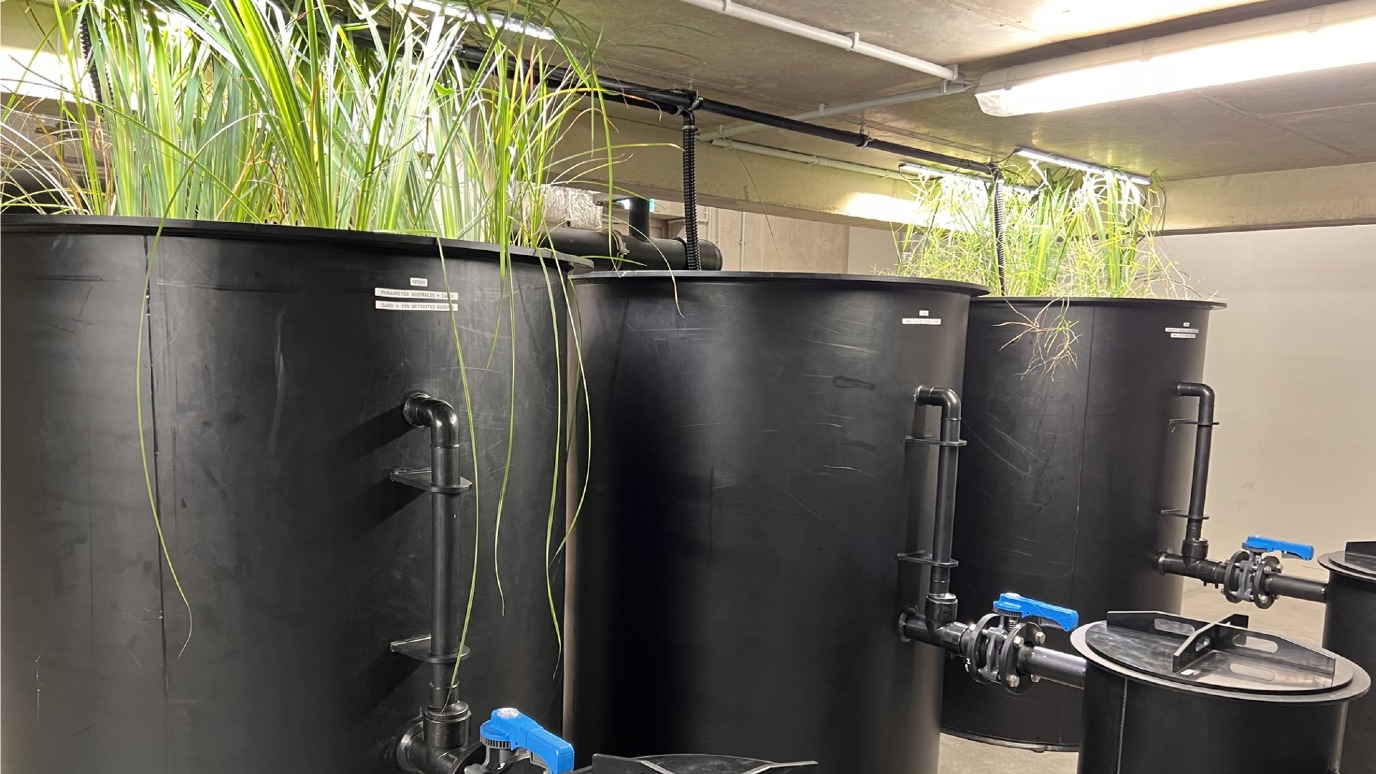
The researchers are considering various risk-mitigation options, tracing the entire chain back from sewerage to the patient, to the pharmacy, to the doctor, and to pharmaceutical companies. Hak explains, ‘One option could be to filter out medicines from the sewerage at places where they are most abundant, like at a hospital or at a nursing home. We would like to learn whether this is cost-effective and actually necessary. Drug removal currently takes place primarily at water treatment plants’. By the time medicines arrive at these plants, however, they are strongly diluted, thus making the removal process more difficult. Moreover, current systems are not always designed to remove micropollutants. The scientists are therefore examining the cost-effectiveness and sustainability of installing a filter under a pharmacy sink or at the end of a sewerage pipe.
A different educational approach to reducing pharmaceutical residues in our water could be to raise awareness amongst patients. ‘Surplus drugs can be handed in at most local pharmacies, but people often throw them in the bin or flush them down the toilet’, notes Hak. A campaign to alert people to the dangers of disposing surplus medication through the toilet would help. ‘This was done years ago, but it requires a sustained effort in close collaboration with the pharmacists.'
Antidepressants with PFAS
Prevention can also begin in the pharmacy or the doctor’s office. Hak observes, ‘In some cases, different medicines are available for a given treatment, with different environmental impacts.’ The RIVM is developing an assessment framework for comparing the sustainability aspects of various pharmaceuticals. Professional organizations like the Royal Dutch Pharmacists Association (KNMP) and the Dutch College of General Practitioners (NHG) are part of a user group for incorporating this assessment system into their guidelines. This process requires education on sustainable drug use for all parties – from students to professionals. Hak and his colleagues will be providing this as well.
Education
In 2022, Hak and colleagues from universities in Ghent, Gdansk, and Lille received an Erasmus Mundus grant to set up a two-year international Master’s degree programme in Sustainable Drug Discovery. More than 40 students have already obtained Master’s degree certificates to work in industrial and academic settings to make medicines more sustainable by design.

One long-term solution could involve designing environmentally friendly drugs. ‘For example, the antidepressant fluoxetine contains a forever-chemical in the PFAS group. This is done to stabilize the drug and ensure that it reaches its target intact’. Designing sustainable drugs could help to reduce the environmental pressure of medicines.
Hak elaborates, ‘Many different parties are involved in the chain – from pharmaceutical companies, pharmacists, and doctors to experts from water treatment plants. In the NWE region, we are working on the entire chain. We need to understand where problems arise, and then address them efficiently together’.
More news
-
10 September 2026
Searching for the first generation of stars
-
10 September 2026
Wouter Vansteelant appointed Scientific Director of BirdEyes
-
08 September 2026
How do you spot a nice wool coat in a heap of discarded textiles?