
Making stardust in the lab
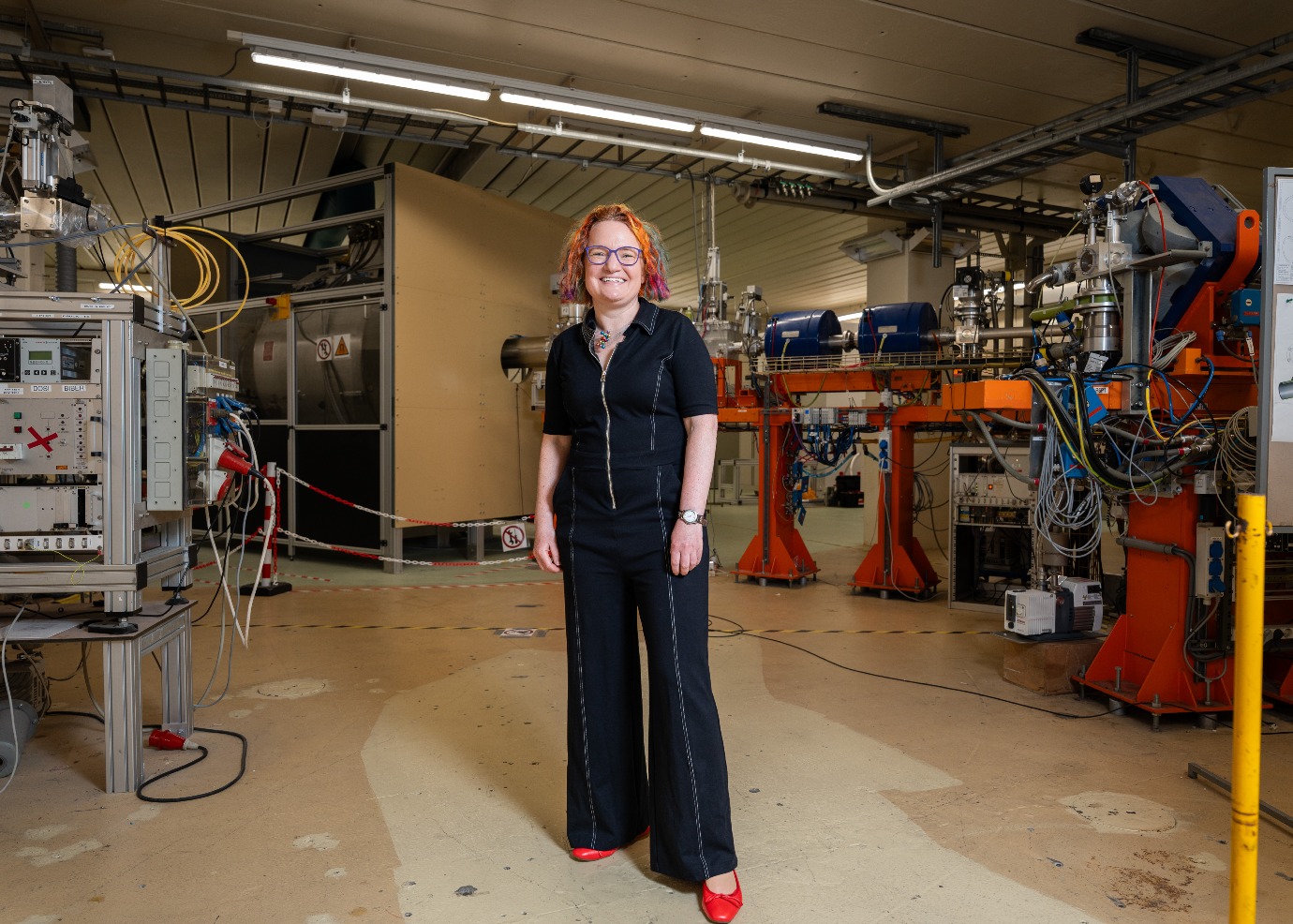
Physicists have developed models which simulate the extreme processes that are required to make the heaviest atoms. But there is not enough experimental data to be sure those simulations are correct. Nuclear chemist Julia Even wants to collect this missing data, and thus increase our understanding of how the heaviest elements came into being.
FSE Science Newsroom | text René Fransen | photography AV-services RUG
All but the lightest atoms in the universe began their life in the heart of a star. The Big Bang that started the Universe mainly produced hydrogen and helium. These elements formed the first stars, and inside those, nuclear fusion produced heavier elements. ‘This produces the elements up to iron’, explains Even. ‘Elements beyond iron are formed in processes which can take place, for example, in a supernova or a merger of neutron stars.’ This means that all matter, including our bodies, is made up of ‘stardust’.
Exotic nuclei
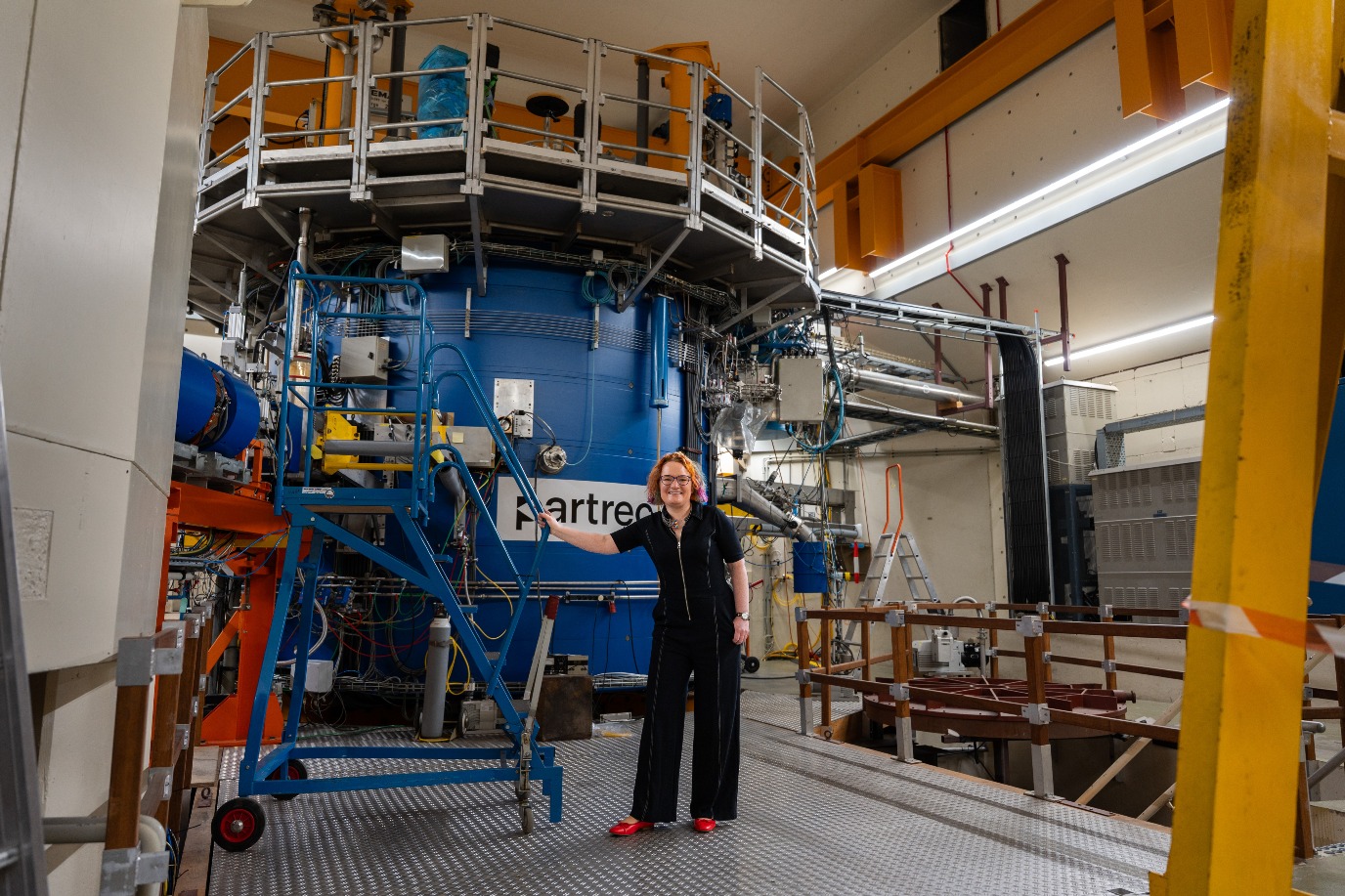
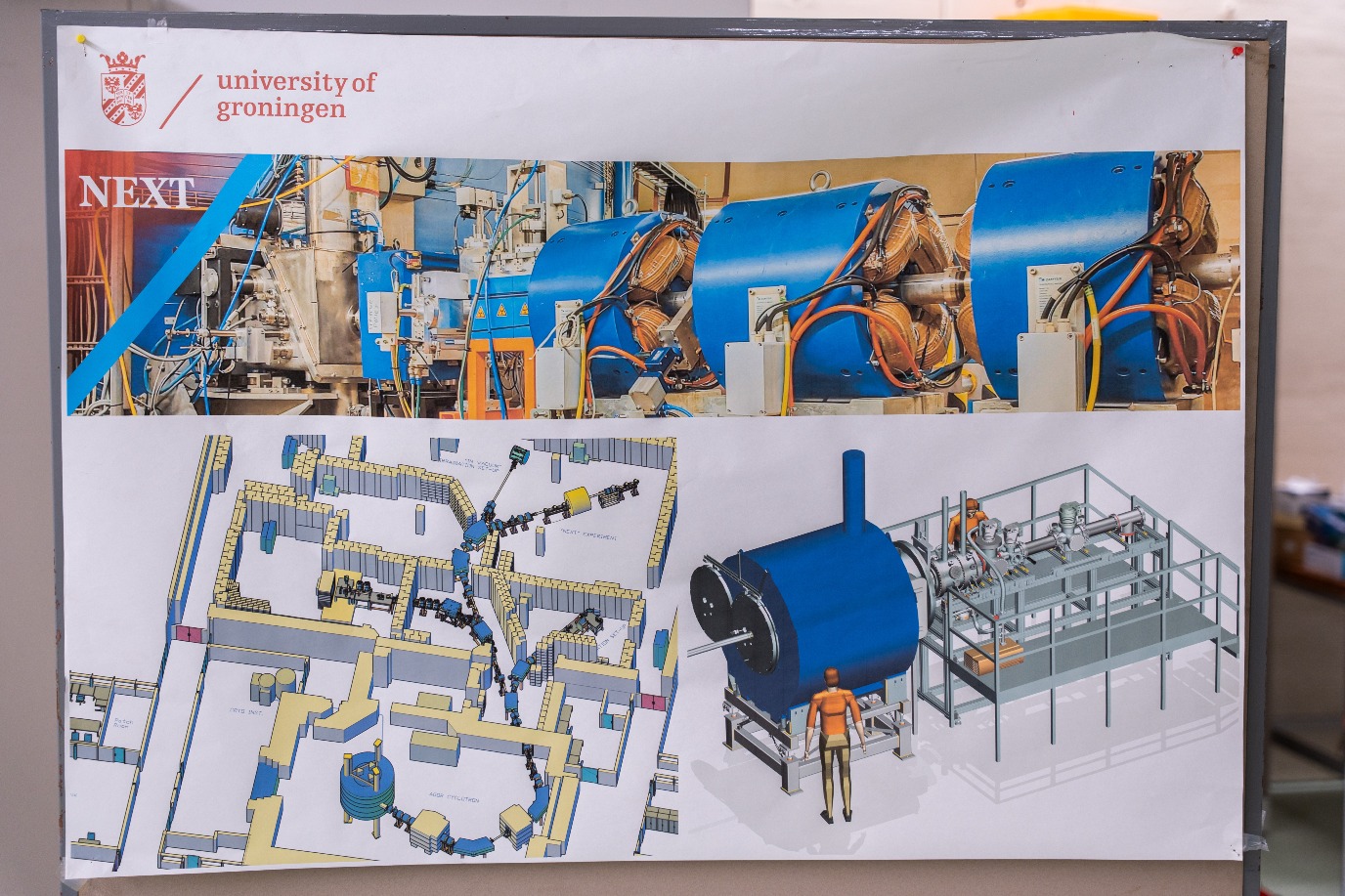
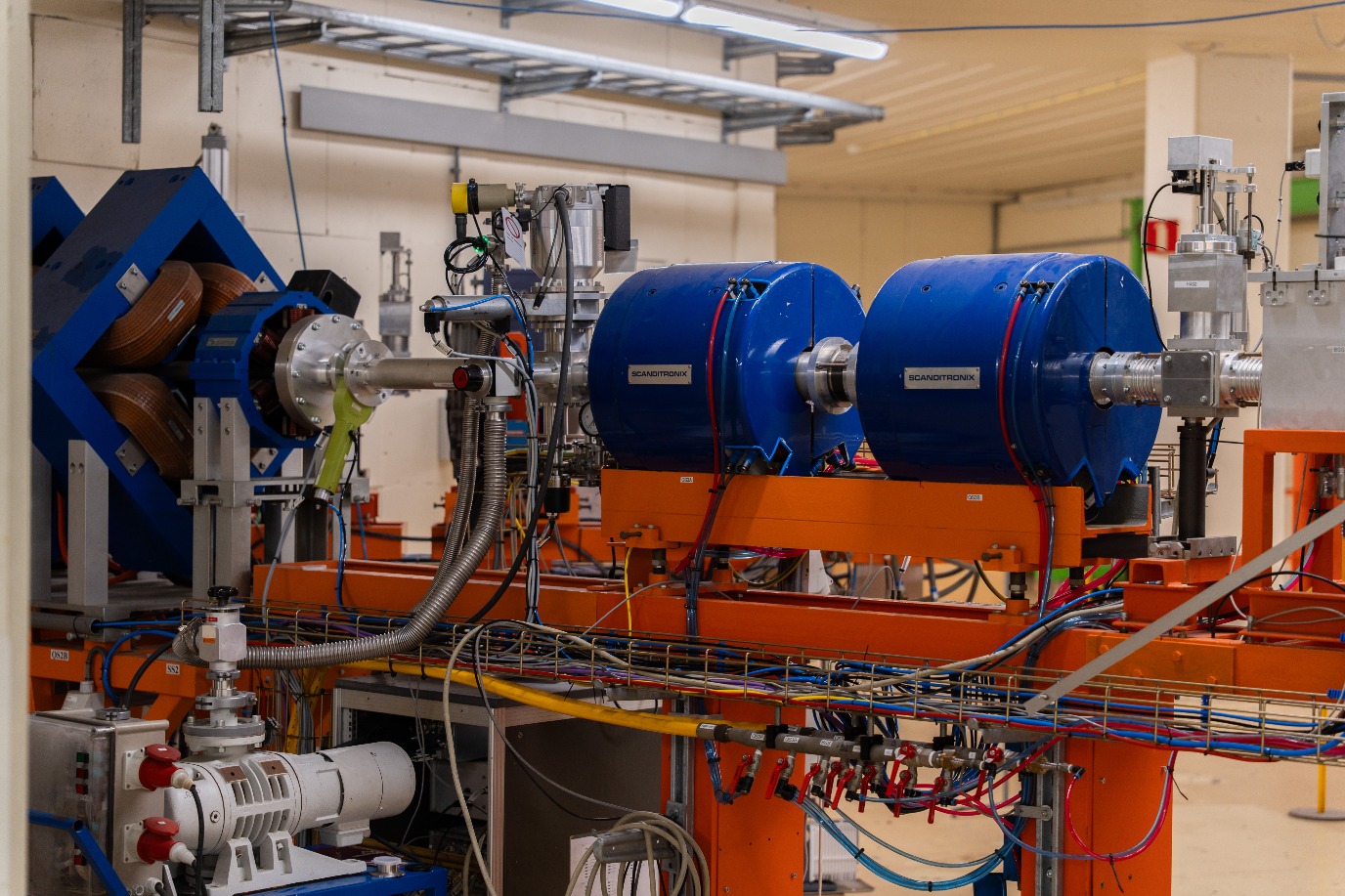
Producing heavy elements is hard work. Most of the elements that we find in nature are stable, and it takes a lot of effort to add protons and neutrons, the building blocks of atoms, to make them heavier. This requires beams of heavy ions which are provided by the particle accelerator AGOR of the Particle Therapy Research Center (PARTREC) at the Zernike Campus.
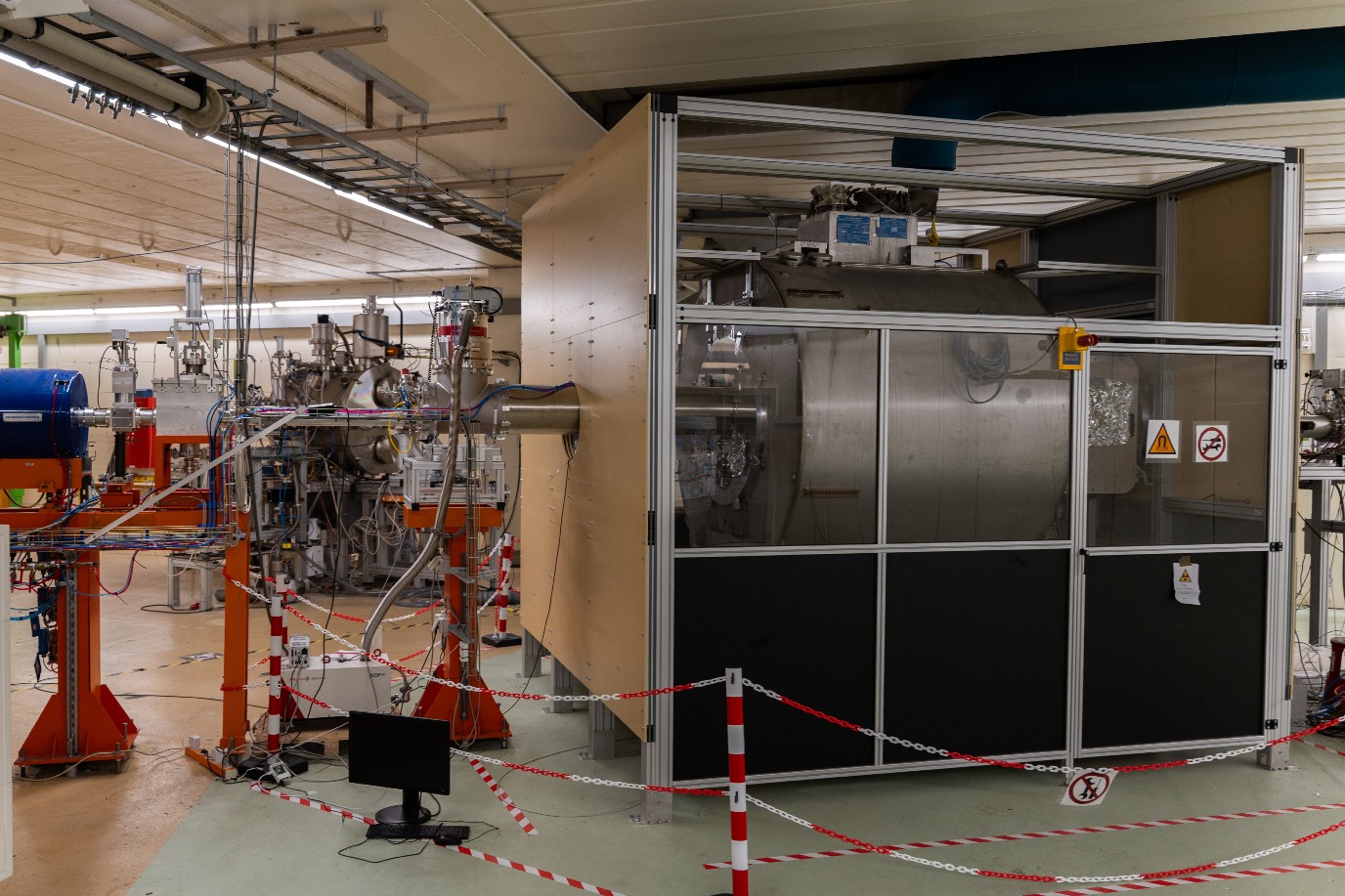
There, over the last eight years, Even and her team built the NEXT experiment: Neutron-rich, Exotic, heavy nuclei produced in multi-nucleon Transfer reactions. The AGOR cyclotron is used to accelerate a beam of ions to such a high speed that they can interact with the nuclei of particles in a thin metal foil. A small fraction of the accelerated ions undergoes a nuclear reaction which creates exotic nuclei that can otherwise only be found in environments like neutron star mergers.
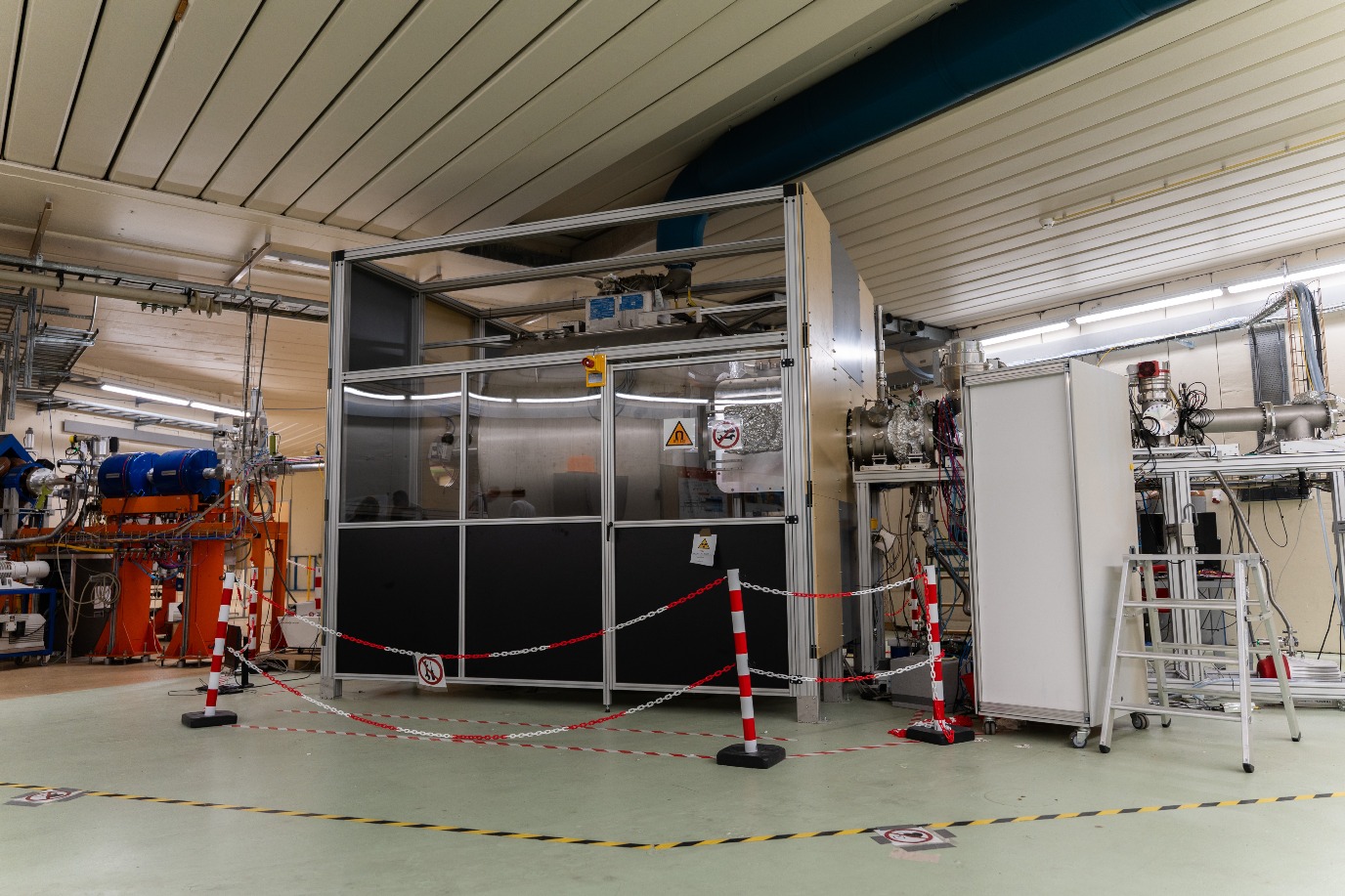
However, it is very difficult to catch these nuclei. This is done using a magnetic field, which focuses the nuclides of interest in a detector. In a first experiment in June this year, a beam of krypton-ions was aimed at a lead target, producing new nuclei that were successfully detected by looking at their decay process. In following experiments, the nuclei will be further studied, and more beam-target combinations will be explored.
The heavy nuclei which are produced in this experiment are unstable, and will rapidly decay through different processes. By studying the production and decay of these exotic nuclei, Even and her team collect new information on the properties of very heavy atomic nuclei. This data can be used to test and refine the current models.
Shells in nuclei
The NEXT experiment is part of the ‘precision frontier’ program of the Van Swinderen Institute for Particle Physics and Gravity. It will provide useful data about the ‘shell structure’ of nuclei. This was an idea first proposed by German physicist Maria Goeppert Mayer, and brought her and her colleague J. Hans D. Jensen the Nobel Prize in Physics in 1963. The shell model explains how the different particles in the atomic nuclei are kept together. It describes how a nucleus has shells with room for a fixed number of positions for neutrons, or protons. If a proton shell is fully occupied, it is hard to add another proton to it, and it requires more energy to remove a proton. The same goes for the neutron shell. Physicists can predict when shells are ‘full’, but for very heavy nuclei, more experimental data is needed to test these predictions. The NEXT experiment will provide input for this.
Scream for joy
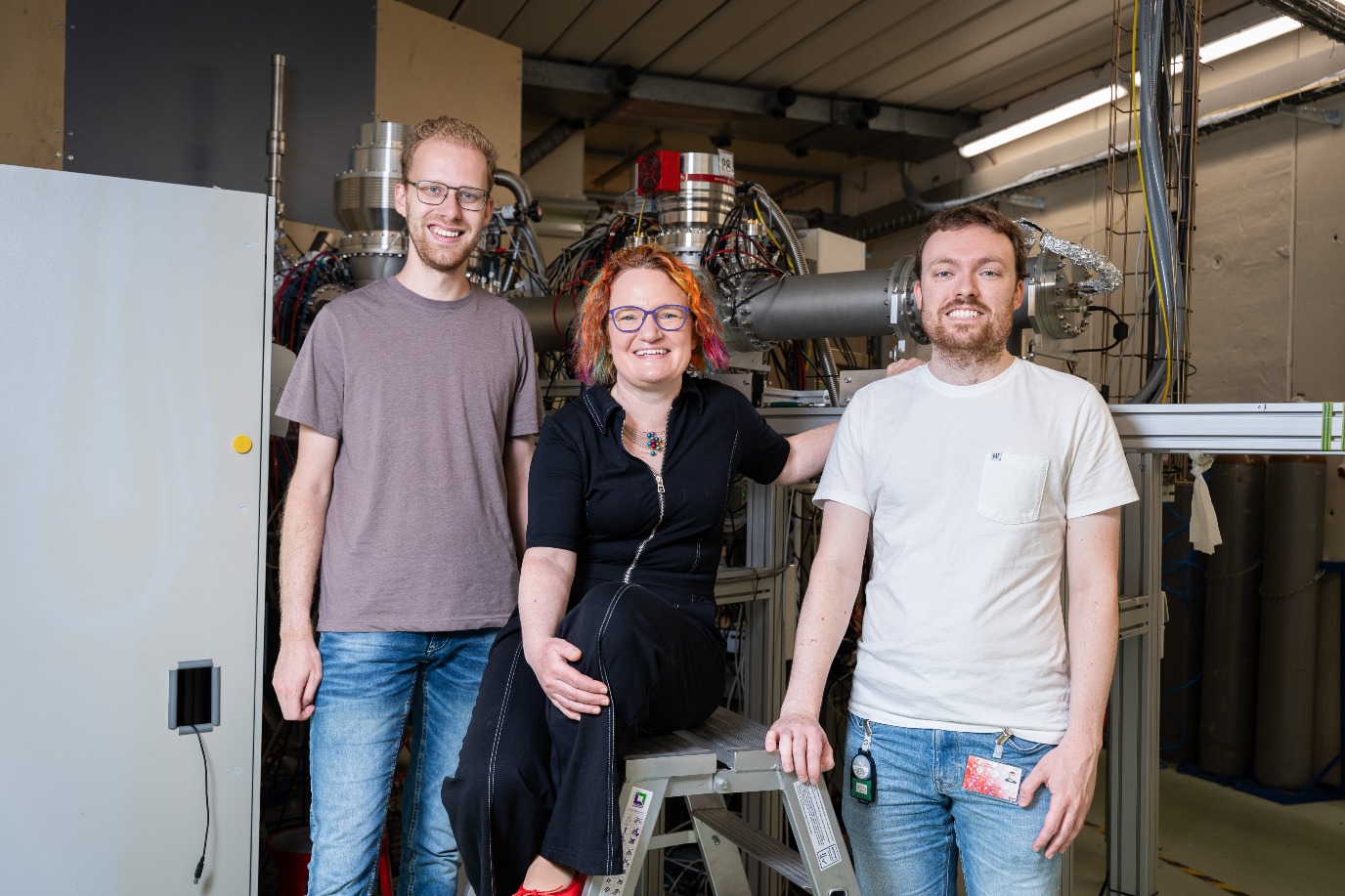
Designing and building this set-up started in 2019 and is now finally ready for testing. Even: ‘All systems are custom-built. The sort of experiments we do here are usually studied in large national and international labs. We can now do this in our own university, which is quite an achievement.’ She relies on a dedicated team of motivated students, and on international cooperation. ‘We share experience and information with other labs and research groups, for example on data analysis pipelines.’ In this international network, scientists cooperate to constantly improve their equipment.
When the trial runs are successful, Even and her colleagues will start the search for new exotic nuclei and isotopes. ‘Only after we have tested our system using known processes can we take a look at the uncharted territory.’ And what happens if she finds the first signs of new stardust? ‘As soon as we detect our first nuclear decay which shows we’ve produced a new heavy nucleus, you can probably hear me scream for joy all across the campus!’
More news
-
01 October 2026
10 years of the Nobel Prize Ben Feringa
-
25 September 2026
NASA selects infrared space telescope PRIMA featuring Dutch technology
-