
From cyclotron to clinic: NWO grant for targeted radionuclide therapy
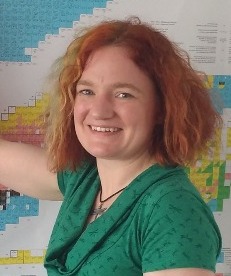
Researcher Julia Even of the University of Groningen has received EUR 420,000 from the NWO Open Technology Programme to develop a new way of producing a promising radioactive substance for cancer treatment. The substance, astatine-211, can be used to destroy cancer cells that have spread through the body, but it is currently difficult to produce and transport astatine-211 because it decays very quickly.
The grant is part of the consortium project ‘A 211Rn/211At generator for targeted radionuclide therapy of cancer’ with a total budget of EUR 1.1 million. Part of the funding comes from the industrial partners CURIUM, Urenco and TRISKEM. The consortium brings together researchers from the University of Groningen, Delft University of Technology and the University Medical Center Groningen (UMCG).
A promising cancer treatment
Some cancers spread to other parts of the body. These are called metastases and they can be difficult to treat. One possible treatment is targeted radionuclide therapy. In this treatment, a radioactive substance is attached to a molecule that recognises cancer cells. The substance then delivers radiation directly to the cancer cells, while causing as little damage as possible to healthy tissue.
Astatine-211 is a radioactive substance that emits alpha radiation. This type of radiation is very powerful over a very short distance. That makes it promising for destroying individual cancer cells, including cancer cells that have spread through the body.
However, astatine-211 does not last long. After 7.2 hours, half of it has decayed. This makes it difficult to transport to hospitals that are not close to a production facility. Only a small number of places in the world can currently produce it.
Making the treatment more widely available
The researchers want to solve this problem by developing a ‘generator’. This is a device that produces a radioactive substance on site, when and where it is needed.
Instead of transporting astatine-211 itself, the researchers want to transport radon-211. Radon-211 lasts longer: after 14.6 hours, half of it has decayed. It then changes into astatine-211. A generator could therefore transport radon-211 to a hospital, where it would produce astatine-211 for cancer treatment.
Expertise from Groningen to Delft
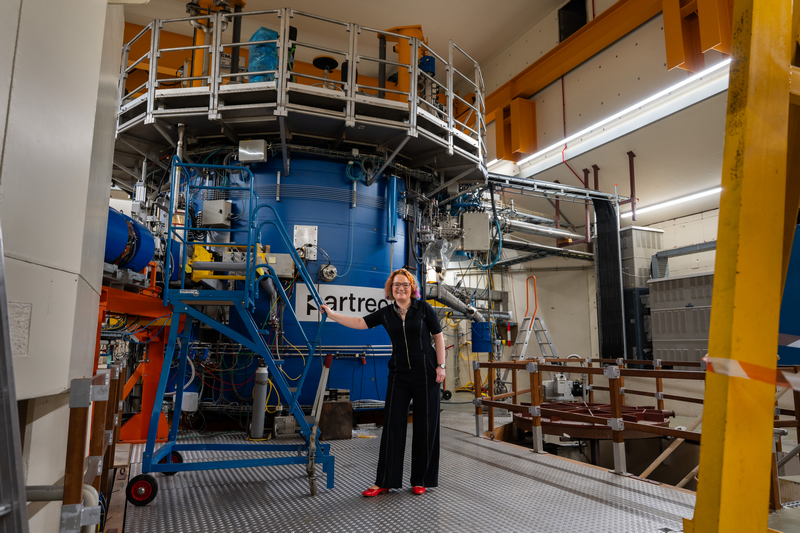
At the University of Groningen, Julia Even’s group will investigate how to produce radon-211 more efficiently. The researcher will study the nuclear reactions that create radon-211 and look for ways to make more of it while producing fewer unwanted radioactive by-products.
The researchers will also develop a new ion source for the AGOR cyclotron. A cyclotron is a machine that accelerates tiny particles to very high speeds. These particles can then be used to create radioactive substances. The new ion source should make it possible to produce more radon-211.
Open Technology Programme
The NWO Open Technology Programme funds application-oriented technical-scientific research. Researchers from all disciplines can apply, while companies and other partners can participate by making financial or material contributions. In this funding round, six projects received support.
More information
More news
-
24 November 2026
Materials scientists help to better understand diseases
-
18 November 2026
NWO-KIC for smarter production of medical-grade contact lenses
-
17 November 2026
Insects react differently to light