
FWO-SBO grants for Groningen research on nanopores and recycling
Two researchers from the University of Groningen have secured international funding from the Research Foundation – Flanders (FWO) for projects in molecular technology and sustainable materials. Prof. Giovanni Maglia and Dr. Remco Havenith are co-applicants in interdisciplinary consortia working on nanopore-based sensing and the recycling of polyurethanes. Both projects are funded through the Strategic Basic Research (SBO) programme of the Research Foundation – Flanders (FWO). The funding for both projects together amounts to EUR 680,000.
The projects are carried out in collaboration with partners in Belgium and the Netherlands and focus on developing new technologies for molecular analysis and circular material design.

Computational Protein Design for Hybrid Nanopores
Prof. Giovanni Maglia is co-applicant in the project ‘Computational Protein Design for Hybrid Nanopores’ in collaboration with partners from the Interuniversity Micro-Electronics Centre in Leuven (imec) and Vrije Universiteit Brussel. The main applicant is Dr. Koen Martens (imec).
At the University of Groningen, the project provides EUR 350,000 in funding within the Groningen Biomolecular Sciences and Biotechnology Institute (GBB).
The project focuses on the development of hybrid nanopore technologies, combining biological and solid-state components to enable advanced molecular sensing and diagnostic applications, including new approaches to detect and study plant viruses. Maglia leads the biological nanopore efforts within the consortium. His group contributes expertise in biopore engineering and reconstitution, and supplies protein pores from an established library, including small nanopores for protein sequencing applications or large nanopores for folded protein analysis.
In addition, Maglia contributes to the overall design of the hybrid systems and serves on the project’s advisory board, also bringing in a valorisation perspective through his role as co-founder and CSO of Portal Biotech.

Recycling of polyurethanes
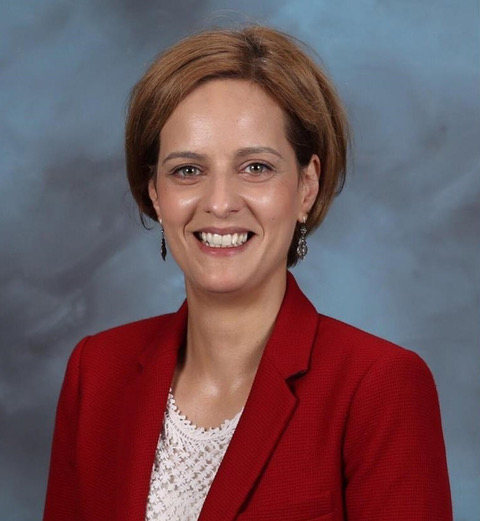
Dr. Remco Havenith is co-applicant in the project ‘MOSA-PUR: Molecular simulations to advance the circular design of thermoset polyurethanes’ which has been awarded EUR 330,000 in funding. Dr. Ana Cunha (previously affiliated to the University of Groningen, now at Oak Ridge National Laboratory) is also one of the applicants. The main applicant is Prof. Pieter Billen from the University of Antwerp, while other co-applicants are from Ghent University and the Vrije Universiteit Brussel.
The project brings together an international consortium to address a key challenge in sustainable materials: the recycling of polyurethanes. These widely used materials are essential for applications such as insulation and cushioning, but their chemical complexity makes efficient recycling difficult.
MOSA-PUR aims to develop a multiscale modelling framework to better understand how the molecular structure of polyurethanes relates to their processing, performance, and recyclability. By combining quantum chemistry, molecular simulations, and process modelling, the project will enable the prediction of depolymerisation pathways, material properties, and recycling efficiency.
Havenith contributes expertise in theoretical chemistry and molecular modelling, helping to generate detailed molecular-level insights and thermodynamic data that are currently lacking. These insights are essential for designing improved recycling processes and supporting the development of circular polyurethane materials.
About the funding programmes
The Strategic Basic Research (SBO) programme of the Research Foundation – Flanders (FWO) supports interdisciplinary research with clear potential for societal or economic impact. Projects are typically carried out by consortia of academic and industrial partners and aim to bridge the gap between fundamental research and practical applications.
More news
-
17 September 2026
NWO-KIC funding for new route to sustainable biocatalysts
-
15 September 2026
Enzymes break down textile fibres into useful resources
-
10 September 2026
Searching for the first generation of stars