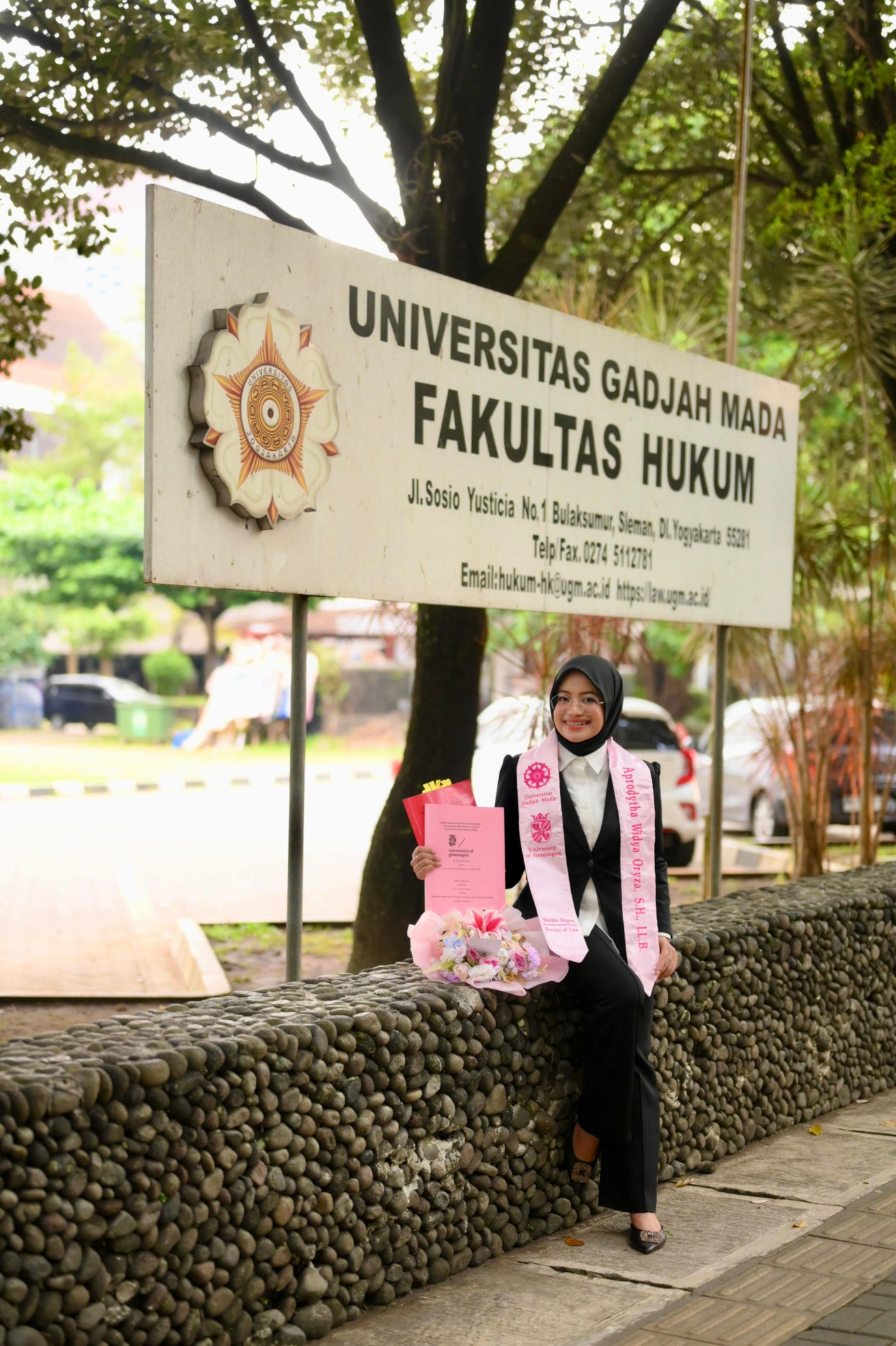
Are you interested in global challenges, international relations, and the role of law across borders? Then the International and European Law bachelor's programme is the perfect choice for you!
How are international human rights protected? How does European Union legislation affect businesses and citizens? Lawyers specializing in international and European law play a key role in answering these questions. During this programme, you will develop the legal knowledge and skills needed to work in an international legal environment.
✓ Build a strong foundation in international law, European law and comparative legal systemsFor Dutch-speaking students, please note this programme is different from the 'Internationaal en Europees Recht' track within the Rechtsgeleerdheid programme and does not offer civiel effect in the Netherlands.

The programme touches upon all fields of law, starting with a general introduction into law in which the Dutch system is used as an example, an introduction into Legal English and research skills and in year 1 you will already be taught the basics of European law and public international law.
| Semesters | ||||
|---|---|---|---|---|
| CoursesCourse Catalog > | 1a | 1b | 2a | 2b |
| Introduction to Legal English and Research Skills (5 EC) | ||||
| Law and Legal Skills: the Dutch example (10 EC) | ||||
| Criminal law (10 EC) | ||||
| Legal History (5 EC) | ||||
| Contract and Tort Law (5 EC) | ||||
| Introduction to International and European Law (10 EC) | ||||
| Comparative Constitutional Law (10 EC) | ||||
| Introduction to Technology Law (5 EC) | ||||
In year 2 students pick a specialisation: either they continue with International and European Law or they choose to join the Technology Law track.
| Semesters | ||||
|---|---|---|---|---|
| CoursesCourse Catalog > | 1a | 1b | 2a | 2b |
| Law of the European Union (10 EC) | ||||
| Property Law (5 EC) | ||||
| Law, Power, and Politics (5 EC) | ||||
| Public International Law (10 EC) | ||||
| Administrative Law and Market Regulation (10 EC) | ||||
| Research seminar (10 EC) | ||||
| Markets and Regulation (5 EC) | ||||
| Private International Business Law (5 EC) | ||||
All students spend the first semester of year 3 at one of our partner institutions, which are located all over the globe. When returning to Groningen in semester 2, they continue in their chosen track and write a Bachelor's thesis dealing with a topic of their choice within the scope of the programme.
| Semesters | ||||
|---|---|---|---|---|
| CoursesCourse Catalog > | 1a | 1b | 2a | 2b |
| Semester abroad (30 EC) | ||||
| Commercial Dispute Resolution (5 EC) | ||||
| Competition Law in the Digital Market (5 EC) | ||||
| Research Colloquium (10 EC) | ||||
| European Judicial Protection (5 EC) | ||||
| The Contemporary Value(s) of International Law (5 EC) | ||||
40 hours of class and self-study per week on average
The programme is only available in full-time mode.
| Programme options |
|---|
| Technology Law (graduation track) The Technology Law track, together with the general legal knowledge in international and European law, covers a wide range of technology related legal topics. The track is designed in light of the understanding that technology operates across jurisdictions and, as a result, regulatory responses have to occur at the interface between domestic, regional and international law. |
Every student goes abroad in the first semester of year 3.
International and European Law (Haagse Hogeschool)
| Specific requirements | More information |
|---|---|
| previous education |
You can find the previous education requirements here: https://www.rug.nl/rechten/education/international-programmes/llb/application/ |
| language test |
You can find the English language proficiency requirements, and situations where exemption may be considered, here: https://www.rug.nl/rechten/education/international-programmes/llb/application/ |
| other admission requirements |
The programme has a compulsory matching activity. If you are interested, the (online) matching activity will help you in deciding if our LLB programme is a good fit for you.
You can find more information about the matching
here
. Please make sure
to click the English flag at the top. The Dutch information on this
page is applicable to the 'Rechtsgeleerdheid' programme.
|
The degree programme will organize a matching procedure. Attendance is compulsory. The advice is not binding.
| Type of student | Deadline | Start course |
|---|---|---|
| Dutch students | 01 May 2027 | 01 September 2027 |
| EU/EEA students | 01 May 2027 | 01 September 2027 |
| non-EU/EEA students | 01 May 2027 | 01 September 2027 |
Please make sure to have uploaded all your documents before 1 May.
| Specific requirements | More information |
|---|---|
| previous education |
You can find the previous education requirements here: https://www.rug.nl/rechten/education/international-programmes/llb/application/ |
| language test |
You can find the English language proficiency requirements, and situations where exemption may be considered, here: https://www.rug.nl/rechten/education/international-programmes/llb/application/ |
| other admission requirements |
The programme has a compulsory matching activity. If you are interested, the (online) matching activity will help you in deciding if our LLB programme is a good fit for you.
You can find more information about the
matching
here
. Please make sure to click the English flag at the top.
The Dutch information on this page is applicable to the
'Rechtsgeleerdheid' programme.
|
| Type of student | Deadline | Start course |
|---|---|---|
| Dutch students | 01 May 2027 | 01 September 2027 |
| EU/EEA students | 01 May 2027 | 01 September 2027 |
| non-EU/EEA students | 01 May 2027 | 01 September 2027 |
Please make sure to have uploaded all your documents before 1 May.
Most students continue with a one-year Master's programme after completing their bachelor's degree. An LLM allows you to specialise further in a particular area of law and significantly broadens your career opportunities.
Graduates of International and European Law are well prepared for careers in an international legal environment. They work for governments, international organisations, NGOs, multinational companies and academic institutions around the world. Please note that this programme does not provide civiel effect in the Netherlands and therefore does not grant direct access to the Dutch legal professions (such as lawyer, judge or public prosecutor).
The Faculty regularly conducts alumni research to gain insight
into where graduates work and how they look back on their studies.
The results show that graduates pursue careers across a wide range
of international organizations, businesses and public
institutions.
Would you like to know more about the career opportunities after
this programme? Take a look at our alumni survey
results and discover where our graduates work and how they have
built their international careers.
Law is constantly evolving. Digital technologies, international cooperation, climate change and geopolitical developments raise new legal questions every day. At the Faculty of Law, research plays a central role in both our teaching and our contribution to society. As a student of International and European Law, you will not only learn what the law is, but also critically examine how it develops and how it addresses global challenges.