
Navigating Identities and Wellbeing
This theme investigates diverse aspects of identity and wellbeing across various contexts. It examines how identities are shaped, negotiated, and developed within social interactions, groups, institutions, physical spaces, and cultural contexts. The research explores how individuals experience and derive wellbeing and and implications thereof, considering mental, physical, and sociocultural processes. Current projects include studying how adolescent identities are co-constructed during parent-child conversations, how academic identities take shape in classroom interactions, how the arts are supporting wellbeing in care settings and contributing to the future of our healthcare system, investigating experiences of inclusion/exclusion in everyday places and practices, examining what the how the arts facilitate processes of sense-making and self-awareness of children, adolescents and adults, and how these dynamics change over the course of development.
Project Showcases
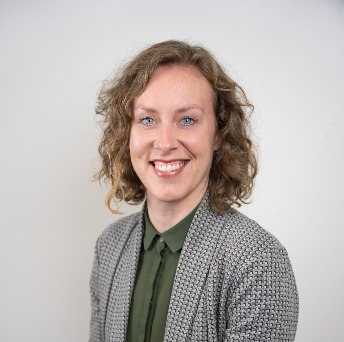
Naomi de Ruiter and Muire Paap (Faculty of Behavioural and Social Sciences) have received funding from the Young Academy Groningen to study the development of interdisciplinary researchers: Interdisciplinary research is vital for producing innovative, and ground-breaking research that can uniquely solve society’s complex problems. But doing interdisciplinary research requires working between disciplinary norms, dealing with disciplinary stigmas, bridging disciplinary communities, and developing expertise outside of one's own background. How do the researchers doing this work navigate these challenges and opportunities? How do they develop their professional identities as 'interdisciplinary researchers' in a monodisciplinary world? These questions form the basis of this new PhD project, which Marian Crespo López will work on in the coming years, under the supervision of Naomi and Muirne.
With the articel Empowerd traditionalism: the paradoxical identity of twenty first century tradwives, Naomi de Ruiter explores the identity construction of Tradwives, twenty-first century women who embrace traditional gender roles and prioritize domestic life. Together with UCG alumni Emilie Zandbergen, Naomi de Ruiter shows how these women navigate seemingly contradictory ideologies of traditionalism and feminism, framing gender complementarity and gender essentialism as ways of enacting feminist values such as empowerment, agency, choice, and continuous learning. In her article she critically discusses this positioning from a feminist perspective.

Alongside UCG teaching, Dr. Ferdinand Lewis is also Director of Science and Education for Arts in Health Netherlands (AiHN), which is a project of the Aletta Jacobs School of Public Health and is supported by
Nationaal Programma Groningen, University of Groningen, and University College Groningen.
The mission of AiHN is to advance the arts in health field in the Netherlands. This means that I write, design, and facilitate research. I am always trying to move the field forward by advocating for arts in health research among scholars, agencies, and policy-makers. At AiHN we network very actively to connect researchers with funders, projects, and other resources. At this moment, we are working on an arts-based community project in the earthquake region of the Netherlands, and and also leading the development of a national white paper that will set the agenda for the research, education, and practice of arts in health in the Netherlands. Also, because arts in health is an emerging field, I make certain that our new educational programs and curricula are rigorously supported by research. I oversee a number of student arts in health researchers, and each year I co-supervise the annual UCG Year Two research-based project on an arts-in health theme.