
Practice Lab
Is your organization ready to take inventory of its art collection? Is there a piece hanging in your museum that has yet to reveal its secret history?
In the course Practice Lab, art history students apply their academic knowledge to a real-world project. Students can conduct research within their area of interest (art, architecture, or landscape) and gain work experience along the way.
Does your organization have an interesting research question related to art history? Then work with our Practice Lab students!
What is Practice Lab?
Practice Lab is a course within the Bachelor Art History in which students gain hands-on experience. They work on a project of their choice within their area of interest (art, architecture, or landscape). The research takes 10 weeks and starts every year in February.
The project includes, among other things, ethnographic research and material and object analysis. Students also design, conduct, and interpret interviews with stakeholders, both to develop their professional skills and as a research method. Based on their research, they write a (policy) advisory report, which they present to the clients and to professionals from the field.
Collaborating within Practice Lab
Would you like to work with us? The staff of the Science Shop for Language, Culture and Communication will gladly help you formulate a research question that moves your organization forward. The Science Shop acts as an intermediary and project manager, in cooperation with the programme.
We ask that you provide a permanent contact person, access to the collection, the archive, or the location, and availability for interviews with the students. The students will write a policy advisory report and give a presentation on their research. There are no costs associated with this collaboration.
Examples and Experiences
In recent years, the Science Shop for Language, Culture and Communication has acted as an intermediary in a number of Practice Lab projects. Some examples are listed below.
Museum Janning
One important collaboration within Practice Lab is with Museum Janning. This small museum holds a broad collection of religious art that originated in the personal collection of Pastor Janning, who was not only a pastor but also a collector of religious art and a painter. The collaboration began in 2025 with research into the wainscotting in the museum’s collection. What began as a visual analysis grew into a full-fledged study with results the museum could not previously have uncovered itself. Through archival research, the students were ultimately able to establish where the original comes from, which church it originally stood in, and who made it.
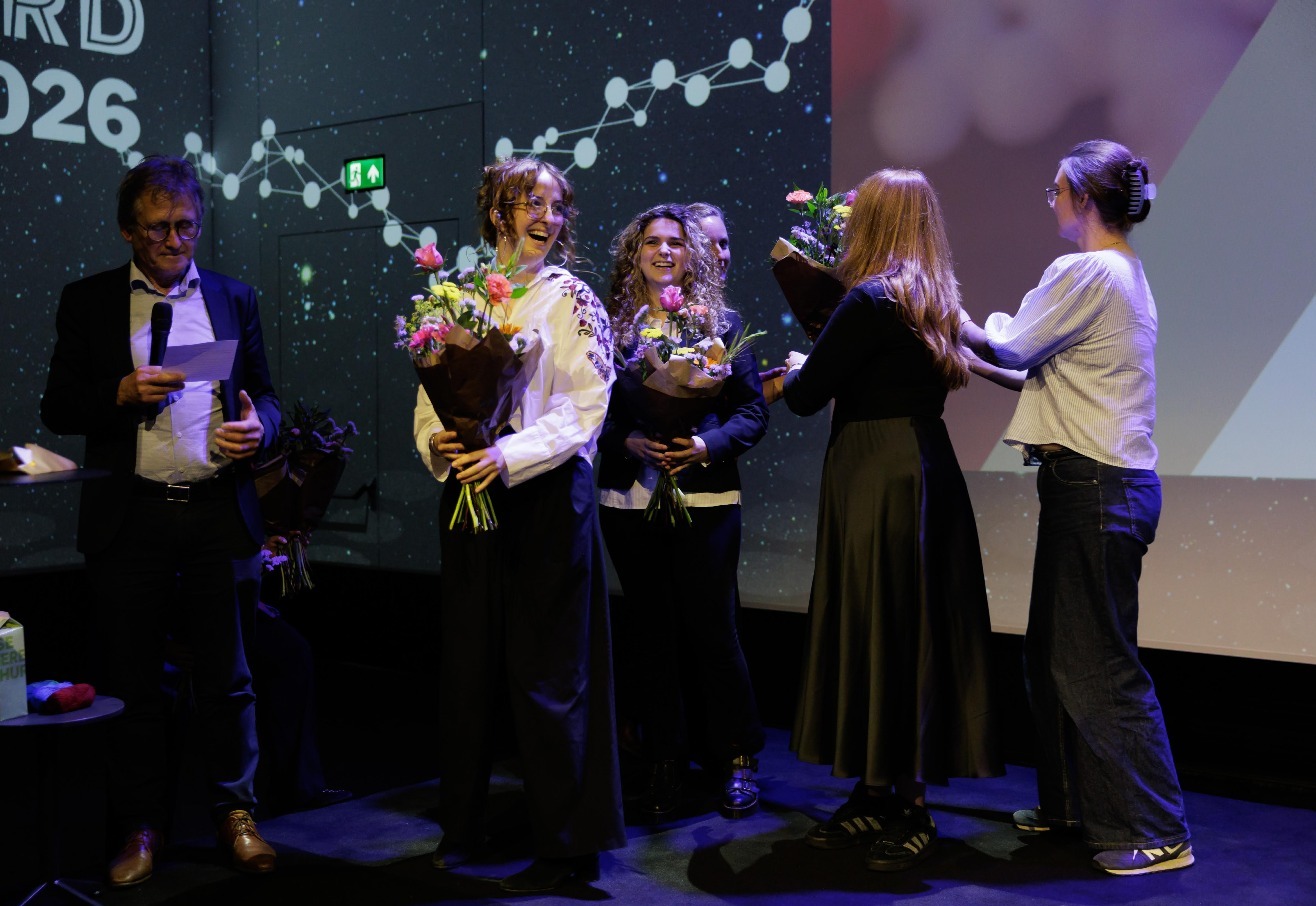
This research was nominated for the Ben Feringa Impact Awards 2026 because the students’ archival research has, in all likelihood, identified the church the wainscotting came from.
In 2026, the collaboration expanded to four studies, on vestments, relics, the museum’s museological development, and the Catholic enclave of Nieuw-Schoonebeek, where the museum is located.
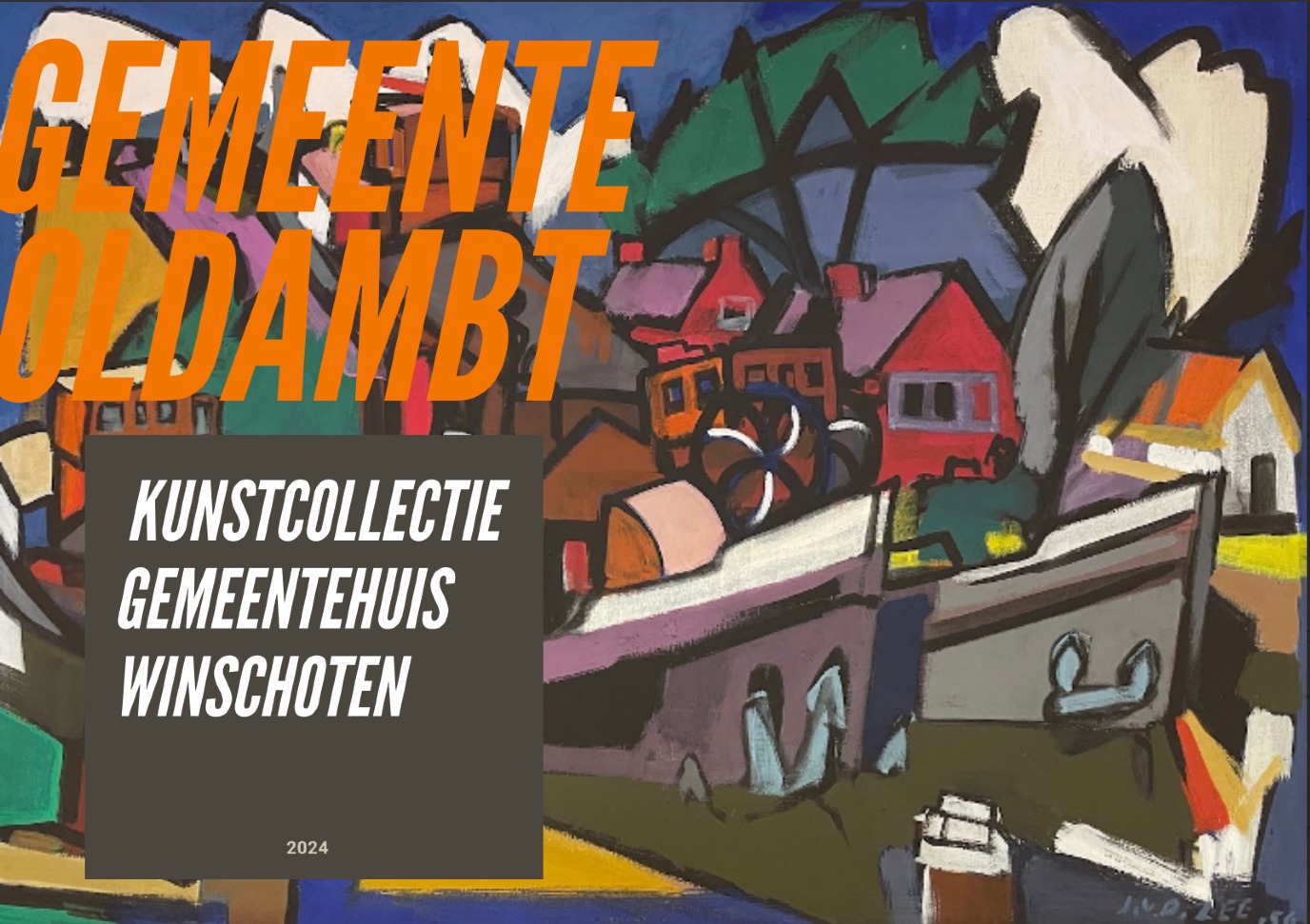
Municipality of Oldambt: art collection of the Winschoten town hall
In 2024, Practice Lab students catalogued the art collections of the town halls in Winschoten and Scheemda. The occasion was the construction of the new town hall, De Poort van Winschoten. The students measured, photographed, and numbered each work so that every piece could be given a place in the new building.
The students delivered a complete inventory for the municipality and a publication featuring thirteen works. For each artist, the book provides background and context, thereby telling the story of the collection. Unexpected discoveries also emerged, such as a watercolor that had probably been in an attic for years, and three nearly identical charcoal drawings by Evert Musch, whose possible location in Drenthe the students were able to trace.
Client experience
André Zwake, chair of Museum Janning, on the 2025 research:
“The students’ dedication was nothing short of phenomenal. The source research and case studies were structured and precise, which led to surprising insights. Through their visual analysis, the students discovered that the wainscoting originates from German Neo-Gothic. That is a significant improvement on what was previously assumed. They also noticed that the styles differ from one another and that not everything fits together. This suggests the work was made in several phases, or by different craftsmen…”
“…The students worked independently while still keeping the Museum Janning team excellently informed throughout. We are impressed by the depth and commitment of this team: a fine example of applied research at an academic level, with results of high museological value. The outcomes will be used in an information panel as part of the museum’s planned renovation.”
Student experience
Anna Sofie Kuipers, Museum Janning 2025:
“The experience I gained during the project is very valuable, and I consider this research a highlight of my studies. Not only was it very educational to work for a client, but I also discovered that the knowledge I have acquired so far in my studies can actually be meaningful in practice. It was particularly motivating to know that our research would have a tangible impact and that we could genuinely do a great deal for our client. I think the work the Science Shop does is not only of great value to the clients, but also makes an important contribution to the students’ learning experience.”