



Missing the goal: Why goal frustration might lead soccer players to aggression
Date:02 September 2014Author:Mindwise
Soccer players often display aggressive behavior when they are frustrated during matches. This aggressive behavior could possibly be explained by a loss of competency that goes along with goal-related frustration. However, pro-social behavior could also possibly be a way to restore that competence.

Living in a bubble? How reality is altered in people with eating problems
Date:01 September 2014Author:Mindwise
People with eating problems seem to perceive their environment and themselves differently from people without eating problems. Their thoughts are constantly occupied with eating, body-shape and weight-related themes. Thus, getting through to them to treat their condition can be difficult.

Do people with ADHD run more risks?
Date:27 August 2014Author:Yvonne Groen
Common sense psychology predicts that people with Attention Deficit Hyperactivity Disorder (ADHD) run more risks, because they are more impulsive than people without ADHD. We systematically reviewed the scientific literature and discovered that this presumption may not be true.

And you think I’m crazy? Yeah, you think I’m crazy!
Date:20 August 2014Author:Marieke Pijnenborg
‘I am not crazy, just help me get rid of my neighbors. They are constantly on my back!’ Something along these lines represents a common assistance request by people with psychotic disorders. Insight is impaired in a majority of patients with psychotic disorders.

Measurement of stigmatization towards adults with attention deficit hyperactivity disorder (ADHD)
Date:13 August 2014Author:Anselm Fuermaier
Adults with ADHD are at high risk to be confronted with negative attitudes and beliefs which can be described as stigmatization. In our research group at the Department of Clinical and Developmental Neuropsychology, we developed a disease specific assessment tool, measuring various facets of stigmatization towards adults with ADHD.

An Honour to Have Met You
Date:06 August 2014Author:Karen Fischer
I have completed the end of my third year in the English-language Bachelor of Psychology programme. Being in the Honours College has enriched my understanding of research in psychology in a tremendous way. Here, I can look back at a wonderful experience and look forward to more fruitful research experiences.
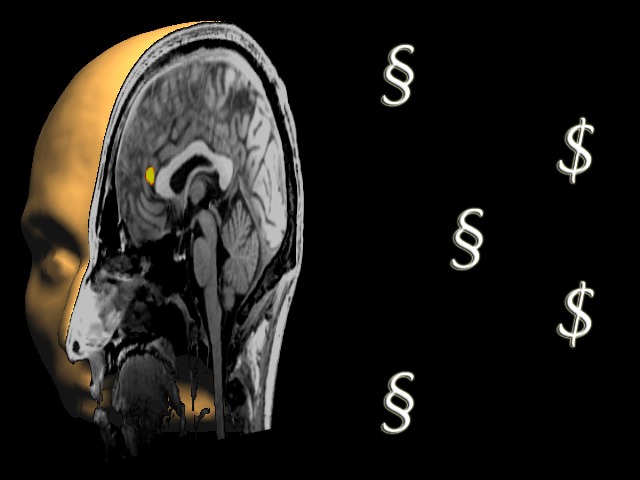
Psychology or Neuroscience? The case of forensics
Date:30 July 2014Author:Stephan Schleim
Scholars try to understand and predict crimes to make society safer. Some expect that investigations of the nervous system will provide us with new solutions. Although this seems promising, it may distract us from other important sources of knowledge.

The voice in control: Exploring auditory communication in persuasion contexts
Date:23 July 2014Author:Sarah Elbert
Auditory stimuli, such as voices or sound logos in radio advertisements, can have persuasive effects. In addition, technological advancements create possibilities for using auditory forms of communication, also in the domain of health. This post discusses the differential effects of listening instead of reading on persuasion.

What are the problems if disgust is NOT suppressed during sex?: A postscript to Peter de Jong
Date:16 July 2014Author:Charmaine Borg
What are the clinical implications of a less functional interplay between sexual arousal and disgust? If sexual arousal is low, then perhaps the disgusting properties of relevant stimuli for pleasurable sex, and the hesitation to approach these stimuli, are not suppressed. This can give rise to sexual problems.

Facebook's Manipulations
Date:09 July 2014Author:Maarten Derksen
Facebook recently revealed that it manipulated the content of the News Feeds of some of its users by changing the number of positive and negative words they were exposed to, without their knowledge or consent. Maarten Derksen weighs in on this and the ethics of informed consent.