



The Cinema Student
Date:24 September 2014Author:Roos Cornelius
Should you expect an academic lecture or a movie when you take a seat in a theater of a local cinema in Groningen? Psychology students will have to stay alert; you never know what will happen.
The Avril McDonald Memorial Fund
Date:22 September 2014Author:Tassos Sarampalis
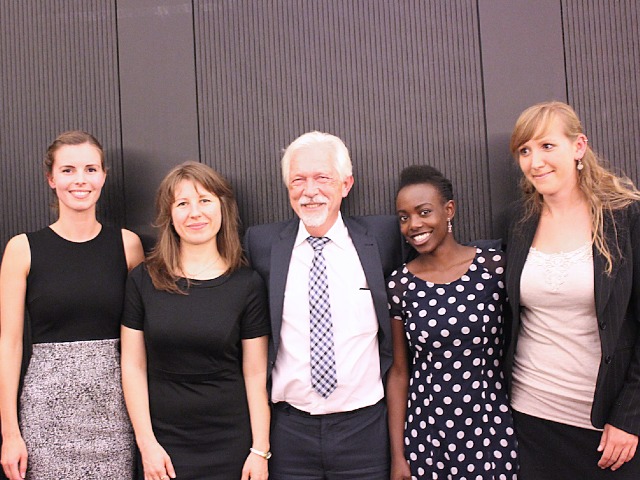
Every quarter, we share articles published in the BCN Neswletter and we are happy today to share a story written by Elouise Koops on the Avril McDonald Memorial Fund that is organised by Rosalind Frankling fellows from the RUG. This year, four PhD students and brilliant starting scientists received this award.
Social Sciences: Past, Present, and Future
Date:15 September 2014Author:Stephan Schleim
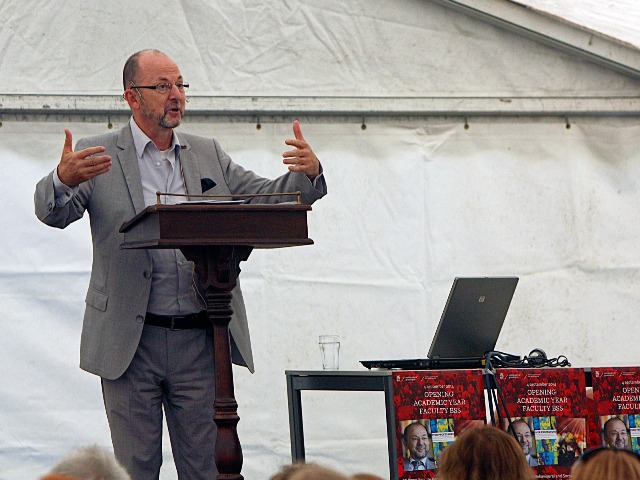
With the opening of the academic year 2014-2015, the Faculty of the Behavioral and Social Sciences (BSS) celebrated its fiftieth anniversary. The presentations were a tour de force through the past, present, and future of our academic life.

Network connectivity in the ageing brain: An Interview with Linda Geerligs
Date:15 September 2014Author:Tassos Sarampalis
Interview with Linda Geerligs, who did her PhD in the Psychology Department in Groningen and now works on ageing at the University of Cambridge. Robin Mills talks to her about her research on the ageing brain, the challenges of being a researcher and her goals as an academic.

Using statistics for truly understanding psychological processes
Date:09 September 2014Author:Casper Albers
The classical way of conducting experiments in empirical psychology is useful for understanding psychological constructs. However, using measurement-intensive longitudinal data is essential when you wish to truly understand psychological processes. For analyzing such data, new type of methods are required. Casper Albers explains the merits of these methods.

Then it grosses you out, and then it doesn’t?
Date:07 September 2014Author:Mindwise
Though disgust is a universal emotion, little is known about how it emerges. It is assumed that disgust primarily helps us avoid contaminants and diseases. However, disgust responses are not always adaptive. For example, people with a phobia may experience extremely high levels of disgust.

What if… this title had been different?
Date:06 September 2014Author:Mindwise
Thinking about how things could have turned out differently can be useful for people. When you think about how something could have gone better, you may learn from it. On the other hand, when you think about how it could have gone worse, you may feel better about yourself.

Does attentional bias modification constitute a suitable treatment for depression?
Date:05 September 2014Author:Mindwise
Negative attentional biases have been linked to depression. The “find the smiling face task” has been shown to reduce these dysfunctional attentional biases. To further validate the task, Thole Hoppen and two fellow students investigated whether the "find the smiling face task" changes attentional biases when people are in sad mood.

The odd one out – what does your brain pay attention to?
Date:04 September 2014Author:Mindwise
Is it possible to identify the sounds people pay attention to, based on brain signals? If so, this could have important implications for urban planning aimed at reducing the noise pollution in today’s cities.

“Photoshopping” mental images for psychotherapeutic purposes
Date:03 September 2014Author:Mindwise
Distressing mental images can severely disrupt a person’s daily life. A psychotherapeutic technique called Imagery Rescripting can reduce the impact of traumatic memories in individuals diagnosed with depression or post-traumatic stress disorder, and it may also work when people visualize a stressful future.