



Social inclusion in diverse work settings
Date:10 February 2016Author:Wiebren Jansen
Perceiving to be socially included at work is vital for the well-being and performance of employees. Yet, due to increasing levels of workforce diversity it is often difficult for people to fit in at work. In his dissertation, Wiebren Jansen studied what organizations can do to ensure that their employees feel included.

Social behaviour and serotonin: Some unexpected findings
Date:03 February 2016Author:Koen Hogenelst
Koen Hogenelst, ahead of his dissertation defence on 4 February 2016, describes how serotonin affects social behaviour and mood in people at risk for depression. An acute decrease has few effects, while longer-term increase improves mood and alters social behaviour.

ADHD is not simply due to a shortage in dopamine
Date:20 January 2016Author:Yvonne Groen
ADHD is a common disorder that suffers from many misconceptions. For example, do you also think that ADHD is caused by a lack of dopamine in the brain? In this blog post, I explain why this is not true.

Foreign news, nearby consequences: How media portrayals of distant situations affect local group relations
Date:13 January 2016Author:Thijs Bouman
This Thursday, Thijs Bouman will defend his doctoral thesis in which he explains the influence of foreign news on how we perceive groups within our nearby surroundings. Generalizations from global to the local situations seem to specifically occur for negative news and rely on often trivial and unconscious associations between the foreign and nearby groups.

How beer automatically attracts attention: and the relation with adolescent substance use
Date:06 January 2016Author:Madelon van Hemel-Ruiter
Did you ever find yourself drinking another beer when you actually had to stop at the previous one? Then you can imagine how this automatic behavior might be involved in the development of substance abuse and addiction. Illuminating this relationship is the very reason Madelon van Hemel-Ruiter started her PhD research.

A year in review: The most popular Mindwise posts of 2015
Date:30 December 2015Author:Tassos Sarampalis
A look back at the most popular Mindwise posts of 2015, including the Survival Guide to Studying Psychology in Groningen, Honours College internship research, study abroad experiences and a post on how to study smarter.
Are Exams Killing Learning?
Date:24 December 2015Author:Tassos Sarampalis
Is the way we assess learning in higher education killing its very central aim: learning? It is, if Eric Mazur from Harvard University is to be believed and he makes a very convincing case in the talk he gave in Groningen a few weeks ago. Read on to see what students and staff from our department think about it.
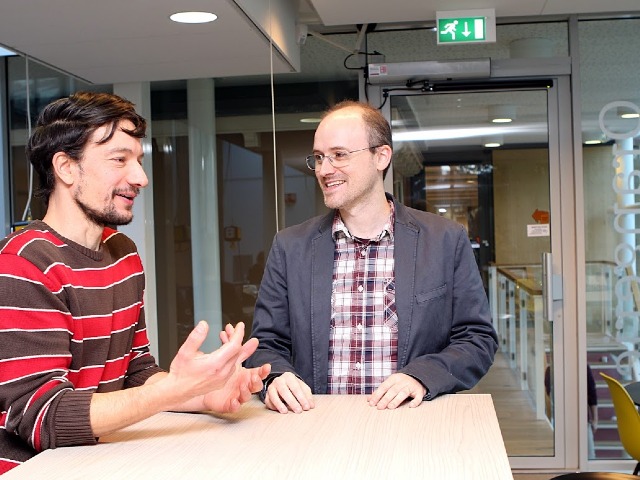
Duo-Interview: Perspectives on Social Coordination
Date:16 December 2015Author:Namkje Koudenburg
People tend to coordinate their actions, feelings, and thoughts with others in social situations. But how does this work? We asked two experts of our department, Dr. Ralf Cox (Developmental Psychology) and Dr. Pontus Leander (Organizational Psychology), who examine this intriguing topic from two different perspectives.

Making Sense of Speech Understanding
Date:09 December 2015Author:Tassos Sarampalis
How should we test whether speech is understood, so we have an accurate picture of the processes that support comprehension? The answer turns out to be rather simple: besides looking at how accurate the responses are, measure how fast they are given.

How problematic are sleep problems in the treatment of post-traumatic stress disorder?
Date:02 December 2015Author:Miriam Lommen
Do you sometimes feel that after a bad night sleep, you cannot take in anything that is being said during a lecture? If so, then maybe you can imagine the rising concern that patients with post-traumatic stress disorder (PSTD) might not benefit from trauma-focused treatment if they also suffer from sleep difficulties. I dug into this issue to figure out whether this concern was justified.