



The perks of growing up bilingually
Date:08 August 2016Author:Michelle Braun
There appear to be clear differences between bilinguals and monolinguals. Within the last 30 years, an evolution took place from a very negative view towards being raised bilingual to a view that underlines the benefits of bilingualism. Findings nowadays are relating bilingualism to better attention, multitasking and a delay in the onset Alzheimer’s disease.

Matching tiles: how Rummikub links my childhood to Alzheimer’s disease
Date:05 August 2016Author:Jildou Stapert
A personal story, explaining how a childhood’s experience can be linked to a horrible disease. This article will give you some insight in how dementia affects the family of patients and which therapies are currently used to enhance quality of life in patients with any form of dementia.

Anger, revenge, and politics
Date:03 August 2016Author:Vladimir Bojarskich
The feeling of anger and the craving for revenge are closely linked to each other. Anger and revenge can take on enormous scales contributing to global conflicts. Well-intentioned political involvement might counter possible detrimental effects.

Throw it in the box!
Date:01 August 2016Author:Stephen Scholte
Second-year Psychology students participating in the University Honours College follow a mini-course on Blogging Science (within the Thematic Meetings course), in which they learn to communicate science to the general public, by means of informing, giving...

The benefits of being neurotic: The bright side of painting it black
Date:29 July 2016Author:Lukas Kowald
Neuroticism is often depicted as an extremely undesirable personality trait, having been associated with all sorts of problems. This post shines a brighter light on being a neurotic, with benefits including enhanced evolutionary fitness, more positive health behaviors, and greater academic as well as vocational success.

Refugee crisis from a psychological perspective
Date:27 July 2016Author:Lieke Jorna
The huge stream of immigrants comes with many challenges. These challenges often have an underlying psychological aspect. Psychological theories can therefore help to understand the impact of immigration on both immigrants and locals. They can also be used to develop interventions that could improve the understanding between immigrants and locals.

Treat the patients, not just the symptoms: What we can learn from homeopathy
Date:25 July 2016Author:Leon Többen
Homeopathy is a domain of alternative medicine that has no scientific plausibility. However, many people are convinced of its effectiveness because they are fooled by the unconscious psychological mechanisms homeopaths utilize for treatment. One of these mechanisms is the patients’ positive reaction to the empathy homeopaths show during consultations.

Gaining understanding with exploratory statistical modeling
Date:20 July 2016Author:Marieke Timmerman
Marieke Timmerman, based on her inaugural lecture, discusses the reproducibility crisis in psychology and argues for the value of exploratory research. She outlines how exploratory statistical modelling can be done soundly, with a solid research plan and without HARKing.

There is life after retirement
Date:13 July 2016Author:Wolfgang Stroebe
A retired professor describes research pursued after compulsory retirement, outside the lab. Topics include the relation between age and scientific productivity, gun availability and homicide, and the validity of student evaluations of teaching.
An Example of Blurry Boundaries
Date:06 July 2016Author:Selwyn Renard
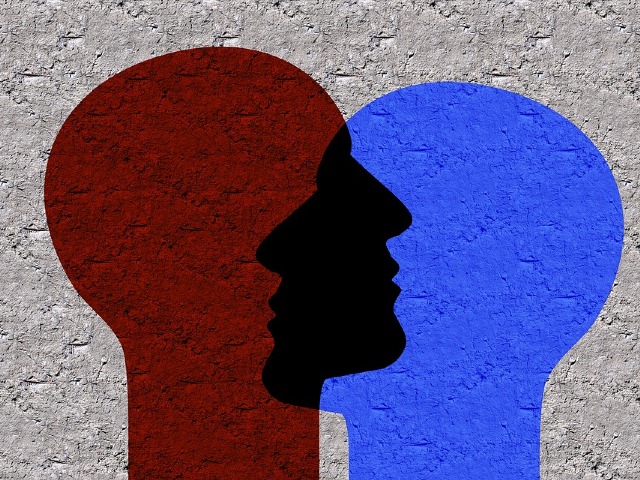
In a recent literature review my co-authors and I compared the symptoms and causes of schizophrenia spectrum disorders and dissociative disorders. The results show the limitations of categorical models of psychopathology (e.g. DSM-5) compared to models that view symptoms as extremes of normal behavior, and models emphasizing that symptoms can cause other symptoms.