



Envisioning time: Why seeing at max speed isn’t what we want
Date:27 October 2017Author:Nils Kappelmann
Explores how the visual system turns the signals of some 95 million retinal receptors into meaningful units through chunking, a process also known as a memory aid. Discusses chunking at higher and lower levels and why seeing at maximum speed is not what we want.

Invitation to the 1st Symposium for Complexity for Behavioral and Social Sciences.
Date:22 October 2017Author:Ole Gmelin
This year Rijksuniversiteit Groningen offers for the first time symposium on Complex Dynamic System Theory in the Behavioral Sciences aimed especially at students, featuring speakers from the field of Psychology, Philosophy, Human Movement Sciences and Linguistics. Attend a day of presentations, workshops, and a networking reception. We look forward to welcoming you in Groningen.

Book Review: The Inkblots by Damion Searls
Date:16 October 2017Author:Lisa Skandali
“Take the official Rorschach Ink Blot test to see if you are crazy”, is the title of the first video that comes up when you type Rorschach Test on YouTube. In the 2006 music video featuring animated inkblots morphing into disturbing images that turn into...

Ready to face your fears?: It's time to get rid of our phobias!
Date:11 October 2017Author:Rachel de Jong
Around 20% of the Dutch experience an anxiety disorder such as a specific or social phobia in their lifetime, and half of them develop their phobia before the age of 18. So why not start facing our fears at the time we develop our phobia instead of waiting until things get scarier and scarier?

Why are we doing what we are doing?
Date:04 October 2017Author:Stephan Schleim
Is it for the money that we are doing what we are doing? That doesn’t fit at all with a community defined by its intrinsic motivation, and certainly not when the object of that motivation is knowledge.
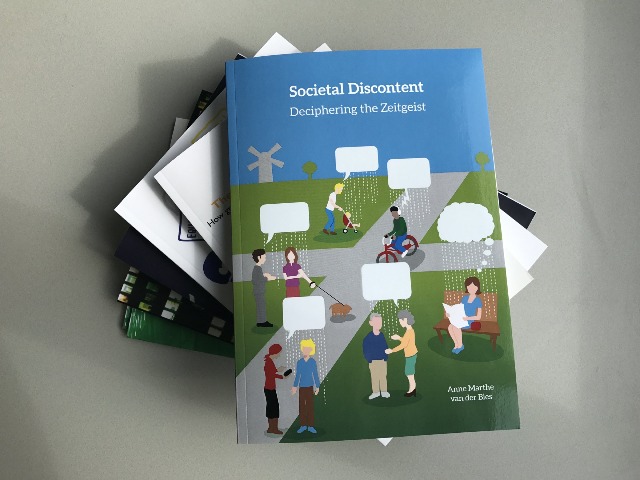
Donald Trump and the Psychology of Doom and Gloom
Date:27 September 2017Author:Anne Marthe van der Bles
Tomorrow, September 27, Anne Marthe van der Bles will defend her dissertation in which she examines today's Zeitgeist. She identifies Factor Z, which poses a new way to understand why voters choose extreme candidates.
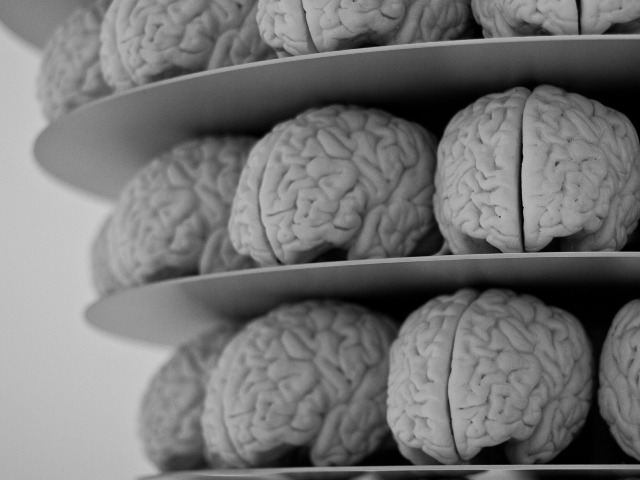
Is the left brain not able to monitor linguistic errors during effortful tasks in ADHD?
Date:20 September 2017Author:Saleh Mohamed
Do adults who report high level of Attention-Deficit/Hyperactivity Disorder (ADHD) symptoms have poor error-monitoring during effortful tasks? If so, which half of the brain is responsible for it? In this blog post, I will address these two questions.

Make Science Great Again
Date:13 September 2017Author:Leon Többen
Why are alternative facts so persuasive? We fail to consider scientific evidence properly because our political opinions signify the kinds of persons we are rather than our knowledgeability. To make science great again, we need to be cooperative and curious and change how science is communicated.

A wonderful gift
Date:06 September 2017Author:Jeremy Trevelyan Burman
A personal essay by a tenure-track professor in Theory and History of Psychology about a gift from her mother, an old book found while moving house. The author reflects on adoption in her family and on what the discovered book means to her.
Social encounters: How do teenagers deal with them?
Date:30 August 2017Author:Minita Franzen
This post introduces a study by Minita Franzen, who examines social encounters of teenagers. How do teenagers experience their encounters with others, how do they behave and feel during such encounters, and how are they affected by them in the short and long term?