
Which would you choose? Nature or the economy?Maybe both are possible…
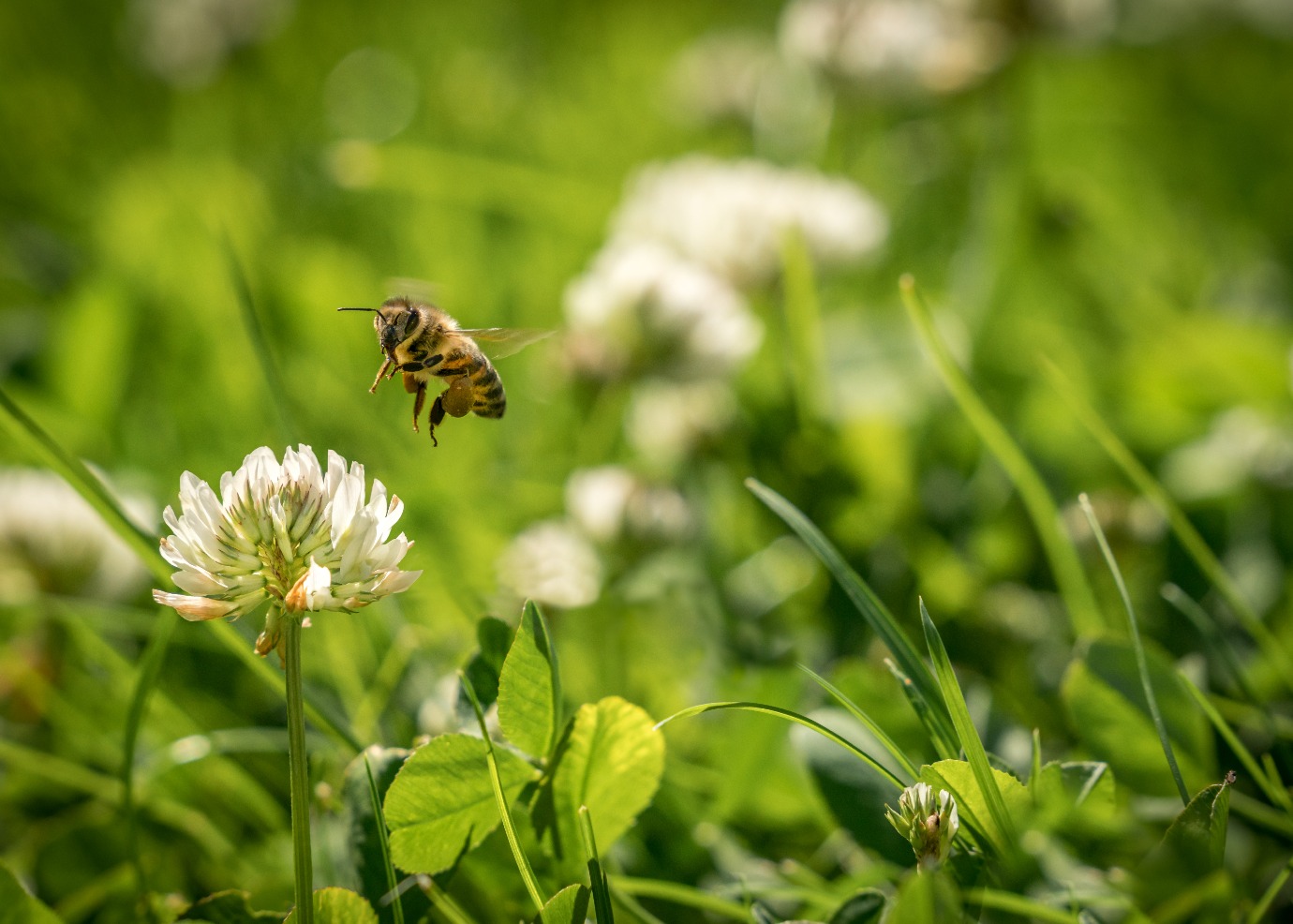
Does agriculture have to choose between production, profit, and nature?
Agriculture faces a major challenge: producing enough food for a growing global population while restoring nature and enabling farmers to build a good livelihood. But is this goal actually achievable? Is it possible to combine nature restoration with high food production and a profitable farm? It is often thought that it is not. Nature and the economy are often seen as opposites, making it seem as though a choice must be made. Economic interests often take precedence, which is evident in biodiversity loss, climate change, and soil depletion.
But it turns out… Research shows that high production, profitable farming, and nature restoration can indeed go hand in hand. Environmental scientists Estelle Raveloaritiana and Thomas Cherico Wanger have studied the long-term effects of agricultural diversification* on four themes, namely: 1) socioeconomic factors (crop yield and income), 2) biological communities (biodiversity, pollination, and pest control), 3) soil quality (water regulation, soil fertility, and nutrient cycling), and 4) combating climate change (carbon sequestration and climate regulation).
What did the researchers find?
The researchers analyzed as many as 17,989 studies on the effects of agricultural diversification. Their statistical analysis shows that, over a 20-year period, agricultural diversification improves soil quality, biodiversity, pollination, and carbon sequestration, while increasing farmers’ incomes and keeping crop yields stable. This provides evidence for the socioeconomic viability of nature restoration through agricultural diversification. This is not surprising, given that the disappearance of pollinators and soil depletion can seriously undermine the viability of farms. After all, the future of agriculture depends heavily on the health of nature.
What are the next steps?
We can draw three conclusions based on the research:
1) Diversity pays off both socioeconomically and ecologically. The Stockholm Resilience Centre has been emphasizing this principle for decades. Diversity strengthens the resilience of agriculture: if one component fails due to a shock, such as drought, a price drop, or disease, other components can compensate for it. This applies in nature, where different species each have their own role, but also in society, where different skills, perspectives, knowledge, and practices help solve problems.
2) Food security, farmers’ incomes, biodiversity, soil health, pollination, and carbon sequestration can reinforce one another. That is why it is important to take a holistic approach to challenges in agriculture. In practice, however, these issues are often addressed through separate measures, plans, and requirements, with little attention paid to their interconnections. The Noardlike Fryske Wâlden, on the other hand, take an integrated approach in which different goals are considered in relation to one another. We at CDLT are also working toward greater integration by fostering connections between farmers and researchers and by incorporating social, ecological, and economic factors into the agricultural transition.
3) After 17,989 studies on the effects of agricultural diversification, one might think that enough is now known, but more research is still needed. This is because studies often do not account for long-term effects. The research by Raveloaritiana and Wanger shows that, as a result, we significantly underestimate the full potential of agricultural diversification on socioeconomic and ecological factors.
*Agricultural diversification refers to practices that introduce greater variety on, in, and around farmland. This can be achieved by increasing crop diversity—for example, through intercropping and crop rotation—as well as by planting flower strips and hedges around fields. In addition, soil life can be enhanced by adding beneficial soil organisms, such as fungi and bacteria that support plant growth, and by reducing the intensity of soil tillage.
Raveloaritiana, E. and Wanger, T. C. (2026). Long-term agricultural diversification increases financial profitability, biodiversity, and ecosystem services: a second-order meta-analysis. Nature Communications, 17, 1-10.
Norström A., Queiroz C., Nyström M., Jiménez-Aceituno A., Jonsson A., et al. (2025). Resilience Science Must-Knows: Nine things every decision-maker should know about resilience. Stockholm Resilience Centre.
More news
-
-
03 September 2026
Ming Cao reappointed as scientific director of the Jantina Tammes School
-
01 September 2026
Evrim Ursavas appointed scientific director Wubbo Ockels School