
Stronger Together: A Data Science & Society Simulation Exercise
As part of the curriculum, second-year Data Science & Society students complete a six-week project designed to develop their group work skills, problem-solving abilities, creativity, and capacity to apply their knowledge to produce a functioning outcome. In this blog post, Angee reflects on the assignment in depth, discussing her group project as well as the challenges and opportunities she encountered along the way.
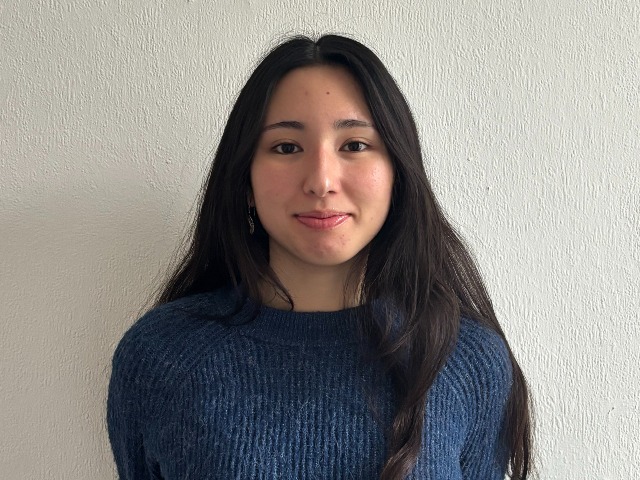
My name is Angee, I am from Peru, and I am a second-year student in the Data Science & Society programme.
What did the simulation exercise involve?
As part of the programme, I recently participated in a six-week simulation exercise. The task involved working in groups to design and develop a practical AI-based project of our own choosing, within the broader themes of task automation, AI innovation, and responsible development. Our teams were organized randomly, and we were given the freedom to select our own project idea and build a functional prototype using open-source tools, which we presented by the end of the six weeks.
What did you learn about working in a team after six weeks of collaboration?
One of the key skills I developed during these few weeks of group work was learning how important it is to clearly define roles and responsibilities within a team. By assigning specific tasks to each group member, we were able to navigate the trial-and-error process more effectively, and combine our individual parts into a cohesive project. Without this structure, we likely would have ended up creating multiple disconnected projects. Assigning tasks also helped us hold each other accountable to the deadlines we set as a team.
❝One of the key skills I developed during these few weeks of group work was learning how important it is to clearly define roles and responsibilities within a team.❞
What do you see as the main strengths and challenges of teamwork during the simulation exercise?
Working in a group highlighted how much stronger a project can be when collaborating with people who have different skill sets, allowing us to build on one another’s strengths and weaknesses. At the start of the exercise, I did not have advanced technical or coding knowledge. However, with the help of my group members, I was able to develop new skills throughout the simulation. Additionally, working in a team allowed us to give each other feedback and point out mistakes or areas for improvement that I likely would have missed if I had been working independently.
Despite these strengths, one of the main challenges that my team and I faced was communication. At times, our project’s progress depended on waiting for different components to be completed before others could move forward. For example, while I was responsible for developing the frontend and could begin working immediately, the group member tasked with integration had to wait until both the frontend and backend were completed to start their work. This made clear communication necessary to keep everyone on track, which included setting up regular weekly meetings.
❝Working in a group highlighted how much stronger a project can be when collaborating with people who have different skill sets, allowing us to build on one another’s strengths and weaknesses.❞
Which skills did you use for the first time while developing the project, and do you feel more confident applying them now that the exercise has finished?
Alongside these challenges came valuable learning opportunities. For one, this project allowed me to gain hands-on experience with integrating a large language model (LLM) locally into a website. This process involved a few moving parts, such as finding the right LLM for our idea and refreshing my memory on how to securely use API keys. Overall, the project pushed me to apply and test the technical knowledge I have been developing throughout my bachelor’s programme.
Working with unfamiliar technical tools also taught me an important lesson in patience. Since much of this type of work was new to me, the development process involved a significant amount of trial and error. Every time I needed to debug an issue or add a new component, I had to restart the backend or frontend multiple times, turning even the smallest changes into an exercise of patience.
Support from the course structure and lecturers played an important role in helping us work through these challenges. I greatly appreciated the weekly check-ins held during the lecture periods. Not only did we receive valuable feedback from our professors, but it also gave us the opportunity to see how other groups were progressing and draw inspiration from their work. In addition, technical lectures were offered to us based on student demand, which proved to be especially useful during the early development stages when many groups ran into similar coding challenges.
By the end of the six weeks, my group had developed a fully functional financial AI advisory tool that provides users with recommended monthly budgets, savings plans, and stock investment insights. Each group had ten minutes to present their projects, discussing the development process, opportunities and limitations, and give a live demonstration of their work. I am proud of what my team managed to accomplish, and equally impressed by the innovative projects created by other students, which included a coding tutor, a cooking assistant, a study advisor, a sheet music generator, and more. Overall, this simulation exercise has definitely been one of the most rewarding experiences, both technically and creatively, of the programme so far!
Curious to learn more about the programme?
Visit our BSc Data Science & Society webpage and sign up for our monthly newsletter.
See you there!
About the author
Angee is currently a student of the BSc in Data Science & Society at Campus Fryslân, University of Groningen.