
Climate Change in the Classroom: Why Educators Matter More Than Ever
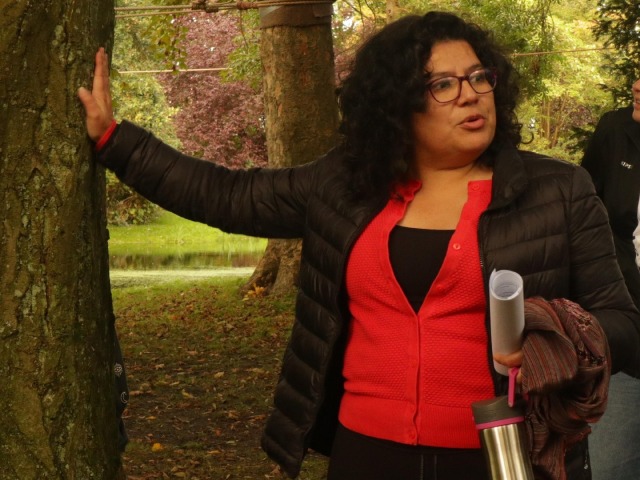
Carol is an ecologist from Colombia and an assistant professor in Earth and Environmental Sciences at Campus Fryslân. Her expertise lies in the use of spatial tools to understand ecological dynamics, as well as in science and technology studies (STS) approaches that explore how biodiversity is maintained across time, space, and knowledge systems. Her work moves between maps, ecosystems, and questions about how different ways of knowing shape the world we live in.
Where It Began: Curiosity and Stories About Nature
When asked what first sparked her interest in environmental sciences, Carol does not offer a single defining moment. Instead, she reflects on a broader sense of curiosity that has followed her for years.
“I am not sure about it,” she says. “I have always been curious about many topics at the same time, but I have always been interested in writing, reading, and listening about nature in literature and music, and how it was presented in documentaries.”
Before ecology became a profession, it was something she encountered in stories and images. She was drawn to the way nature appeared in cultural expressions, how landscapes and species were described, imagined, and narrated. Over time, that curiosity found direction in ecology as a discipline. “I think that sparked my interest towards ecology as a discipline where I could focus on the interactions and connections across scales,” she explains. “I really wanted to be part of that.”
Ecology offered a way to hold complexity without reducing it too quickly. It allowed her to study how systems interact across time and space, and how different elements depend on one another in ways that are not always immediately visible.
Looking Beyond Disciplinary Borders
Carol’s move to Campus Fryslân was shaped by a feeling that something was missing in her earlier academic environment. She had been working mainly with researchers within her own field, or very close to it, and although those conversations were valuable, they did not fully satisfy her questions about biodiversity and its maintenance.
“As part of my discipline I was mostly interacting with researchers within my field, or very close to it, and I always felt something was missing,” she says. “Ecology was not enough in my efforts to understand biodiversity maintenance.”
She began searching for opportunities in other faculties, both in her home country and internationally, hoping to find a place where ecology could be in dialogue with other perspectives.
“I started to search for opportunities in other faculties, in my country and around the world, and finally found a perfect match in Campus Fryslân, where I could be part of an interdisciplinary community, learn, collaborate and teach with researchers and students from other disciplines and work together.”
At Campus Fryslân, biodiversity is not treated as a purely ecological issue. It is discussed alongside governance, economics, justice, and social change. For Carol, this interdisciplinary setting creates the conditions to ask better questions, and to prepare students for the kinds of challenges they will face outside the university.
How Students Are Experiencing the Climate Crisis
In her experience, students today arrive with a certain level of awareness about climate change. “My impression is that students are aware of climate change in the context of what they learn in schools and watch on TV and social media, and are worried about its impacts,” she notes.
That awareness often carries an emotional dimension. Many students feel concern about the future, and sometimes uncertainty about what their role can be. The classroom therefore becomes a space not only for learning scientific concepts, but also for processing those concerns and turning them into informed engagement.
Carol pays attention to how students talk about climate change, what assumptions they bring with them, and how their understanding evolves as they encounter new frameworks and perspectives. Education, in this sense, becomes a process of widening the lens.
The Responsibility of Universities
When discussing the role of universities in times of climate crisis, Carol emphasizes that higher education institutions hold a central position in shaping how society understands environmental problems.
“Universities are at the core of education in all disciplines,” she says. “In that context, their role is critical in bringing awareness and tools not only of the climate crisis, but how that is a symptom of underlying issues in terms of the human–nature connection and domination, concentration of power, and prioritization of short-term gains, as presented by IPBES in their assessment on transformative change.”
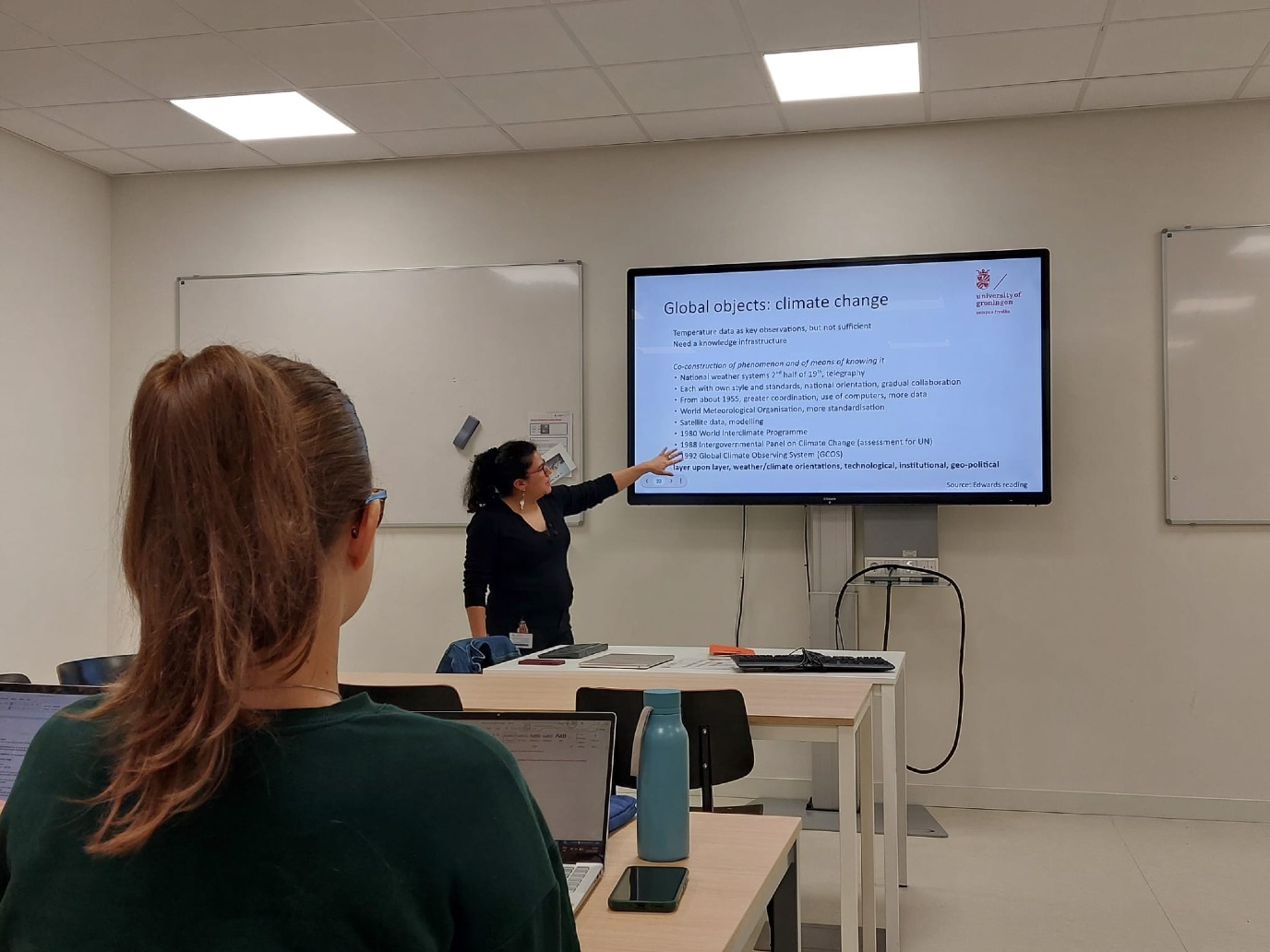
She refers to the work of the Intergovernmental Science-Policy Platform on Biodiversity and Ecosystem Services (IPBES), which has highlighted the need for transformative change that addresses root causes rather than isolated symptoms. For Carol, this means that lecturers cannot limit themselves to explaining atmospheric processes or biodiversity loss in isolation. They also need to help students recognize how economic systems, political structures, and cultural values shape environmental outcomes.
“I think that our role is to bring that forward to the students, to realize that system-wide transformation or transition is necessary and that it is not a one discipline endeavour but a joint effort,” she explains. This requires offering students tools and experiences that broaden their perspectives, facilitate collaboration, and allow them to ground their knowledge in diverse settings where theory meets practice.
Teaching in the Face of Uncertainty
Climate change can be overwhelming, and some students struggle with feelings of anxiety about the future. Carol reflects on her own relationship to this topic with honesty. “Unfortunately, or fortunately, I don’t feel it as overwhelming or anxiety-inducing,” she says, “but it worries me when there seems to be no opportunities for change or paths to more than just one future.”
In her teaching, she addresses this concern by sharing her experiences as a researcher working directly on these issues. By showing students that research is an ongoing process shaped by questions, doubts, and collaboration, she makes space for discussion rather than despair.
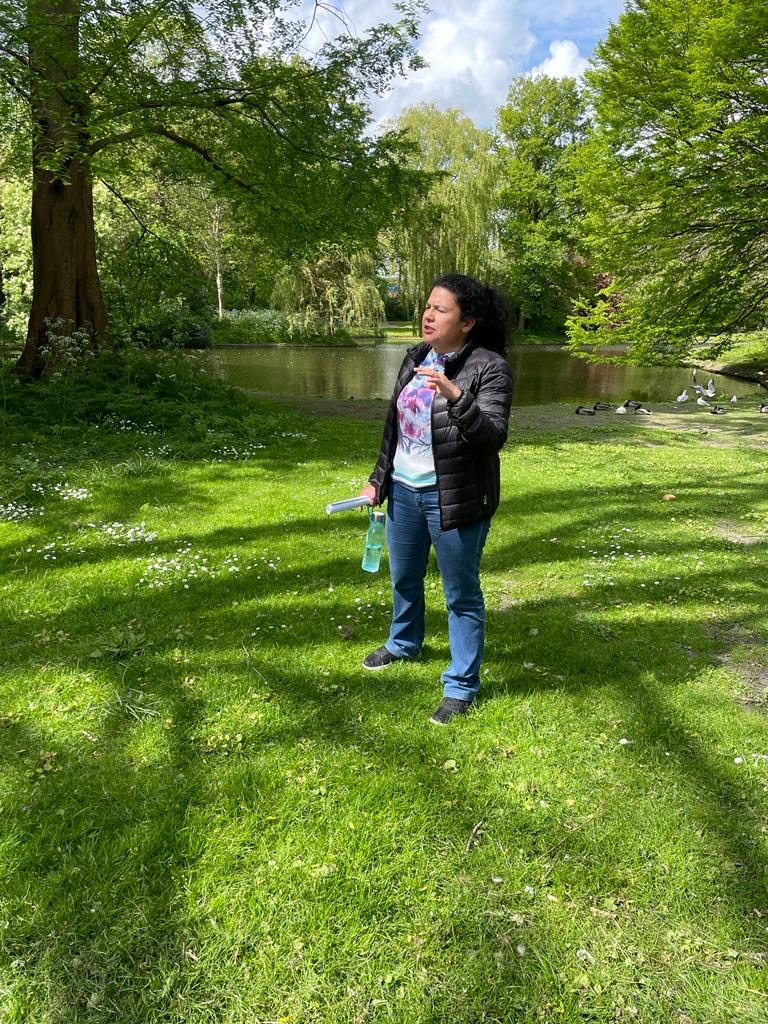
She also takes her students outside the classroom. “I take the students to the city green spaces to connect to nature and reduce stress,” she explains. These visits offer a tangible reminder of what is at stake and create room for reflection that is different from a lecture hall discussion.
In addition, she has worked with students as part of the Liveable Futures Festival, leading a workshop titled “Changing the Narrative - Stories of Hope and Change.” Through that workshop, students explored how the way we tell stories about climate change influences what we believe is possible. By examining narratives of transformation, they were invited to imagine futures that are not predetermined.
What Students Should Carry With Them
When asked what skills or mindset she hopes students develop, Carol outlines a set of capacities that go beyond disciplinary knowledge.
“Students should have system thinking skills to connect topics across disciplines and contexts,” she says. They should be able to see how environmental challenges are linked to economic models, governance systems, and social inequalities. At the same time, they need practical abilities to engage with different actors. “Students should be able to understand and interact with diverse stakeholders including scientists, policy makers and community members.”
A solid understanding of climate and ecological dynamics remains essential, as it allows students to assess both risks and opportunities in relation to biodiversity and environmental change. Yet Carol also stresses the importance of values. “Last but not least, students should value pluralism as a fundamental principle of socio-ecological justice.” Respecting different knowledge systems and perspectives is not an optional addition, but a core requirement for addressing complex global challenges.
Holding on to Hope
Despite the scale of the climate crisis, Carol finds reasons to remain hopeful. “Many things give me hope,” she says.
“The current social movements for justice, the advances in research to more integrative views of environmental and social issues, and spaces like Campus Fryslân, where students have constructive collaborations in these topics as part of the government, NGOs, business and society as a whole.”
Hope, in her view, is grounded in collective effort. It appears in interdisciplinary research, in students who are willing to question existing systems, and in collaborations that connect academia with broader society.
In times of climate crisis, education shapes how problems are framed and who feels responsible for addressing them. Through her teaching and research, Carol invites students to look beyond surface-level explanations, to engage with complexity, and to participate in the long-term work of transformation.
About the author
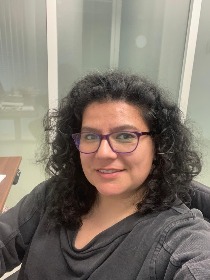
Carol X. Garzón López (PhD) is Assistant Professor of Earth and Environmental Sciences at Campus Fryslân, University of Groningen. A Colombian ecologist, her work focuses on spatial ecology, remote sensing, and biodiversity conservation, with a growing emphasis on how knowledge infrastructures shape what and how we know about biodiversity. She is also the director of Verde Elemental, a Spanish-language platform dedicated to ecology and conservation in Latin America. Her research brings together ecological science, interdisciplinarity, and science communication in the pursuit of livable futures.