
Panel discussion on AI in Education: From White Paper to Inclusive Action, insights from a productive discussion
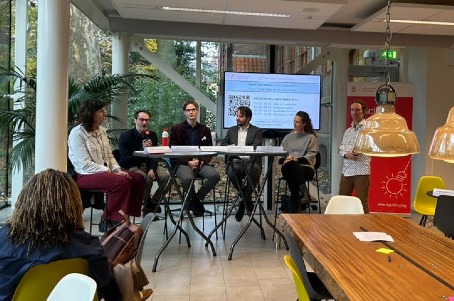
In June the Communities of Practice of Inclusion and Diversity and AI in education presented their jointly developed White Paper (see the link to the white paper: AI D&I White Paper (June 2025).pdf) It stresses that ethical, inclusive, and accessible technology choices are necessary to protect equitable opportunities for diverse learners. As a follow up to the official launch of the white paper, the TAG organised an event on 4 November. Five panel participants gathered to discuss the ethical and inclusive perspectives on AI from an educational point of view. The panel featured Rector Magnificus Jacquelien Scherpen, policy advisor for educational strategy Jasper van de Kamp, assistant professor Tim van Zuijlen (Faculty of Law), lecturer Carole Fuller (Faculty of Arts), and student representative Jona Frank (Faculty of Behavioural and Social Sciences). The discussion was facilitated by the educationalists Angelos Konstantinidis (ESI) and Catherine Meissner (TAG).
A total of thirty people joined the discussion with questions and comments. The session opened with participants sharing their personal views and concerns about AI, especially around bias and diversity, reflected in Scherpen’s reminder that "AI is only as good as what you put into it". Key themes included the need for ethical and legal frameworks for AI use, equal access to digital tools, and the importance of teaching students to engage critically with AI. Participants also noted how AI can both challenge and support inclusivity, for example, acting as an equaliser for non-native English speakers while also raising accessibility concerns.
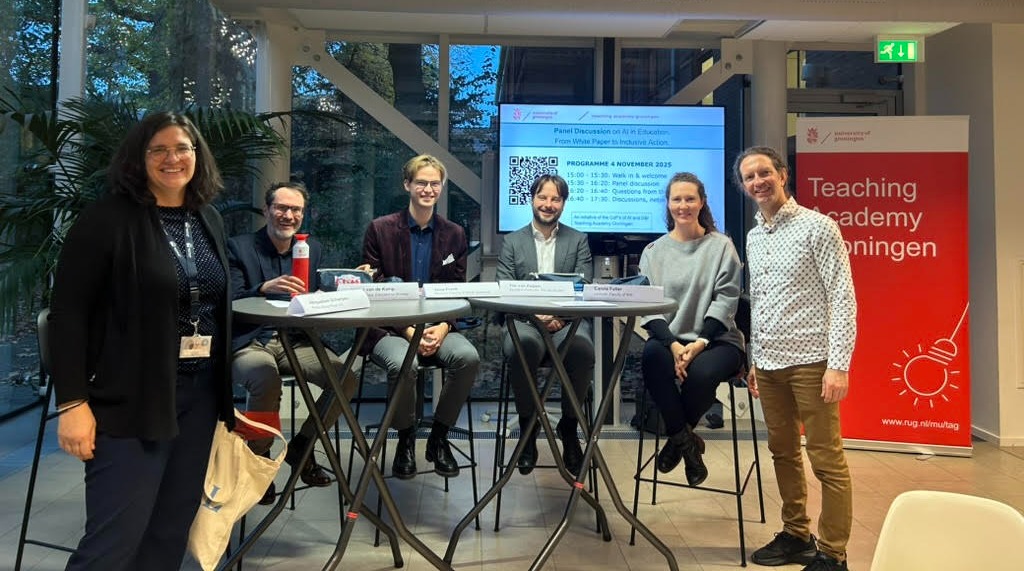
The group highlighted the importance of trust between teachers and students, continuous professional development, and a broader cultural shift in how universities approach AI. Looking ahead, the panel discussed the development of a more specialised course on AI ethics, one that goes beyond the topics covered in the Critical AI literacy module currently offered by the UB and CIT, to help educators and students navigate this quickly evolving field.