
Popović, Prof. Mladen
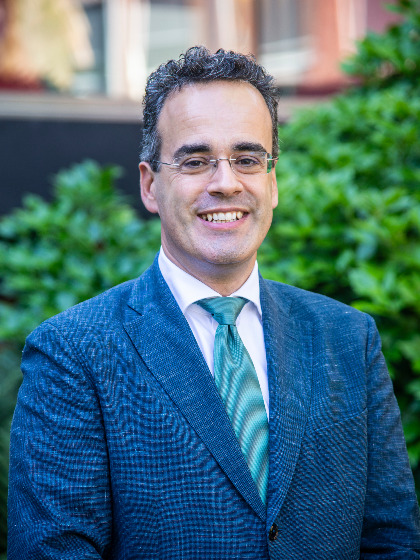
Mladen Popović studied at the University of Groningen, the Katholieke Universiteit Leuven and Yale University. Popović conducted archaeological research in Megiddo and Jerusalem. He is head of the Qumran Institute of the University of Groningen, which has a leading role within the Netherlands in the study of the Dead Sea Scrolls. In 2013, Popović was curator of the unique exhibition of the Dead Sea Scrolls in the Drents Museum.
In 2014 Popović was awarded an ERC Starting Grant of €1,5 million that he used to further develop his pioneering research on the Dead Sea Scrolls. Together with Lambert Schomaker, scientific director of the Artificial Intelligence Institute of the RUG, Popović wanted to develop a new method to analyze the Dead Sea Scrolls known as ‘Digital palaeography’ using artificial intelligence and carbon dating in combination with palaeography (the study of ancient and historical handwriting). With highly advanced techniques for pattern matching and image processing, the individual writers of the manuscripts can be identified. This knowledge will provide a better understanding of the Dead Sea Scrolls and the culture from which they originated. In 2021, through analysis of the manuscript with artificial intelligence, Popović, Schomaker and PhD student Maruf Dhali succeeded to conclude that the famous great Isaiah scroll was written by two writers.
In 2025, many Dead Sea Scrolls were found to be older than always assumed. An international research team, led by Popović, combined radiocarbon dating, palaeography and artificial intelligence into a more accurate date prediction model: Enoch.
Popović served as Dean of the Faculty of Religion, Culture and Society at the University of Groningen from 2017 to 2025. Since 2026, he has been serving as Interim Dean of the Faculty of Arts.
Previously in the news
-
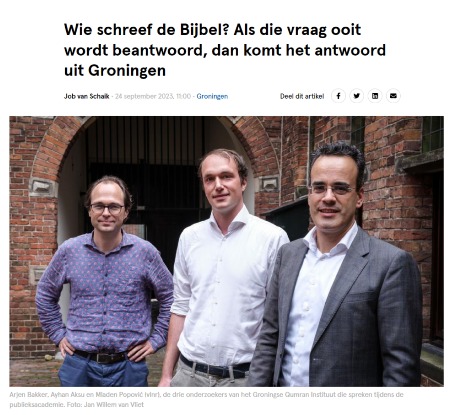
Levend verleden (article on Popovic in Dutch, Dagblad van het Noorden, 2013)