
Regenerative agriculture
The transition towards more regenerative agriculture is essential for a future-proof food system, and RUG actively contributes to this shift. Researchers collaborate with farmers, governments, and industry to overcome barriers such as economic pressures, entrenched practices, and gaps in knowledge.
By focusing on soil restoration, biodiversity, and sustainable land use, new perspectives emerge. This approach strengthens ecosystems, enhances the resilience of agricultural systems, and supports healthy food production for present and future generations.
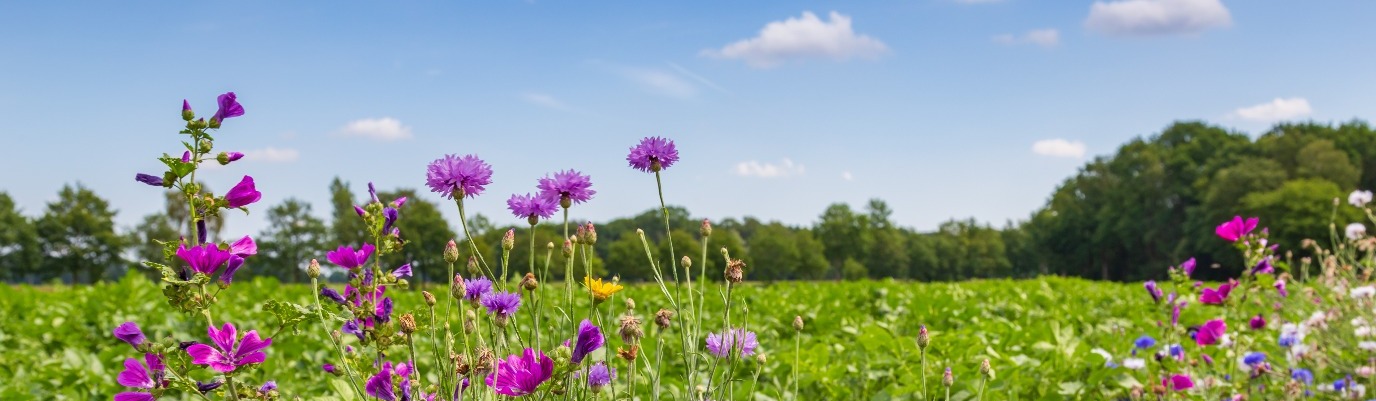
Farmers and researchers are working together on the agricultural transition
For decades, farmers have had to produce more and more to be able to earn their daily bread. Supermarket prices and the agricultural industry determine the often low prices that farmers receive for their produce. The soil is depleted and increasingly needs fertilizing. Biodiversity in agricultural regions has declined alarmingly. In addition, farmers have to comply with legislation that is constantly changing. Farmers do want to produce more sustainably, but are trapped from all sides.
For this reason, the Centre for Sustainable Agriculture Transition (CDLT) at Campus Fryslân (CF) will be guiding hundreds of farmers within the Programme ReGeNL in making the transition to a more sustainable business model in which they can operate healthily, with an eye for soil and biodiversity, while still earning a good living. Professor and director Gjalt de Jong and programme manager Ingrid van Huizen explain why and how they are going about this.
What makes for healthy soil?
Healthy soil does not need chemical fertilizers, is more resilient against pests and diseases, and can take up more water and carbon. But what exactly constitutes healthy soil, and how do we bring it back once it has deteriorated? This is what Professor of Microbiology Joana Falcao Salles and postdoc Barbara Prack McCormick are studying.
‘Suppose you’ve got a field,’ Falcao Salles describes. ‘Perhaps it’s been used in the past for intensive agriculture, with fertilizer, pesticides, and tillage. What is needed to restore the soil?’ There are already some solid principles from agroecology and regenerative agriculture, and Falcao Salles and Prack McCormick measure their effect on the soil, working with farmers who are putting these principles into practice.
Those most affected by modern agriculture
‘Arable farming systems used to be very diverse, with all kinds of different crops and therefore a rich biodiversity,’ says Raymond Klaassen, ecologist at the University of Groningen. Nowadays, however, farmers only grow a limited number of crops, which has significant consequences for the animals that live there. Klaassen researches what adjustments farmers could make to improve the conditions for the species most affected by modern agriculture, such as the skylark.
‘In East Groningen, a region I frequently visit, farmers mainly grow sugar beet, winter wheat, and starch potatoes,’ Klaassen explains. ‘These crops contribute very little to a healthy human diet: sugar beets are processed into sugar, winter wheat is used for animal feed, and potatoes are grown for the starch industry.’ In other words, a rather undiversified landscape, but you can’t blame the farmers, Klaassen is quick to add, because these crops are the only way they can still earn enough to make a living.