
Microplastics are like boomerangs
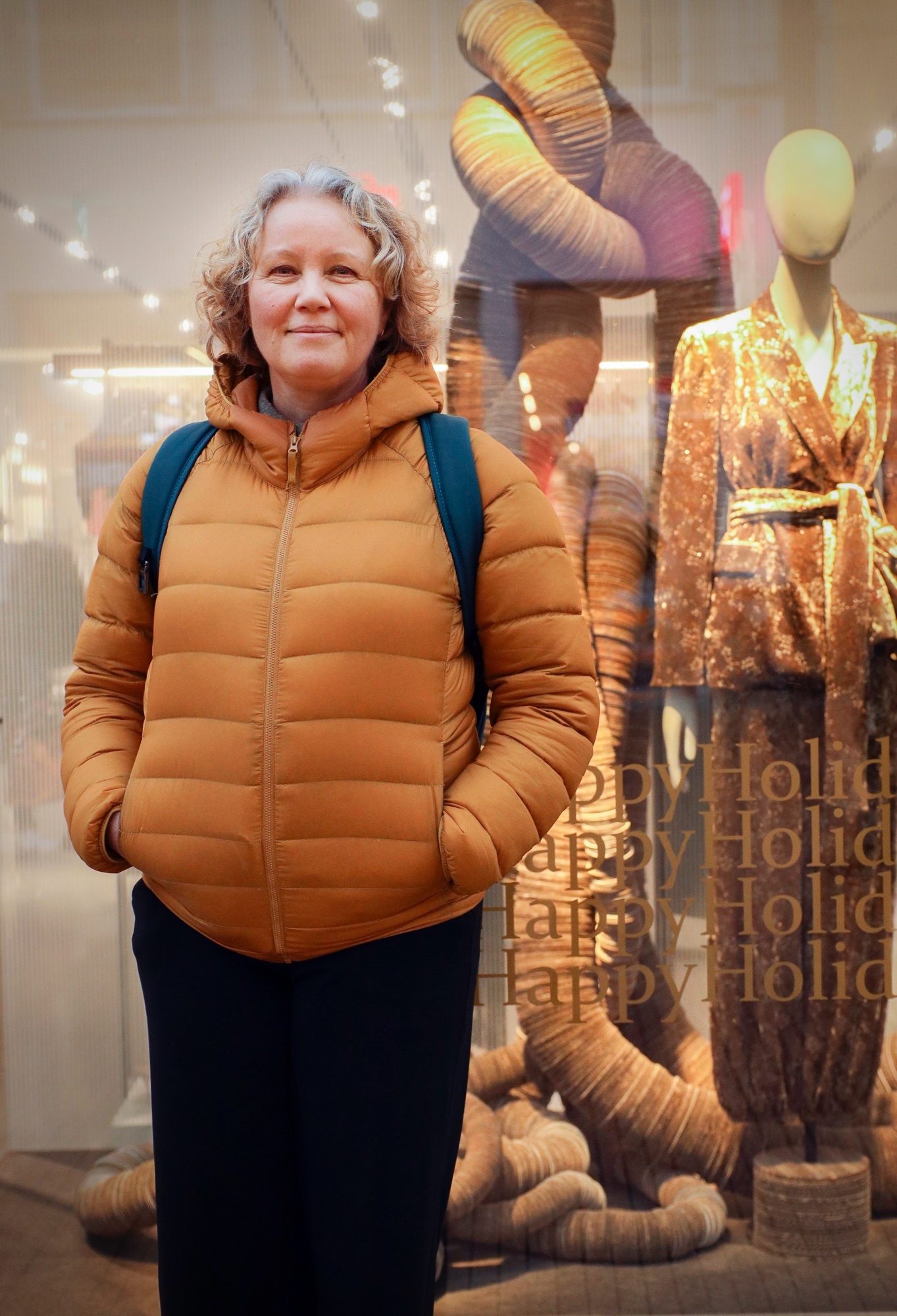
As part of the measurement campaign Kleding Onder de Loep (Clothing Under the Microscope), Barbro Melgert assessed how much microplastic the inhabitants of Groningen disperse from their own clothes. By making people aware of their own role in the dispersion of microplastics, she is hoping to promote a healthier living environment.
Text: Britt Corporaal / Photos: Henk Veenstra
Kleding Onder de Loep
Barbro Melgert is a Professor of Respiratory Immunology at the Groningen Research Institute of Pharmacy. Her research focuses on the immune system of the lungs. She investigates how the immune system can both protect people and contribute to the development of lung diseases, and how medicines can play a role in all of this.
Melgert recognizes that there is an activist layer to her research: ‘What you see is that air quality is very important for our lungs and that poor air quality often leads to lung diseases. A great number of people think that the air quality outside is worse than inside, while this is, in general, the other way around. It was in that context that I became interested in microplastics.’ Melgert’s wish to keep our living environment as healthy as possible prompted her to start the citizen science project Kleding Onder de Loep.
Clothing samples
The Kleding Onder de Loep campaign took place in late 2025. It is a clear example of a study that uses interdisciplinary and innovative research methods. Together with colleagues from Campus Fryslân, staff from the Forum, and student assistants, Melgert visited libraries in Groningen and the surrounding area. They asked people for a sample of their clothing and to complete a questionnaire about the sustainability of their clothes. Although all measurement campaigns have finished, it does not mean that the results are ready. Melgert and her colleagues are currently busy carrying out laboratory tests and analysing the questionnaires. ‘We have just finished scanning all the samples on microscope slides and are now ready to quantify these.’
What does the label say?
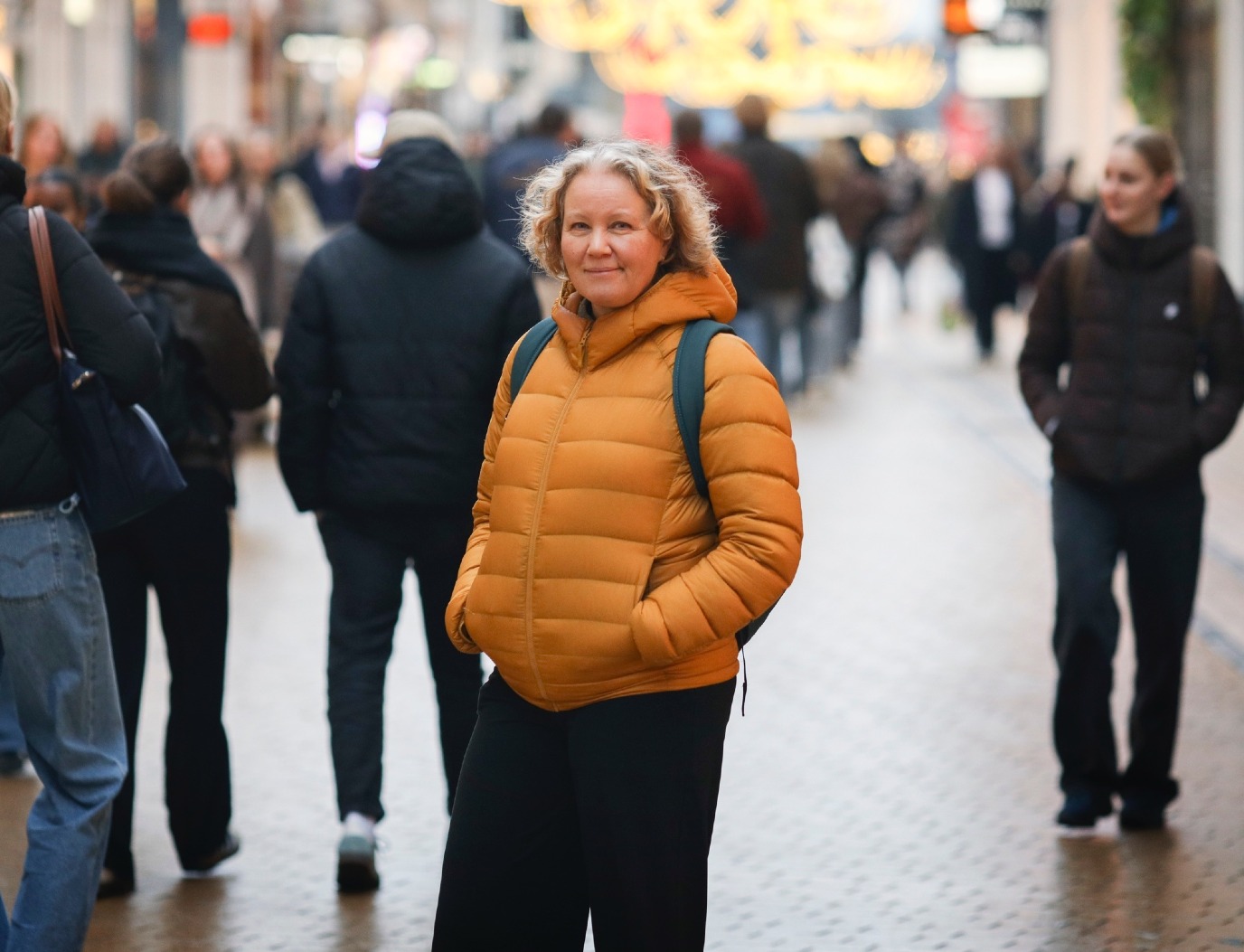
Melgert and colleagues can use the questionnaires to find out how sustainable and healthy citizens think their clothes are. The researchers can then compare these outcomes with data from the clothing samples. ‘We want to show to what extent people are aware of the labels in their clothes and of the information on the label. How many fibres do they think are being released and what are their thoughts on that?’
Making the problem tangible
Melgert is, however, not only focusing on individuals. ‘I don’t think that the responsibility lies only with people themselves, it’s also the responsibility of the government and the industry. So, as a researcher, you have to look at it from different perspectives.’ By making individuals aware of the microplastics problem, they will realize that change is necessary. If that happens on a large enough scale, Melgert thinks that this sentiment may trickle through to policy officers. ‘If you are actively involved in a topic, it makes a deeper impression than if you were just reading about it in an information campaign. I want to make the problem tangible for people.’ That is how our attitudes, as a society, towards microplastics can be changed from a bottom-up approach.
Fast fashion for teenagers
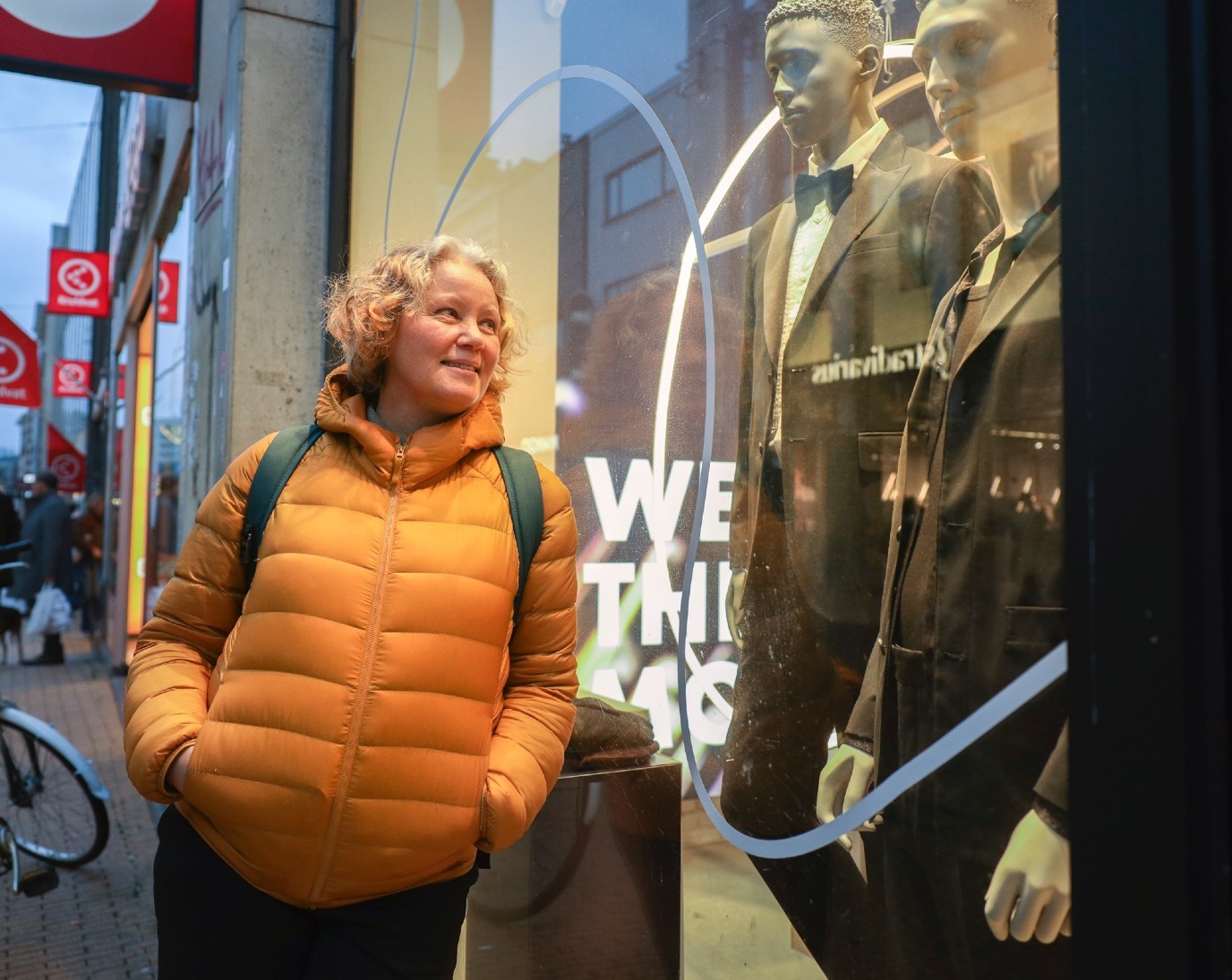
Melgert is about to start a new project: a campaign at secondary schools that is comparable to Kleding Onder de Loep. As part of this campaign, pupils themselves will take and analyse clothing samples. With this campaign, she is reaching a new target group, because only adults were allowed to take part in Kleding Onder de Loep. Melgert explains why this new target group is interesting. ‘Our goal is to make people aware of fast fashion, and you see that fashion manufacturers target young people by supplying new clothes quickly and cheaply. Therefore, young people are an important target group who we are now missing in Kleding Onder de Loep.’
Furthermore, this project has an additional research method. Not only are questionnaires completed and samples studied under the microscope, pupils will also measure the air quality. They will look, for example, at the level of microplastics in the air at the beginning and at the end of every teaching hour. They will do this on several days when the pupils wear clothes made from different materials. This will give us a more accurate measurement of the scale at which our airways come into contact with the microplastics from our clothes.
A healthier living environment
Change is necessary, Melgert explains: ‘I am seeing more and more attention being paid to chemicals such as PFAS and BPA, but we are exposed to such a huge cocktail of substances that you can no longer see their individual effect.’ In an ideal scenario, she would like to compare people who live in air free from microplastics with people who are exposed to microplastics. However, there are no more spaces where the air is not contaminated with microplastics. It is, therefore, very important that people start thinking about the microplastics they introduce into their environment. They can negatively affect their own health. ‘It will always come back to you. It’s like a boomerang!’
Take action
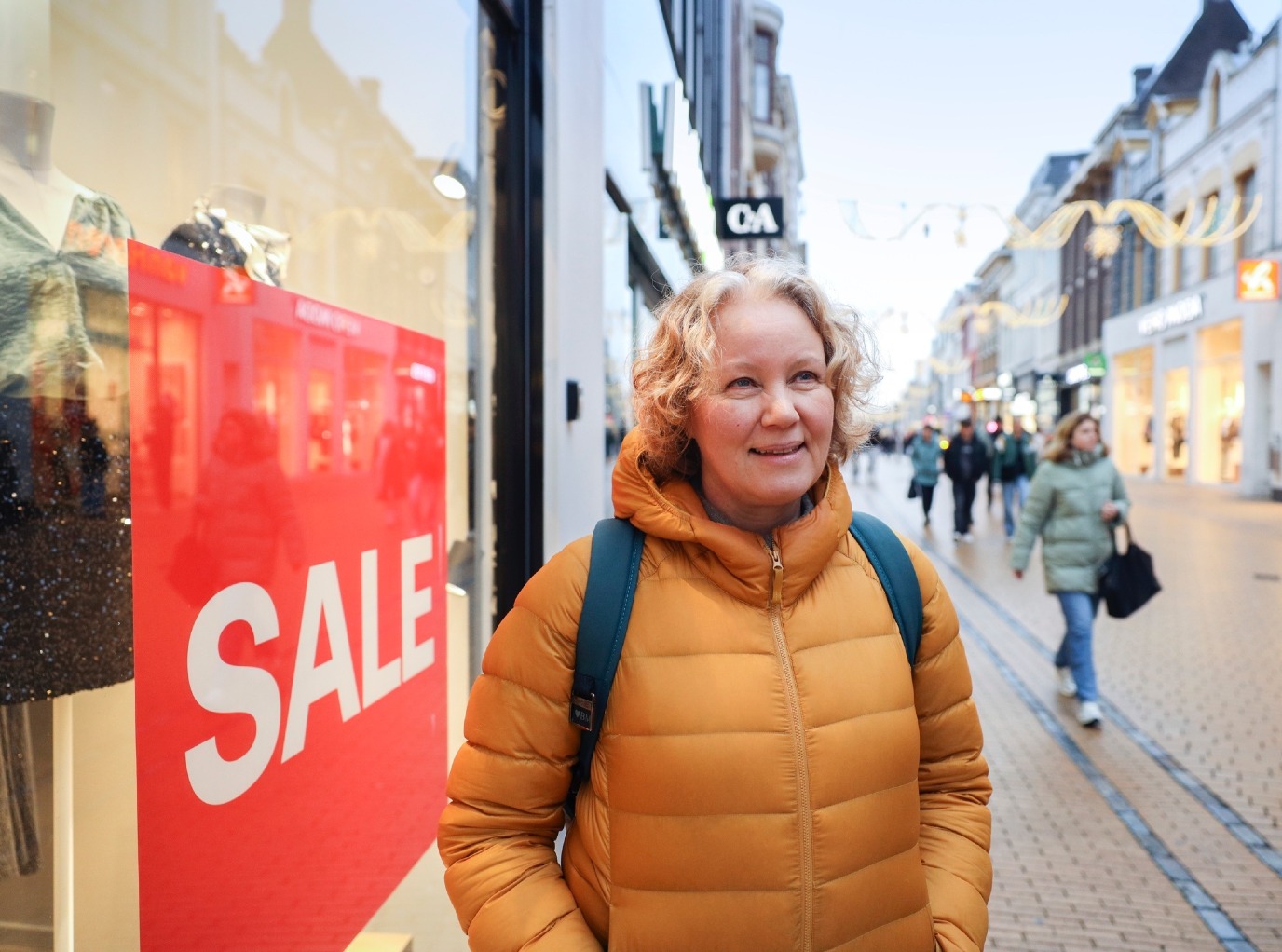
With projects such as Kleding Onder de Loep, Melgert is trying to make people aware of the changes that they have control over. For example, colleagues from Campus Fryslân found out which behaviours help reduce exposure to and dispersal of microplastics. ‘That showed us some things that are very easy to do: for example, vacuum cleaning, ventilating, and not heating your food in a plastic tray in the microwave.’ And Melgert also has some tips related to your clothes: ‘Look carefully at the quality. The cheaper the clothes, the poorer the fibres, and the quicker they end up in the air.’
The measurement campaign Kleding Onder de Loep is a collaboration between Forum, ZonMw, Enlight, and the Rudolf Agricola School for Sustainable Development. It was carried out as part of the CurioUs programme, a collaboration between Forum, ScienceLinx, Aletta Jacobs School of Public Health and Biblionet Groningen.
More information
More news
-
25 September 2026
NASA selects infrared space telescope PRIMA featuring Dutch technology
-
-
24 September 2026
Arjan van der Schaft receives IEEE Control Systems Award