
Science for Society | The Scholierenacademie takes research into the classroom
Scientists work day by day on solutions to a variety of problems. From new drugs to smart farming techniques, our research helps society move forward. But this is not always immediately visible. In the Science for Society series, we use stories about impactful innovations, products and ideas to show that science works!
Text: Nathalie Laarman, Corporate Communication UG
When asked to picture a scientist, many people see the classic image of a white man in a lab coat, working in a state-of-the-art laboratory. Project leader Douwe van der Tuin is using the Scholierenacademie to show pupils in primary and secondary schools in the Northern Netherlands that there is more to science than conducting experiments. ‘It would be a pity if pupils were put off studying because they don’t identify with this stereotype. Our aim is to enable all students to experience science and the associated skills, in the humanities, exact sciences, and social sciences.’
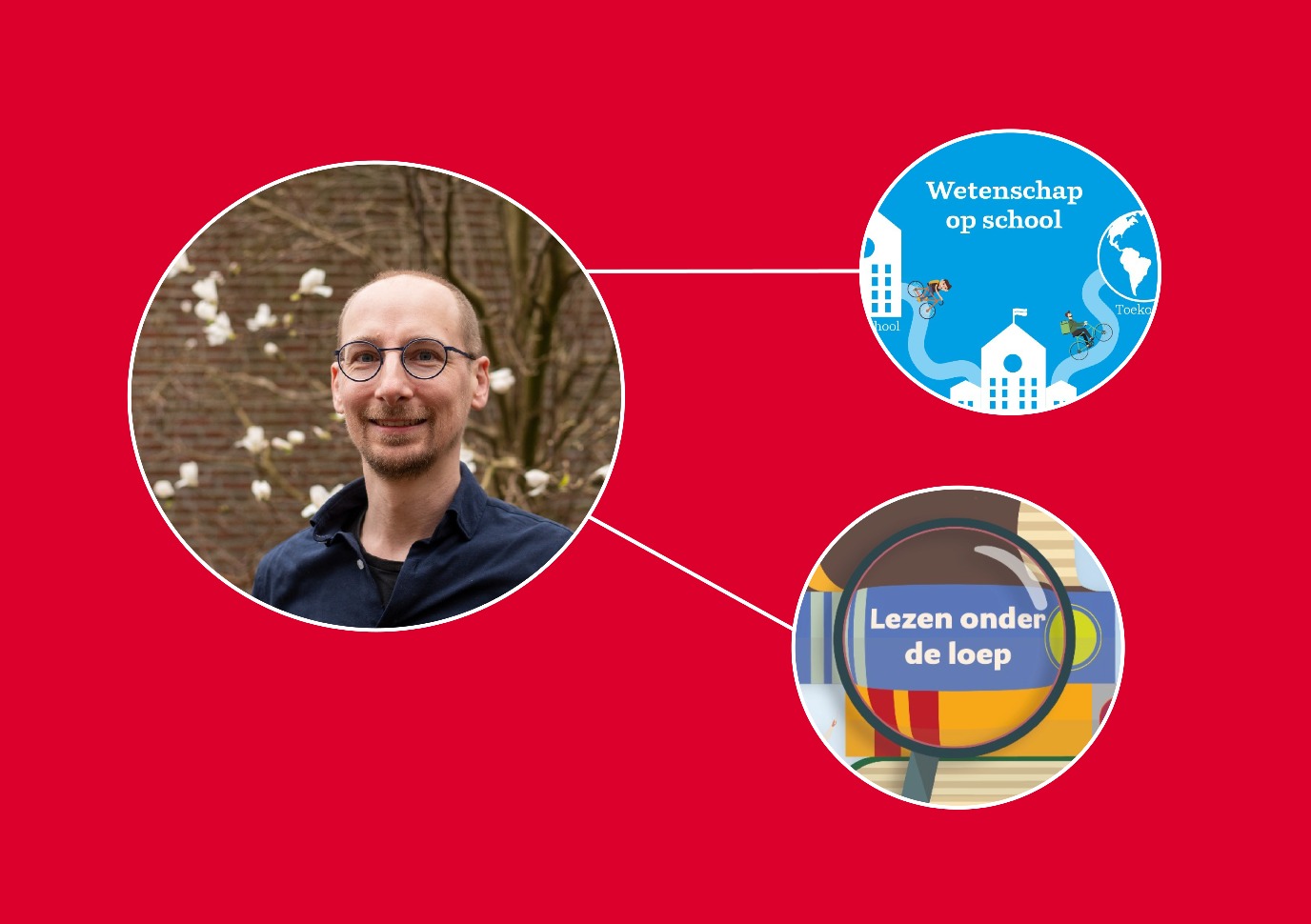
From research to teaching packages
What makes the Scholierenacademie unique is the exchange between the university and other educational institutions. Within a cross-disciplinary development team of scientists, students, and teachers, new materials are developed, which are then made available free of charge to all schools in the Netherlands,' says van der Tuin. 'UG researchers can come to us if they want to translate their research into the field of education. We then consider which subject and teaching method is suitable for which target group. Every teaching package has its own target group, from primary school children to secondary school students in their final years.
The material itself can vary from a scientific poster or a series of lessons, to a more innovative product, such as a game. Van der Tuin demonstrates an escape room game, in which children in a room are given puzzles to solve, while simultaneously training their research skills. ‘We are constantly looking for ways to enable students to actually experience science, resulting in a significant learning effect.’
Start learning research skills in primary school
The overarching aim of the Scholierenacademie is to improve the research skills of schoolchildren and teachers in the Northern Netherlands by introducing children to research and critical thinking from an early age. This starts in primary schools with showing them a simplified research cycle and explaining how you carry out research. The materials provided in secondary schools are a bit more complex and extra steps are added. ‘We want to sketch a realistic picture of science,’ says van der Tuin, ‘science as a means of acquiring knowledge.’ According to him, this is very important: ‘The role played by fake news and conspiracy theories will continue to grow.’
Aspirations and recognition
Developing aspirations is an important aspect of the teaching material. Van der Tuin: ‘We want children to identify with researchers and ask themselves: “Can I see myself studying here, at the university?" This is particularly relevant in the Northern Netherlands, where higher education isn’t always a matter of course. There is a strong feeling of “Just act normal; that’s crazy enough” in this part of the country, making the step to higher education feel huge to first generation students.’
The ultimate aim of the Scholierenacademie is not to attract children to the UG. ‘The UG has a broader societal goal,’ van der Tuin is keen to stress. ‘Everybody needs research skills, regardless of whether they go on to higher education or straight to work.’
Science in the classroom
But the teaching packages benefit teachers as well as pupils. By linking recent academic research to the practice of teaching, the Scholierenacademie is promoting interaction between universities and schools in the Northern Netherlands. Science dates and guest lessons are active ways of taking research into the classroom. ‘A lot of teachers tell us they feel motivated and inspired after a session,’ explains van der Tuin. ‘Our teaching material gives them an experience and knowledge that is new to them. And as teachers are the ones who have to use the teaching packages, it’s particularly important that they’re enthusiastic.’
Creating impact via the Scholierenacademie
Van der Tuin also hopes that more researchers will find their way to the Scholierenacademie. ‘Researchers underestimate how much time, resources and expertise it takes to create impact. By working with us, they can reach a much wider audience.’ In addition, he sees this as a fantastic way of learning how to help young children understand research. ‘You really have to pinpoint the essence of your research.’
The Scholierenacademie does not only focus on popular themes such as AI or mental health. ‘We also highlight research from smaller or less accessible fields, such as philosophy or physics. These provide great opportunities as well.’
Future ambition
Van der Tuin has a clear ambition for the future: to boost teaching in the Northern Netherlands. ‘I want to firmly put the Schools’ Academy on the map, both for schools and for researchers. For researchers, this is a unique opportunity to apply their knowledge and create societal impact. The exchange between the university and other educational institutions makes us all stronger in the North.’
To find out more about Science for Society, take a look at the overview page for all editions.
More news
-
-
03 September 2026
Ming Cao reappointed as scientific director of the Jantina Tammes School
-
01 September 2026
Evrim Ursavas appointed scientific director Wubbo Ockels School