
‘Such willpower’
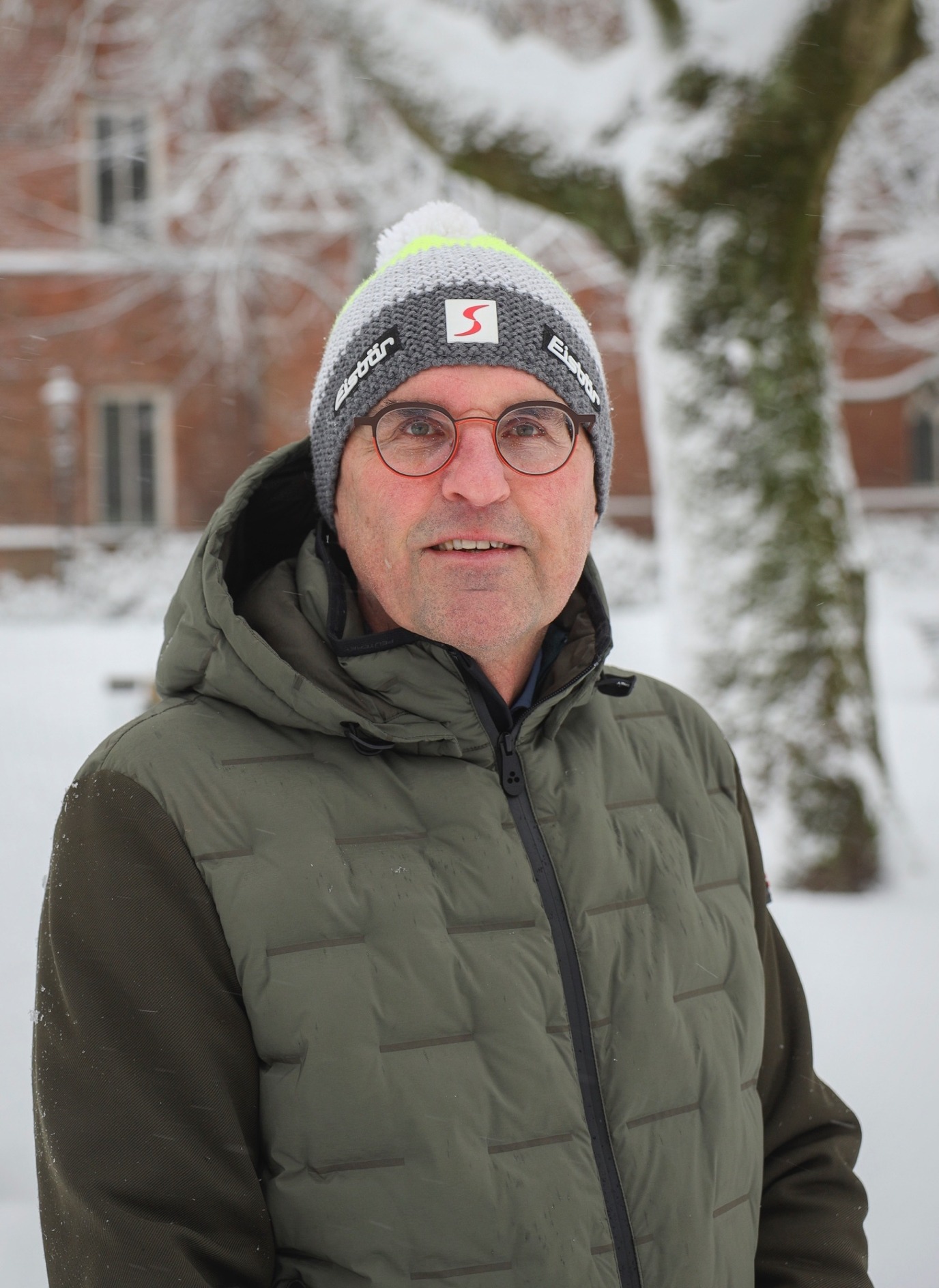
The Olympic Games are where athletes show off the peak of human performance and push themselves to the limit. But being an Olympian is not just about being at your absolute physical peak. Olympians must also strive for mental mastery. Nico W. van Yperen is Professor of Sport & Performance Psychology. His work focuses on the role mental strength plays in high-performance sport. ‘Many people think that physical and mental aspects are unrelated, but obviously, that is not at all the case,’ he says. ‘Your psychological state of mind always affects your physical performance, and vice versa.’
Text: Marrit Wouda, Corporate Communication UG / Photos: Henk Veenstra
Invisible mental strength
According to Van Yperen, when the psychological aspects of elite sport are discussed, the image that comes to most people’s minds is athletes who fail, make mistakes, or lose at the decisive moment. ‘Naturally, that’s when this sort of thing is most visible,’ he says. And it is true, to some extent: ‘After training and working for many years, you have reached that level — as have the other competitors, incidentally — and then it’s up to you to go and do it, under immense pressure, and under the watchful eye of millions of spectators. That does indeed require an awful lot of mental strength.’ However, lay people often forget about the mental component of the process leading up to that moment — the process of getting good at what you are doing. ‘The focus needed to make it that far, train, refrain from all sorts of things, and being tough on yourself for years takes an incredible amount of mental strength.’
Maximum effort, maximum rest
Of course, you need a certain amount of talent — a physiological aptitude that makes you great at a particular sport. But aptitude alone will not get you to the Olympics. Motivation may actually be the most important requirement. ‘If you don’t like working out to the point of exhaustion and being very tough on yourself, you won’t last.’ You have to be tough on yourself in order to make it to the top.
Van Yperen wrote a book entitled Winnen met je hoofd (‘Mentally winning’) in association with sailor and Olympic gold medallist Marit Bouwmeester: ‘She is very good at that. It’s not about those days when it’s sunny outside and everything goes smoothly. It’s about what you do when you’re not feeling great and everything seems to go wrong. That’s where the most gains can be made, from a mental point of view,’ says Van Yperen. ‘If you go ahead and do it anyway, you may actually find yourself performing quite well. This will cause you to feel proud and learn to keep going.’ On the other hand, there are times when you need to take a break. To be genuinely successful, you must learn exactly where to draw that line. ‘Short-track skater and Olympic champion Xandra Velzeboer decided to sit out the second day of the national short-track skating championships to get more rest ahead of the Olympics,’ is an example presented by Van Yperen. ‘Many athletes would struggle to do that, because it goes against the idea of discipline, but luckily, they have a team for that sort of thing,’ he says with a smile.
Growth mindset
Being disciplined, working hard, persevering, striking the right balance: for the most part, these are qualities you can master and get better at. Sports psychologists often talk of a ‘growth mindset’, which refers to the belief that you can learn and improve. Van Yperen: ‘Research conducted on twins has taught us that many qualities are 30 to 70 percent based in genetics. This is interesting from a scientific point of view, but on the individual level, the question to be asked is, what do you believe?’ Van Yperen provides an example: ‘If you are shy, you can choose to accept that fact, because this is who you are. That’s fine, but if it bothers you, you can choose to do something about it: strike up conversations with strangers, attend a party, or possibly even work with a coach.’ The chances are that you will never be the most extroverted person out there, but you can grow. After all, while some things are determined by nature, nurture can go a long way towards significantly changing things. ‘Your ceiling may not be the same as an Olympic champion’s ceiling, but people who have that mindset and enjoy learning will always get better.’
What is within your power?
For elite athletes, one overarching principle of growing stronger in psychological terms is to focus on those things that they can control, both in their training (by practising all sorts of scenarios) and during competitions. ‘Don’t pay any attention to all the people who are watching, the referee, the weather. Take them as they are,’ Van Yperen adds. Instead, focus on where you will be starting, how to round that corner, how to deal with your opponents, all the things you have trained for. ‘And if you do all those things as you did them in training, and have optimized them to the maximum extent possible, then you should be satisfied with your own performance, regardless of the outcome,’ says Van Yperen. ‘That can be very hard for elite athletes,’ he adds with a smile. ‘But if you’re mentally strong, you’ll be able to watch those videos again later and conclude: yes, I did everything correctly. I was simply beaten by someone who happened to be even better.’
He goes on to say, ‘Dutch skaters know that if they’re up against American skater Jordan Stolz, they’re likely to be beaten.’ However, he goes on to say, ‘naturally, they still try to make it happen!’ Mental strength is about giving it your all and knowing afterwards that you did everything you could.
Refusal to quit
Let us stay with Stolz for a moment. At the USA Olympic trials, Stolz fell onto his belly, got up, and managed to finish in third place. That is impressive from a physiological point of view, but also from a mental point of view. ‘Being able to make that switch when you do get distracted is a very important skill,’ says Van Yperen. The ability to pull yourself together and never ever give up is the key to success. ‘In cyclocross, you’ll sometimes see riders whose bikes have broken. This won’t stop the riders from quitting. They’ll just keep running, carrying their bikes on their shoulders. Most people would give up, but not them. They will always keep going.’ Because here, too, it is all about giving it your all, and doing the best job you can do under the circumstances.

There is no such thing as perfection
Elite athletes seek to make the most of their potential and aspire to perfection. ‘Which is exactly what you need to aspire to, and which is inspiring. But at the same time, you must be aware that perfection is unattainable,’ says Van Yperen. In order to give their best possible performance, athletes must definitely aim for the highest level achievable, but Van Yperen says that they must also be prepared for setbacks. That might sound like a negative thing, but considering all the things that could go wrong while you’re preparing [for a competition] will help you deal with such things. ‘If you didn’t do that, you might take a tumble and think, oh, this is not going to be perfect race, so why bother finishing it? But there has never been an Olympic champion who completed a perfect race.’
Outliers
Having a physiological aptitude and a growth mindset, discovering the right sport at the right time, and being in the right environment — many factors must be right for a person to make it to the Olympics. ‘Olympic champions are outliers, statistical anomalies on a very unique trajectory. In short, they are exceptional people.’ However, as Van Yperen is quick to point out, ‘the same is true for outstanding politicians, hairdressers, or teachers. They just don’t get the same acclaim from society.’
More information
More news
-
-
24 August 2026
Social media: swimming or drowning?
-