

Climate change could halve land suitable for grazing by 2100, a new study warns
A new international study published in PNAS shows that climate change could reduce 36–50% of the world’s climatically suitable grazing land by 2100, posing severe risks to livestock systems that support over 100 million pastoralists and up to 1.6 billion animals worldwide.
The research identifies a 'safe climatic space' within which grassland-based grazing systems for cattle, sheep, and goats can thrive—defined by specific ranges of temperature, rainfall, humidity, and wind speed. As global temperatures rise, this safe space is projected to shift and contract dramatically, leaving many regions unsuitable for grazing.
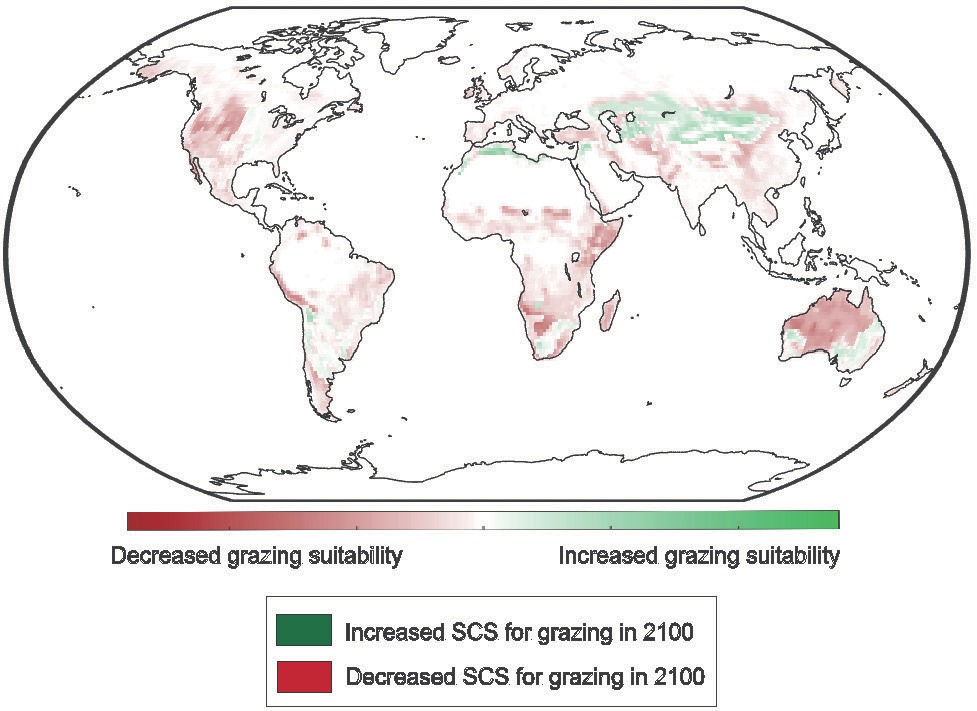
Importantly, the study highlights that the strongest impacts will fall on already vulnerable regions, including countries facing food insecurity, economic instability, and social inequality.
“Climate change will significantly shrink the spaces where grazing systems can survive. Much of this loss will occur in regions already struggling with hunger, political instability, and gender inequity,” said Chaohui Li, lead author and former researcher at Potsdam Institute for Climate Impact Research and Peking University.
“Grassland-based grazing is highly dependent on the environment, including things like temperature, humidity, and water availability. What we see is that climate change is going to reduce the spaces in which grazing can thrive, fundamentally challenging farming practices that have existed for centuries,” commented Maximilian Kotz, another of the study’s coauthors and researcher at the Barcelona Supercomputing Center.
Africa identified as a major hotspot
Africa emerges as one of the most vulnerable regions. Depending on future emissions pathways, the continent could lose 16% of suitable grazing land under low-emissions scenarios, and up to 65% if fossil fuel use continues unabated. As temperature zones shift southward, key grazing regions—including the Ethiopian Highlands, the East African Rift Valley, and the Kalahari Basin—may become nonviable altogether.
Dr. Prajal Pradhan, Assistant Professor at the University of Groningen and affiliated with Wubbo Ockels School for Energy and Climate, is a co-author of the study. He emphasizes that traditional adaptation strategies may no longer be sufficient:
“The scale of climate change we observe goes far beyond what historical adaptation strategies—such as switching livestock species or migrating herds—can handle. In many regions, especially Africa, the climatic shifts are simply too large,” said Pradhan.
Expanded grazing suitability in Asia
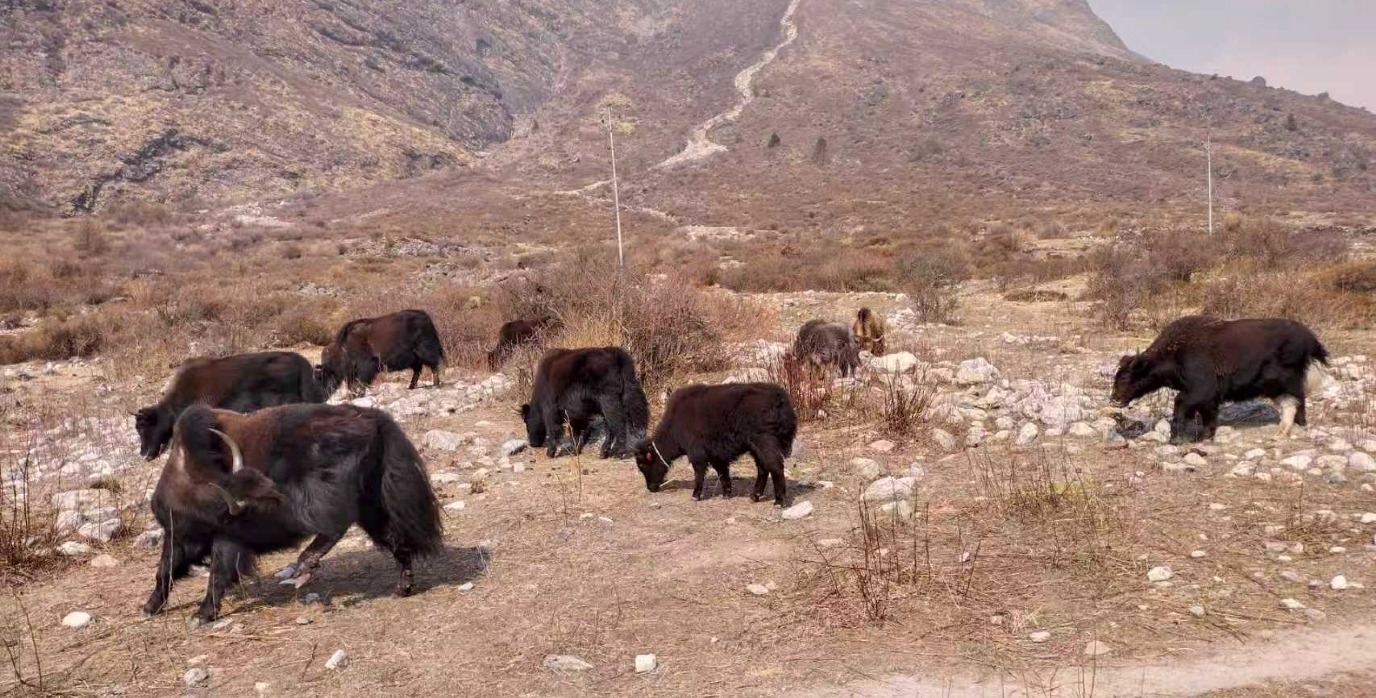
According to Xudong Wu (Beijing Forestry University), climate-driven changes in grazing suitability across Asia are projected to follow a distinct westward shift. Grazing zones are expected to move inland from their current concentration in the eastern plains toward the highland and interior regions. Suitable future niches are likely to cluster in Asian major grazing landscapes, including the Mongolian Grasslands and the Northern China Plains.
The findings underscore the urgent need for rapid emissions reductions, highlighting that limiting global warming is the most effective way to protect grazing-based livelihoods that have sustained communities for centuries.
“Moving away from fossil fuels is essential to avoid potentially existential risks for global livestock systems,” highlights Yuanchao Hu, a co-author (Guangdong University of Technology).
Reference
Li, C., Kotz, M., Pradhan, P., Wu, X., Hu, Y., Li, Z., Chen, G. (2026). Climate change drives a decline in global grazing systems. PNAS.
DOI: https://doi.org/10.1073/pnas.2534015123
More news
-
-
03 September 2026
Ming Cao reappointed as scientific director of the Jantina Tammes School
-
01 September 2026
Evrim Ursavas appointed scientific director Wubbo Ockels School