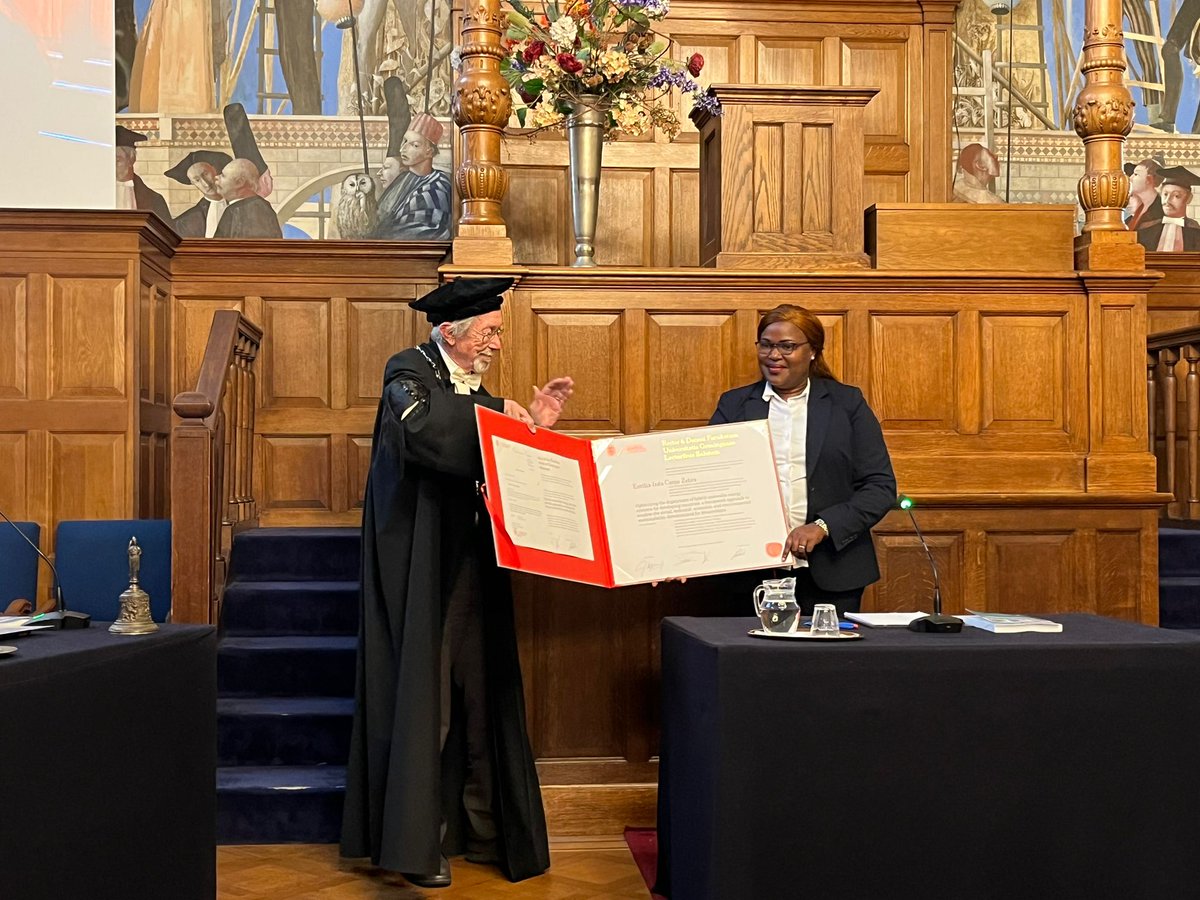
'Sustainable energy systems play a crucial role in improving lives'
The ceremony for the annual sub-Saharan Africa Thesis Award took place Friday afternoon at House of Connections. In the PhD category, the prize was awarded to Emília Come Zebra for her research on hybrid renewable energy systems in Mozambique. ‘These energy systems enable development in education, healthcare, and social progress.’
The SSA PhD Award went to Emília Come Zebra for her dissertation, ‘Optimizing the deployment of hybrid renewable energy systems for developing countries.’ She was supervised by Prof. André Faaij and Dr. Henny van der Windt. The award aims to encourage students to conduct research on sub-Saharan Africa and underscores the importance of the collaboration between the University of Groningen and sub-Saharan Africa. The Wubbo Ockels School is involved in promoting this collaboration.
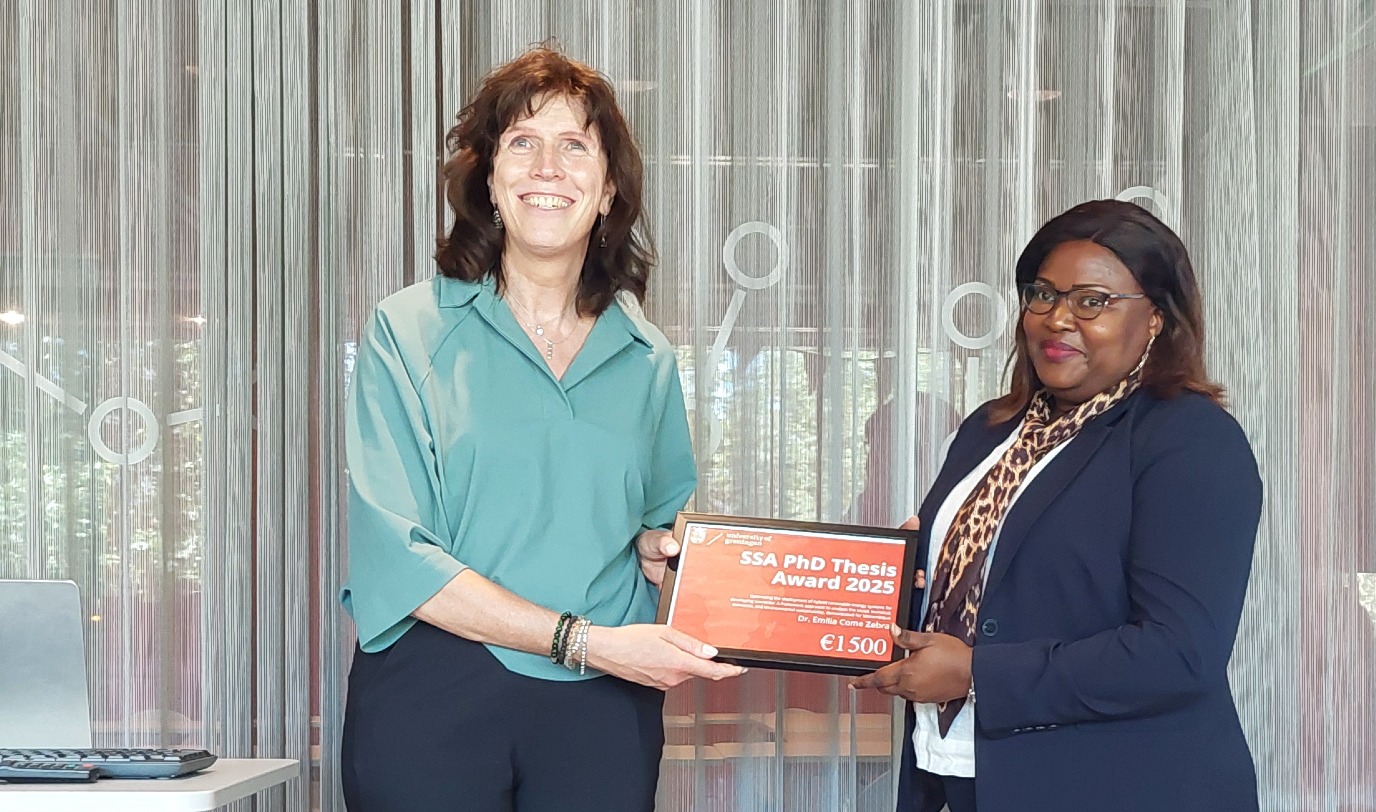
Zebra calls winning the award an honor. ‘It is not only recognition of my own achievement but also of the importance of addressing energy access challenges facing developing countries, particularly Mozambique. Sustainable energy systems play a crucial role in improving people’s lives.’
Zebra conducted a case study in four villages in Mozambique, examining different energy sources like wind, solar, hydro, and biodiesel. In the sub-Saharan region, several rural areas are not connected to the power grid. ‘It is very expensive to connect these areas to the grid due to factors like distance to the grid and populations dispersity.’ Local off-grid solutions are therefore a valuable solution, says Zebra.
In her research, Zebra compared the four energy sources and investigated which single source or combination of sources offered the best results. She used different models, for example the Hybrid Optimization Model for Electric Renewables (HOMER) software package, which can simulate and test energy systems. Many renewable energy sources do not provide power continuously. Zebra demonstrates that, through appropriate technology selection, system design, and implementation strategies, combining two or more renewable sources is often the most effective solution.
In her thesis, Zebra provides various recommendations for policymakers. ‘These recommendations apply not only to Mozambique but also to other countries in the sub-Saharan region.’ According to the researcher, mini-grid systems can create more jobs to stimulate the local economy. ‘Energy systems enable human development in healthcare, education, and social progress. They can truly transform communities.’
The SSA Bachelor Award went to Jan Slump (Faculty of Religion, Culture and Society), and the Master’s Award to Nissi Moses (Faculty of Economics and Business).