
New publication in Horizon Magazine
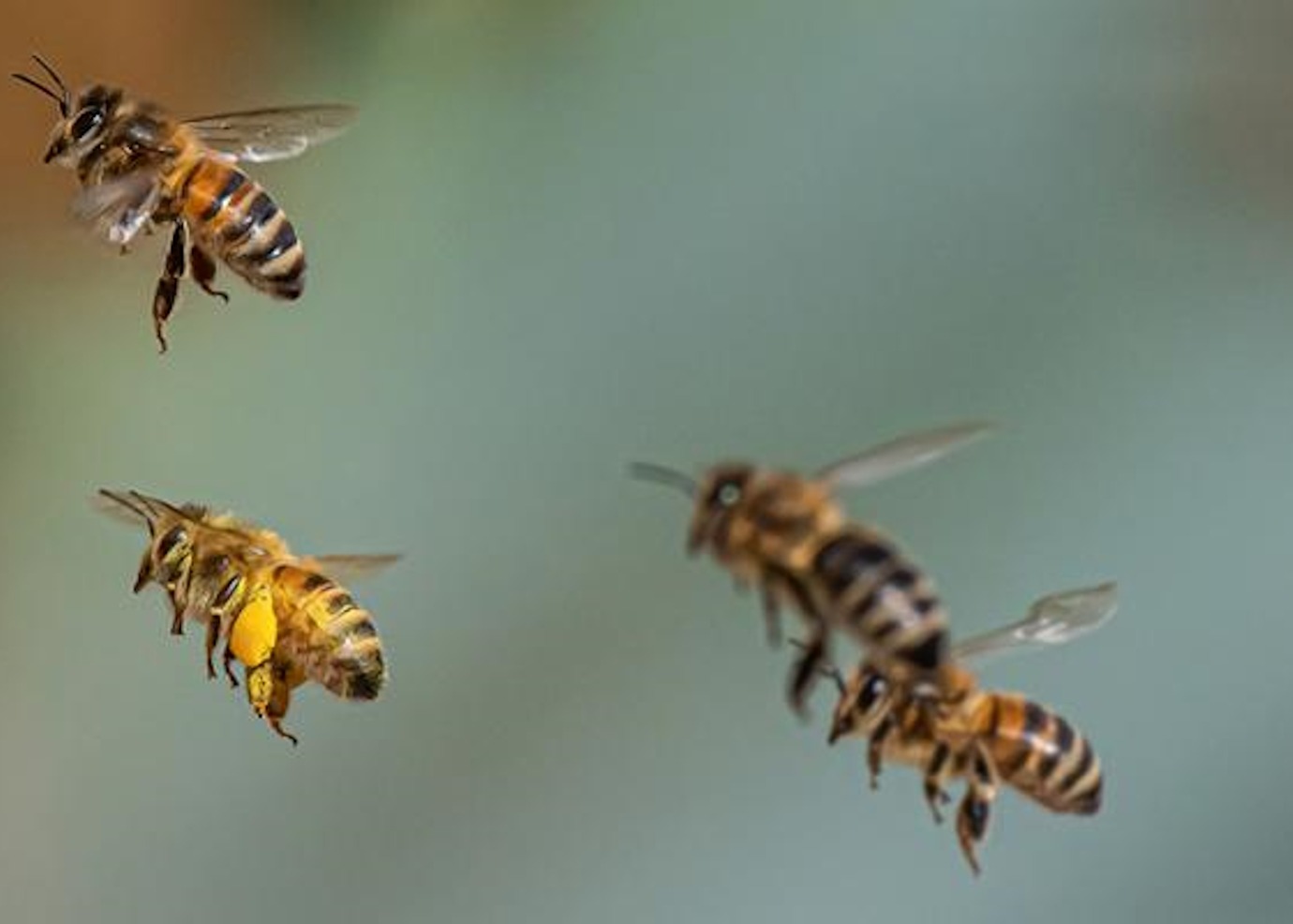
We are pleased to share that Horizon Magazine has featured research showing how insights from bee brains are inspiring a new generation of computer chips.
The article, “How bee brains are shaping next-generation computer chips,” highlights how principles from insect neuroscience are influencing the design of energy-efficient, adaptive neuromorphic hardware. Drawing inspiration from how bees process sensory information, learn, and navigate complex environments with extremely small brains, researchers are translating these biological strategies into novel computing architectures.
A central focus of the piece is how the neural structures in bee brains, particularly those involved in learning and sensory integration, provide blueprints for compact, low-power systems capable of robust decision-making. Unlike conventional computer architectures that separate memory and processing, these biologically inspired designs integrate both, enabling faster and far more energy-efficient computation.
The article showcases how this research direction contributes to the development of neuromorphic chips that mimic the event-driven, parallel, and adaptive nature of biological neural systems. Such chips have potential applications in autonomous robots, smart sensors, and edge devices that must operate reliably with limited power and in dynamic environments.
By studying how bees achieve remarkable cognitive feats with minimal neural resources, scientists are uncovering design principles that may help overcome current limitations in artificial intelligence hardware.
From insect brain to chip
The research team’s biologists and engineers are working to bring insights from the world of insects into that of computer design. Professor Elisabetta Chicca from the University of Groningen in the Netherlands, who specialises in bio-inspired circuits and systems, is one of them.
“For some problems, nature has already found a solution that is compact, low-power and efficient,” said Chicca. “Insect brains offer one such solution. We don’t know everything about them, but we know enough to start building a system.”
“We are learning from biologists,” said Chicca. “But the biologists are also learning from us. It’s great to see that.”
Project InsectNeuroNano
Insects are capable of amazing autonomous feats well beyond current computers, such as navigating across hundreds of kilometres. Here, we want to realize artificial neural networks inspired by neurobiology with our combined skills in nanotechnology.
- InsectNeuroNano project: Insect-Brain inspired Neuromorphic Nanophotonics
- Horizon Magazine: How bee brains are shaping next-generation computer chips