



A flair for science
Date:01 March 2017Author:Maarten Derksen
Dr Derksen engages with Roy Baumeister's dismissal of failed replications as resulting from a lack of "flair." The problem, he says, is not that Baumeister takes this seriously. Rather, it's that he doesn't take it seriously enough.
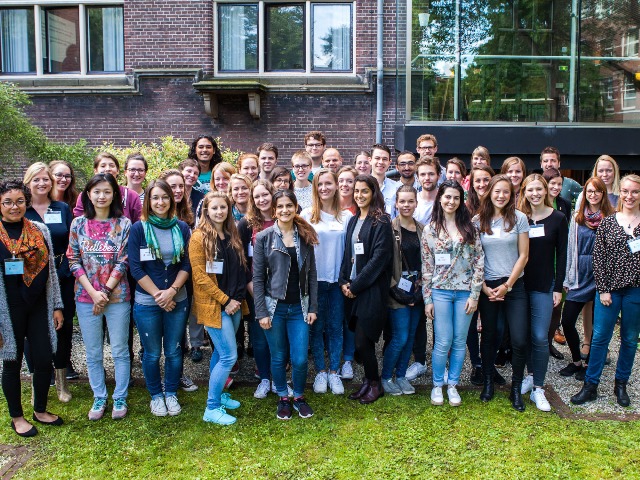
A true learning experience. Acting outside the classroom!
Date:23 February 2017Author:Nina Hansen
Last summer, students, refugees, academics, and practitioners from different nations and disciplines came together to explore the complexity of migration, the problems around it, and alternatives to current practices in policy and society at the RUG. The summer school ‘Migration Matters’ resulted in three concrete student initiatives to improve the lives of refugees.

With great power comes great responsibility… right?
Date:18 February 2017Author:Barbara Wisse
Many hope that Donald Trump will behave appropriately now that he is president –arguably the most powerful position on earth. Research, however, shows that power usually increases the correspondence between people’s internal beliefs, states and traits and their behavior. In Trump’s case this could potentially be unfortunate news.

Too bad to be true? An antidote to PosPos (Positivist Philosophy of Science) and the Crises in Social Psychology
Date:15 February 2017Author:Russell Spears
We all know that we test theories by subjecting them to experimental test, allowing us to potentially falsify hypotheses. But where do theories come from? A realist philosophy of science, and the method of retroduction, allows us to use empirical evidence, even from “failed” experiments, to generate as well as test theory.

A fixed or a growth mindset? Why we should emphasize the context-dependent and malleable nature of students’ mindsets regarding intelligence
Date:08 February 2017Author:Naomi de Ruiter
Discusses fixed versus growth mindsets about intelligence and how they affect students' learning. Presents a view that emphasises the context-dependent and malleable nature of mindsets, and how this changes the answers to what a mindset is, how it develops and how it can be changed.
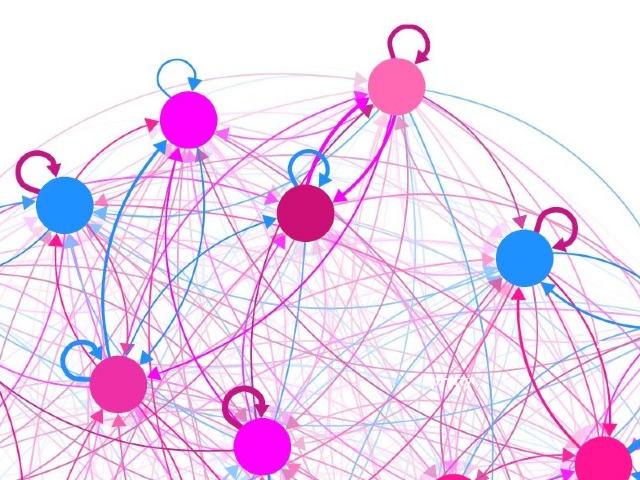
Networks in psychology: more than a pretty picture?
Date:01 February 2017Author:Laura Bringmann
Network analysis enables researchers to visualize the relations between people, objects, and concepts. Here, Dr. Bringmann shows how the technique can be generalized to psychopathology: the complex constellation of symptoms that co-occur with Major Depression can be mapped, and the map itself can be analyzed. This then illustrates an emerging approach to understanding psychopathology.

The stone in the undertaker’s head
Date:25 January 2017Author:Stefanie Enriquez-Geppert
About one year ago, I received a message from Mrs. M.’s neurosurgeon: “Stefanie, are you ready to attend a surgery this Saturday?” This truly extraordinary experience showed me once again the impact of executive dysfunctions and how they can abruptly turn one’s whole life upside-down.
Blue Monday: Perpetuating a media hype or promoting mental health awareness?
Date:18 January 2017Author:Marije aan het Rot
One Monday in mid-to-late January is said to be the most depressing day of the year. For the past 12 years, a Welsh psychologist has been associated with this day. He has become known as the brain behind Blue Monday, allegedly developing the formula used to calculate the date. But what is the real story, and how has it developed over time?

How saying the first thing that “comes to mind” makes us fluent speakers: An interview with Simone Sprenger
Date:05 January 2017Author:Tassos Sarampalis
Every quarter, we share articles published in the BCN Newsletter and we are happy today to share an interview with Dr. Simone Sprenger, Assistant Professor at the Faculty of Arts, who studies language perception and bilingualism. The interview was conducted and written by Améie la Roi, PhD candidate in linguistics.
To p , or not to p
Date:21 December 2016Author:Don van Ravenzwaaij
Everyone uses p -values (in empirical psychological research anyway), but is that the best idea? In this blogpost, I will outline four problems that are associated with using p -values in inferential statistics.