
Materials driven by structure
Scientists have always been on the lookout for materials with new, useful properties. Anastasiia Krushynska takes a different approach: she designs and creates metamaterials, whose properties are determined by their structure. These materials have different properties, for example, enabling the development of more precise machines or bone-friendly implants.
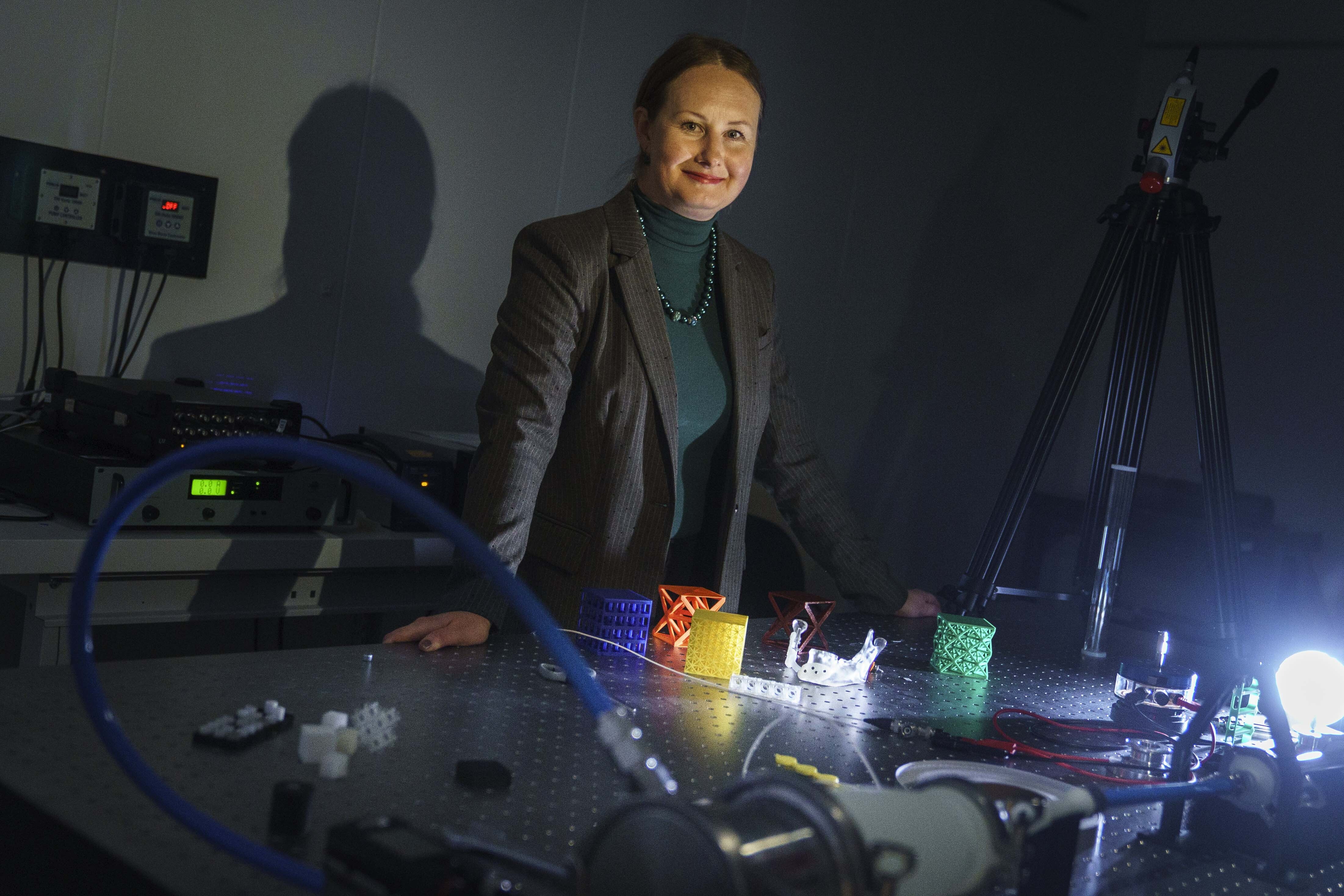
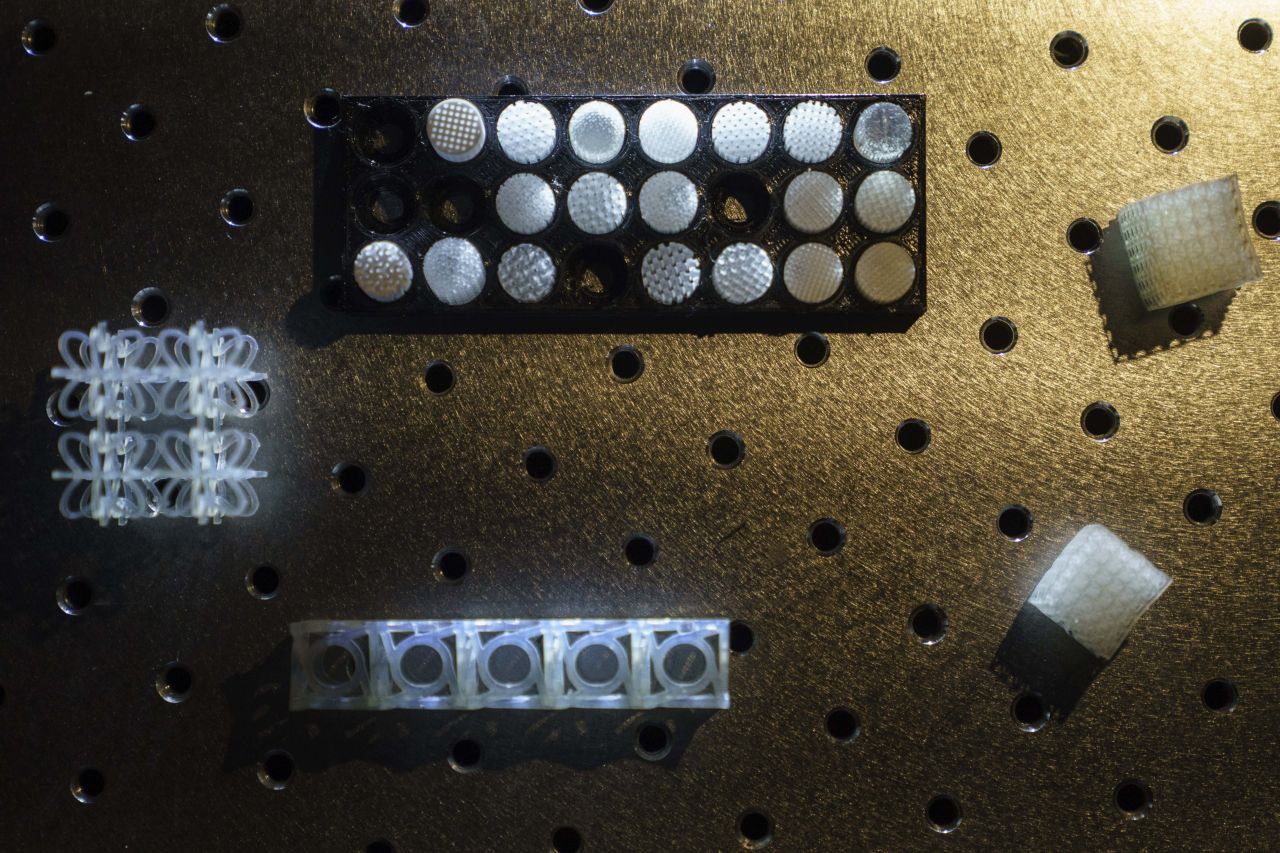
Steel is hard, rubber is flexible, and wool is soft and itchy. We often describe materials in terms of their properties. However, the properties of metamaterials, often composites, are determined by their structure. Krushynska shows a plastic model of a structure made with a 3D printer. ‘If it has the properties we need, we could also make it from metal, and it would have the same properties. The material is secondary,’ she explains.
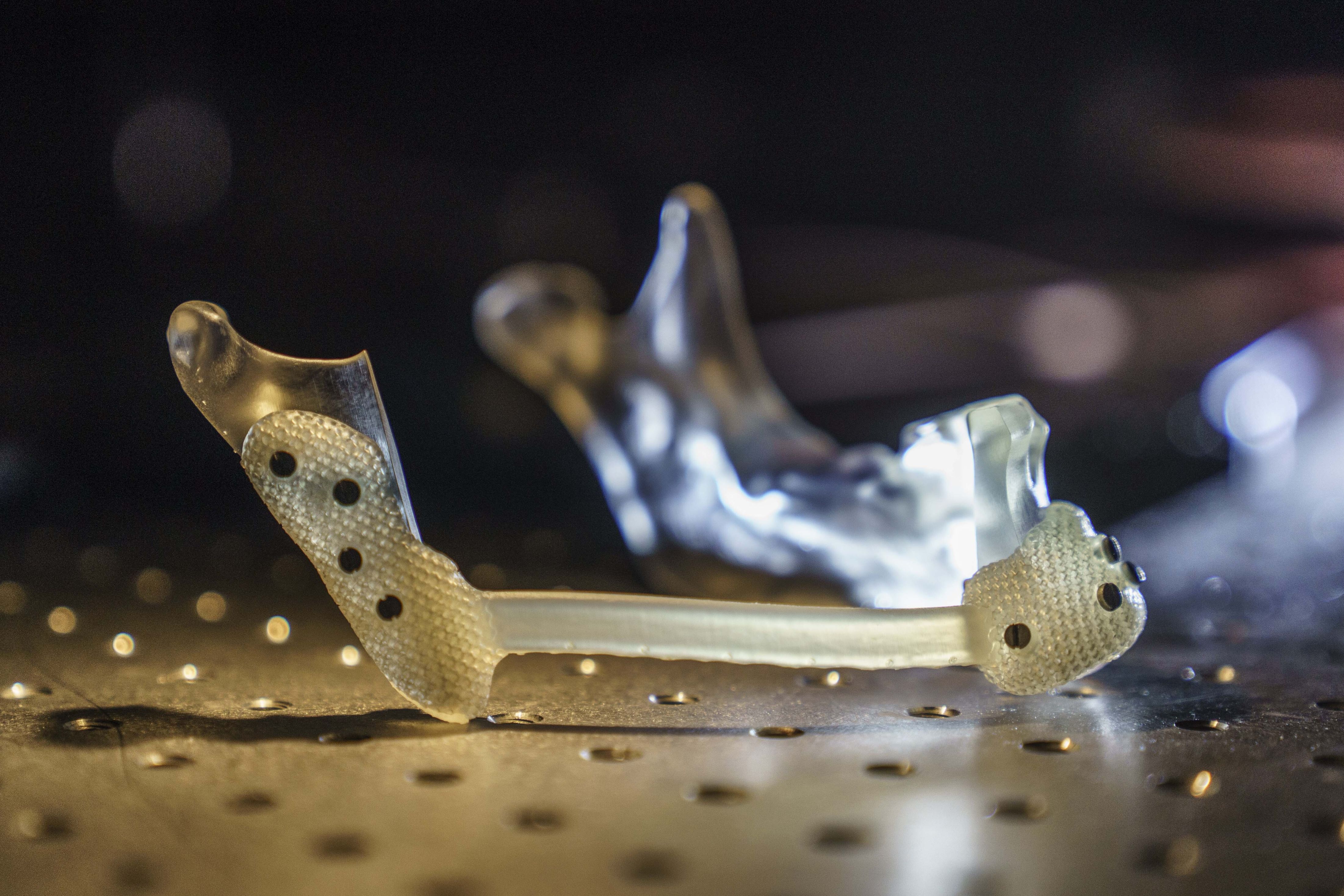
The metamaterials are made from three-dimensional structural units called unit cells. Some are formed by repeating a single unit cell, while others are a combination of different cells. Krushynska creates metamaterials for a range of applications, from soft grippers for robots to materials that interact with sound waves or dampen vibrations, and even bone implants. ‘The more fundamental work we do is to explore the physics behind new structure-driven properties.’
One example is a material that dampens low-frequency vibrations caused by cooling fluid being pumped through pipes in high-precision equipment. ‘Those vibrations limit the precision with which such machines can operate.’ Damping low-frequency vibrations arising in long pipelines is especially challenging. ‘There were no known materials that could dampen vibrations below 10 hertz.’
At the start of the project, Krushynska did not know whether her metamaterials could solve this problem. By modelling the physics of fluid flow in pipes, and running the model for several weeks on a large computer cluster, her research group came up with ideas for materials that could dampen these vibrations. ‘The first theoretical structure we identified was 40 metres long, and we had to redesign it to create a much smaller structure that would dampen low-frequency vibrations and fit into a machine.’
Metamaterials have enormous potential. ‘We also work on materials that could dampen sound in school classrooms and sports halls, or the noise from underwater pipelines.’ Her students regularly come up with new ideas and use a 3D printer to test them. ‘This means they can come in and get a printed prototype to see if it works as expected. They really enjoy that.’
Text: FSE Science Newsroom | René Fransen
Photos: Reyer Boxem
Every two weeks, UG Makers puts the spotlight on a researcher who has created something tangible, ranging from homemade measuring equipment for academic research to small or larger products that can change our daily lives. This is how UG researchers contribute solutions to the big scientific and societal challenges. Previous portraits for Makers can be found on the overview page.
For decades, engineering teaching and research at the UG has been part of a wide array of strong disciplines, and from a national point of view, our collaboration with the four technical universities is becoming increasingly intensive.
More information
More news
-
25 September 2026
NASA selects infrared space telescope PRIMA featuring Dutch technology
-
-
24 September 2026
Arjan van der Schaft receives IEEE Control Systems Award