
How fundamental research on new classes of materials leads to everyday applications
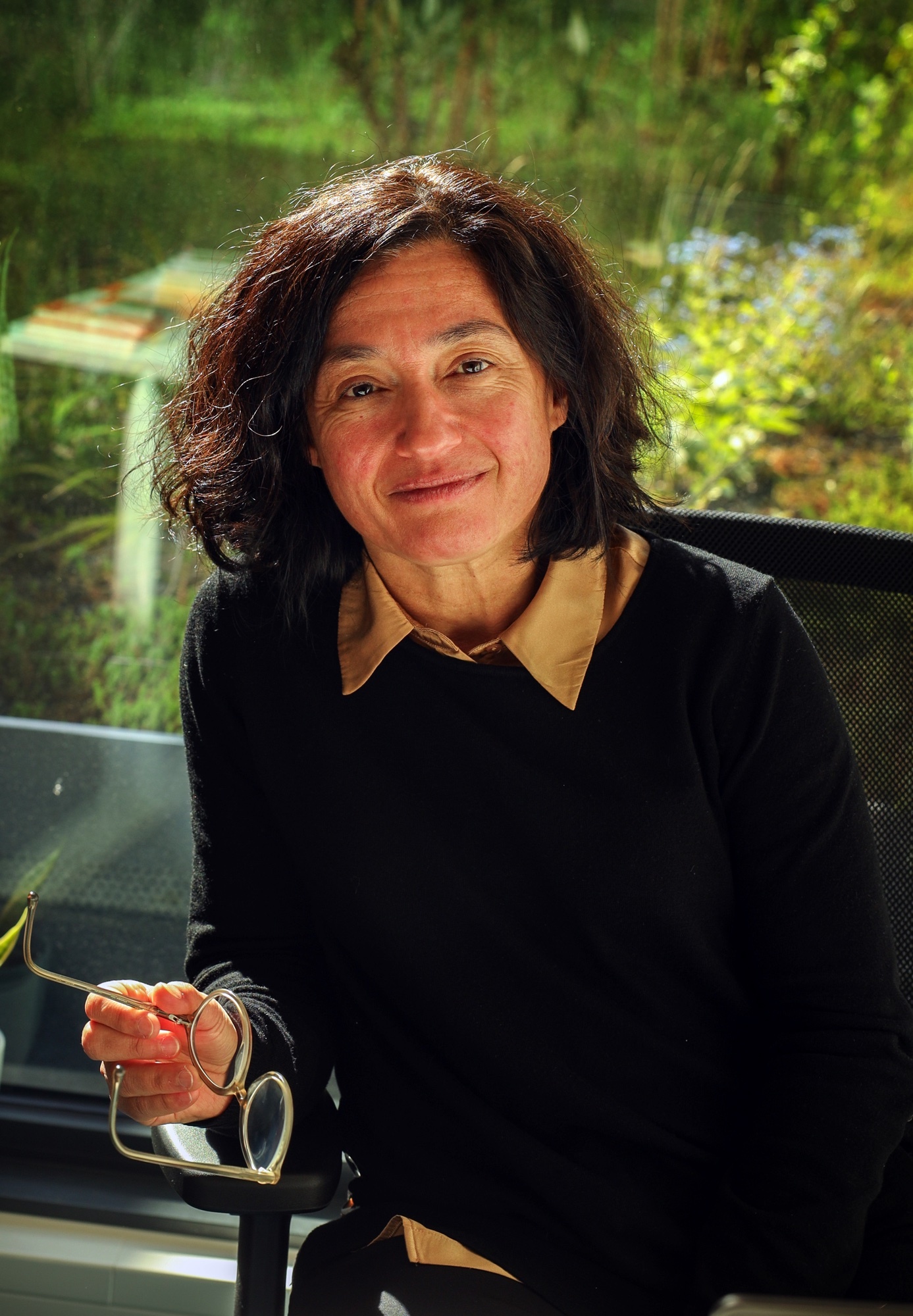
From fundamental research on new classes of materials to everyday applications: throughout her career, professor of photophysics and optoelectronics Maria Antonietta Loi has proved that this transformation doesn’t have to be difficult. Next to perovskites, she is currently focusing on quantum dots, which according to her can have very important applications in photodetector technology: ‘I expect that quantum dots devices may become soon a very important player in the detection of infrared light.’
Text: Thomas Vos, Corporate Communication UG / Photos: Henk Veenstra
Loi has always been interested in new classes of materials and semiconductors for different applications. Loi: ‘Fundamentally, I am a spectroscopist, someone that measures and interprets optical properties of material. The materials I’m interested in should convert light in electricity or electricity in light. These are materials for optoelectronics. Basically, if it has anything to do with light and electricity, I am interested in it.’ For this, Lois uses organic semiconductor, quantum dots and perovskites.
Low-cost, large-area solar cells
Perovskites are one of the preferred classes of materials of Loi. But what exactly are they? Perovskites are a large class of materials—either naturally occurring or synthesized in the lab—characterized by their specific crystal structure. Their potential is remarkable, according to Loi: ‘Not only do they exhibit outstanding semiconductor properties, but they are also solution processable. This means the precursors can be dissolved in a solvent, and they can be deposited like an ink, making them ideal for low-cost, large-scale manufacturing techniques.’
Exceptional at transporting electricity
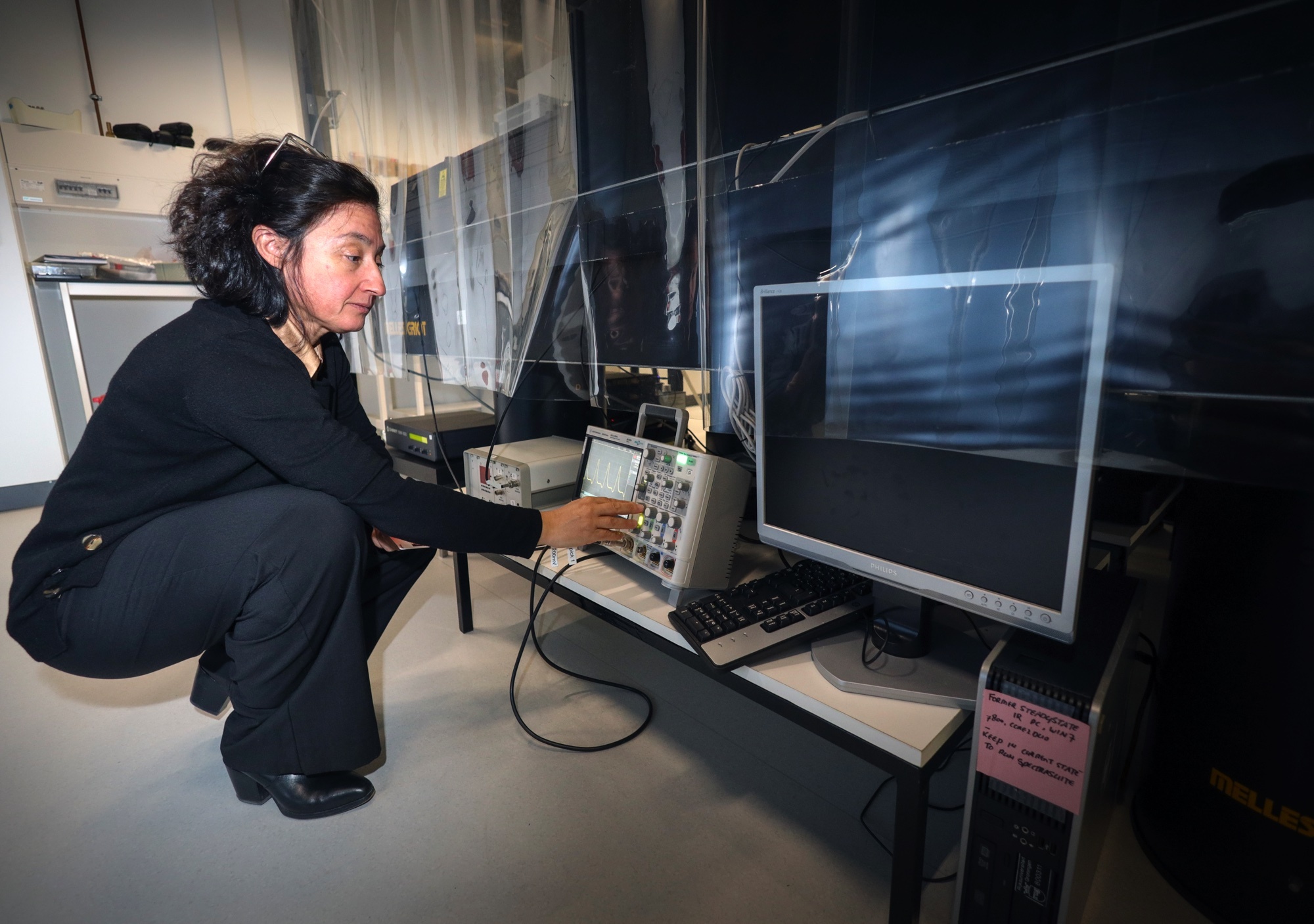
When Loi started looking into perovskites, their full potential was not clear. Loi: ‘Back then, about ten years ago, perovskites started being of interest to researchers because of how dark they are, which means they are very good at absorbing light. However, we had to learn how to control the material, how to make thin films control the crystallization. My group started investigating the fundamental properties, the optical properties in single crystals. Then we started learning how to make thin films first of lead-based perovskites and we made solar cells. Later, we switched to tin and to tin-lead perovskites. Nowadays, we are one of the best groups in the world for tin-lead perovskite solar cells. In the meantime, many companies were born, and some companies are already commercializing solar panels. A very interesting approach is to integrate the perovskites with silicone. This can already lead to a 5 to 8 percent increase in power conversion efficiency per solar panel.’
Detecting lung cancer
Perovskites have many uses. Loi: ‘We also utilize them to detect alcohols. The surface of perovskites is full of surface traps that can be passivated by alcohol molecules. When this is happening, we can see an increase of the current going between two electrodes deposited on the thin film surface. Since there is good evidence that people with lung cancer emit specific chemicals such as 1-Propanol, an alcohol, we would like to utilize our perovskite gas detectors as an electronic nose to detect lung cancer. For this, I teamed up with professor of Bio-Inspired Circuits and Systems Elisabetta Chicca, who makes microchips that are inspired by biological brains and, like a brain of an insect, will be able to discriminate the signal provided by our gas, in this way the different analytes. This collaboration was financed through CogniGron.’
Like Lego bricks
For many years, one of Loi’s preferred materials have been quantum dots. These are semiconductor particles a few nanometers in size with optical and electronic properties, that can be tuned by size. Loi explains: ‘Quantum dots have been a class of materials for around thirty years already. In the beginning, they were only used for their optical properties. Only in the last 15 years, scientists have started to believe that they could be used for optoelectronic devices, devices that can convert current in light, or current in an electrical signal or power. It is now clear that their potential is big, since you can use them like Lego bricks to make the material with the desired properties.’
Photodetectors
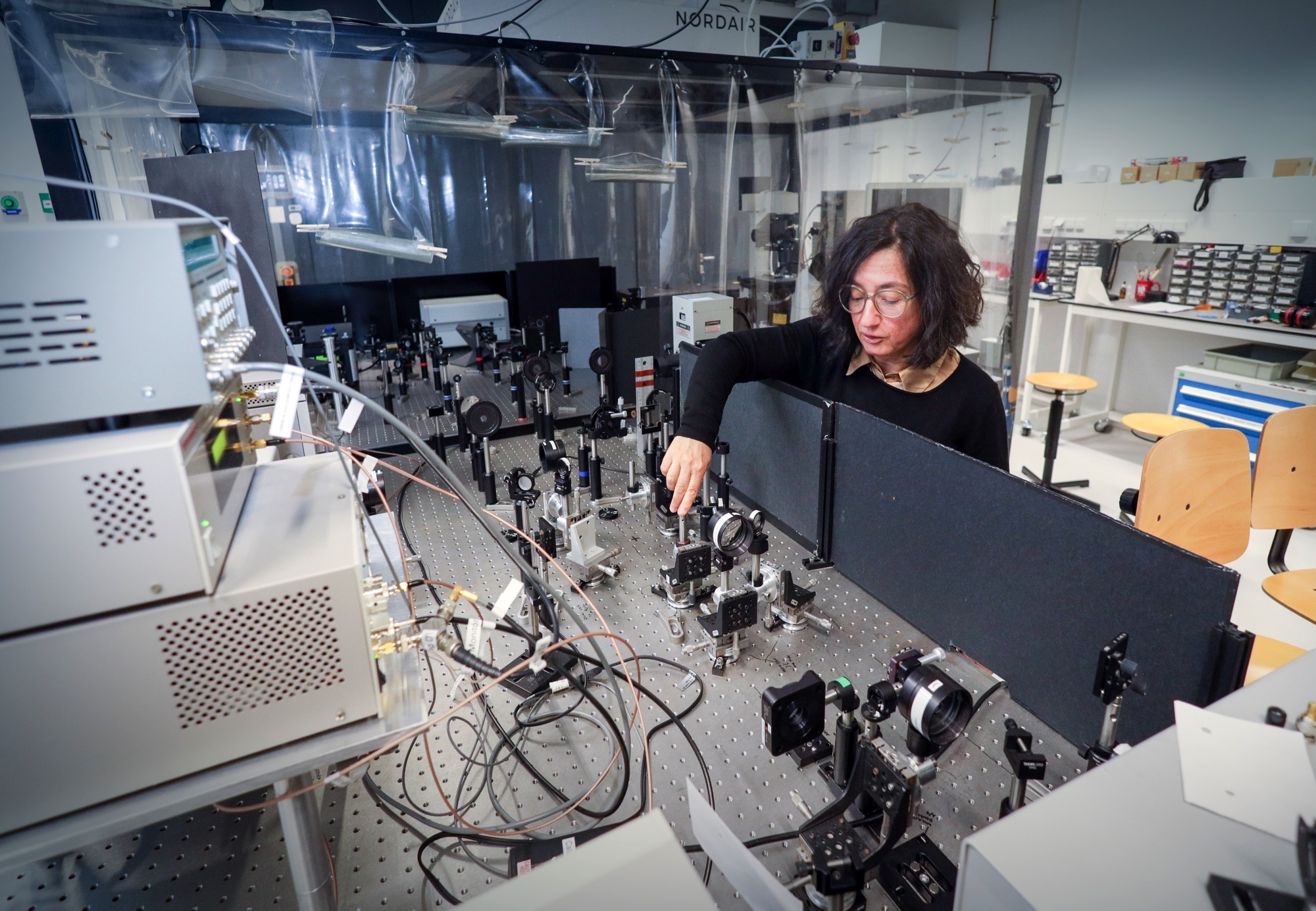
Thanks to her ERC Proof of Concept grant, which builds on her previously awarded ERC Advanced Grant research, Loi will be able to prove the potential of these quantum dots, focusing on their application in ultrafast photodetectors for use in advanced sensor technology. Loi: ‘If you organize quantum dots in a lattice, like Lego bricks, you can make a meta material, namely a material of which the structure determines the property, and not the chemical composition. The important thing here is the color of light that is emitted or absorbed. In standard semiconductors, these properties are dictated by the chemical component and by the structure of the semiconductor. By fixing the size of the quantum dots, you can define the color of the light that will be absorbed or emitted. By organizing them in a super crystal you can obtain good electrical transport properties. And through functionalizing the surface of the quantum dots you can change the charge transport level and nature. This extremely useful to make photodetectors, for example. During the first years of research of the ERC Advanced Grant, we already figured out that we can organize the quantum dots three dimensionally, making a rather large superlattice. Now we will take on the challenge to make photodetectors with them.’
Faster and cheaper
Loi has high expectations: ‘I expect that these photodetectors will be much faster than standard quantum dot photodetectors, as by organizing the quantum dots we are able to largely increase the carrier mobility. This is helpful in lidar technology for example, which measures distance by using light and a fast photodetector. Self-driving cars could benefit from this too. Current lidar technology with normal semiconductors is very expensive and therefore limits applications in everyday life. We think that these devices will become much more affordable when we finish optomizing our quantum dots metamaterials.’
Applications are important
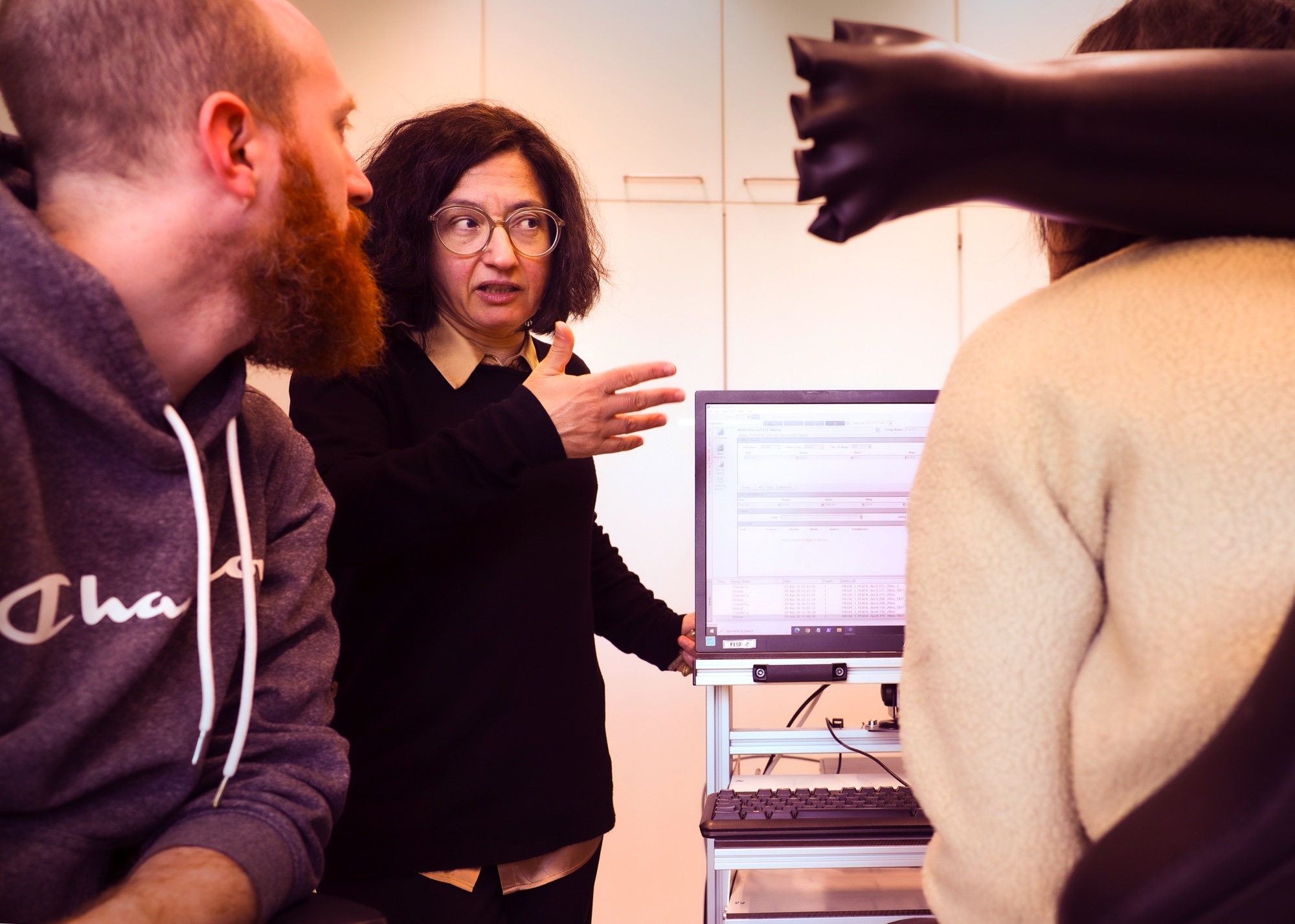
Even though Loi’s research is at its core fundamental, when there is the possibility to show applications, she is happy to do so. ‘Fundamental investigations and demonstrations of device application reinforce each other. If we understand the fundamental properties of new materials, we can also improve optoelectronic devices made with them, making our fundamental investigations more relevant and impactful. Therefore, I’m lucky to have not only the facilities to do fundamental research, but also all the equipment and clean room space necessary to make optoelectronic devices.’
More information
More news
-
25 September 2026
NASA selects infrared space telescope PRIMA featuring Dutch technology
-
-
24 September 2026
Arjan van der Schaft receives IEEE Control Systems Award