
Strong entry measures alone will not bring about equality
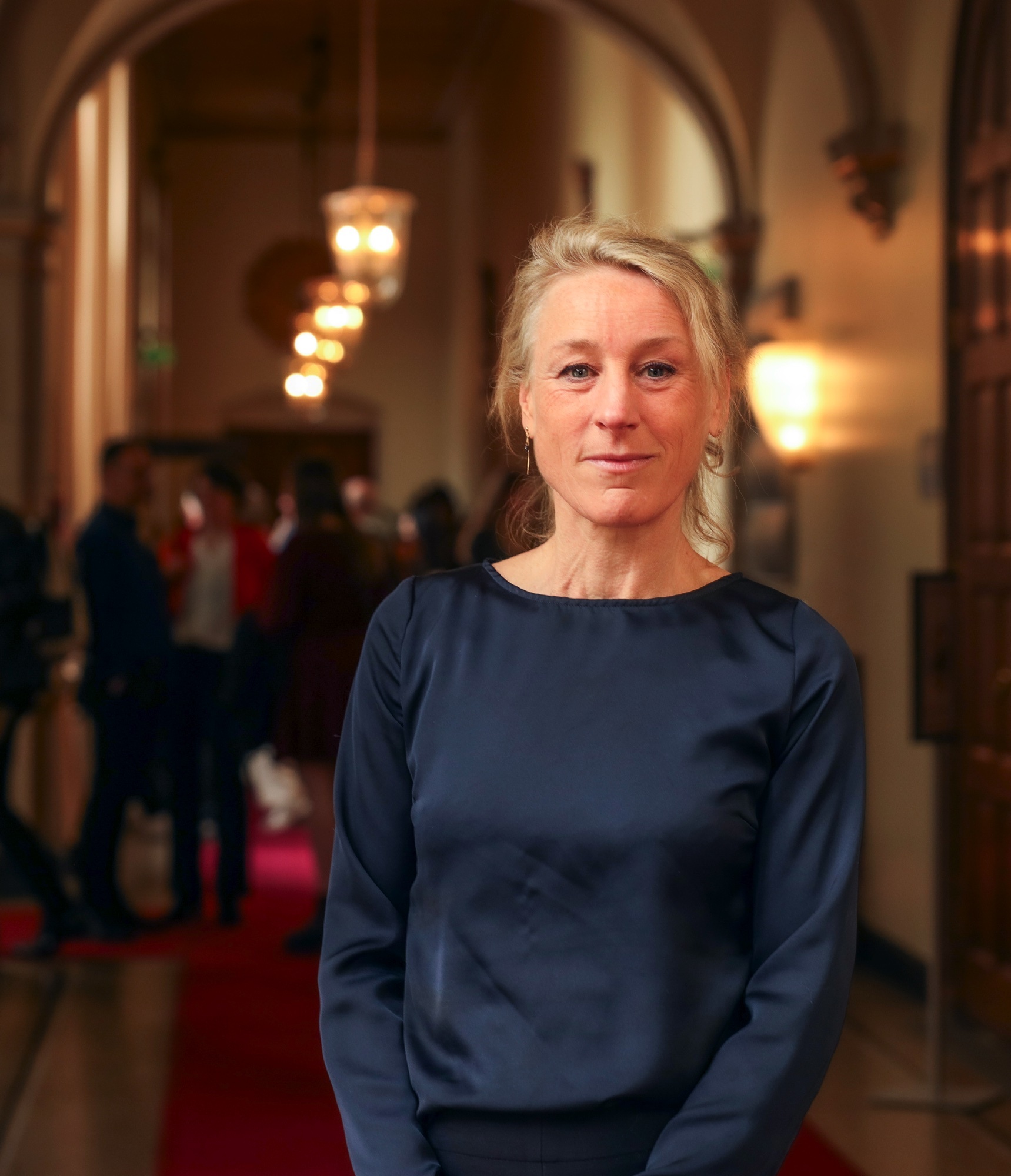
A quota for women is a forceful remedy designed to create more diversity at the top. This is certainly important, says Floor Rink, Professor in Organisational Behaviour at the Faculty of Economics and Business, but simply getting women to the top is not enough. Although there are now enough women in senior positions to enable studies to be conducted, these studies show that they tend to leave these positions sooner than their male counterparts. Moreover, there is no so-called Second Act for them. So strong entry measures alone are clearly not enough.
Text: Marrit Wouda, Corporate Communication UG / Photos: Henk Veenstra
Morality does not pay the bills
For many years, diversity researchers in the field of management and economics mainly looked at the ‘business case’ for diversity within organizations. ‘It was assumed that it would always be profitable to combine a range of perspectives,’ Rink explains. Politicians and industry also engaged with this idea. ‘Logical,’ says Rink, ‘as the emphasis on the business case for diversity reflects how organizations and policy-makers back up their decisions: through measurable performance and broad-based legitimacy.’ She continues: ‘Moral arguments explain why diversity is desirable, but economic arguments provide a turnkey framework for implementation and accountability.’
Common norms
Unfortunately, things are less manageable in practice. ‘It seems that when you put a diverse group of people together, they don’t immediately focus on what makes them unique,’ Rink explains. People tend to search for the features that they have in common. So during discussions, they keep any opinions that deviate from the norm to themselves. In her PhD research - ‘yes, that’s 20 years ago,’ Rink laughs - she concluded that people feel most comfortable in very homogeneous groups, or in very diverse groups. ‘But in fifty-fifty groups, i.e. not highly diverse, people tend to form coalitions and sub-groups in search of common ground. We can only transcend this tendency if there is so much diversity that nobody can find a “partner in crime”’, Rink continues.
Hard work
So can we conclude that diversity in a team does not work? Not true, says Rink. But it is difficult. Diversity is hard work. ‘It’s like taking care of your health. You have to work on it, it requires constant attention, but all that effort pays off in the end. In recent research within my field, we’re seeing that the business case argument has become less important and the focus is shifting towards the negative consequences of social inequality. When you consider diversity, above all, you will notice that there are always certain groups or representatives of groups that get more.’ Rink continues: ‘My main reason for studying this is that I want us to have a society in which everyone can participate; one in which we lift and inspire each other.’

Into the boardroom
According to Rink: ‘You are infuenced by the company you keep'. Her appointment in the Faculty of Economics and Business meant that the focus of her research switched from ‘the bottom to the top of society’. ‘If you want to change the status quo, you have to be at the top, where the power is.’ But it proved difficult to actually get into the boardroom, rendering interviews and experiments impossible. However, data from public archives in the US provided a wealth of valuable information. This longitudinal data made it possible to analyse key features of top executives. How far does the ‘old boys network’ extend these days, and what do directors focus on? The data revealed a number of trends. And they were not any old trends... ‘What we discovered was truly shocking,’ says Rink. ‘Women are certainly finding their way to the top, and people think that this has eliminated the status quo, but nothing could be further from the truth.’
No ‘Second Act’ for female managers
Rink and her colleagues, who include Kyra van Hinsberg and Janka Stoker, linked the data showing that more women are securing top positions in recent years, to other datasets monitoring when top directors leave their job and where they work afterwards. ‘What you see is that women appointed to top positions are consistently fired or resign more often than male managers, even if they become CEO of a company and have an excellent starting position.’ In addition, women are much less likely to find another equivalent position after their first managerial appointment, even if they do not leave prematurely. Most male managers, on the other hand, continue on to their ‘Second Act’.

Higher risk, faster departure
Conclusion: shelve the quota because women simply are not up to the job? Rink has a definite opinion on this: ‘Certainly not. If women get as far as to be selected for a top managerial position, you can’t argue that they are incapable of doing the job, quota or no quota. These women meet all the criteria.’ So what is the problem? ‘We’re not quite sure, which is why we’ll be studying this next.’ Australian researcher Michelle Ryan has already discovered that women have a greater chance of being selected for the riskier managerial positions, the so-called “glass cliff effect”. This often happens when organizations feel the need to change track. ‘After all, if things are going well, you don’t need to change anything and you’re more inclined to appoint a man,’ Rink adds. ‘But now we have enough data to monitor the career paths of senior female managers, we can see that female managers leave sooner and don’t get a second chance regardless of a glass cliff.’ Rink’s research indicates that having power, even when you are right at the top, is still secondary to gender effects.

Work to be done
So there is still enough work to be done. The US does not operate a quota, but the Netherlands does. Together with the Socio-Economic Council, Rink wants to find out whether the Dutch Quota Act is actually helping female managers to pursue their career paths. ‘Perhaps the quota we enforce here are working as a buffer against the early departure and low rate of return for female managers,’ Rink speculates. In her opinion: 'It’s such a pity that all that talent and knowledge at the top is so underutilized. We happen to be talking about women here, but we still need more data on other types of diversity at the top. Just imagine how organizations, and society as a whole, stand to benefit?
More information
More news
-
07 September 2026
Why entrepreneurship thrives in specific regions
-
11 August 2026
InnoLaunch: Get your startup ready for takeoff in 8 weeks
-
24 April 2026
Royal Decoration awarded to Jakob de Haan