
Making robots work together
Sepide Taleb builds brains (embedded control systems) for tiny robots that operate in a swarm. Together, they can inspect pipes or bridges for structural faults. Designing and testing these brains is a challenge. ‘Some work on software, others on hardware. My job is to do both and design a robot that is robust enough for practical use.’
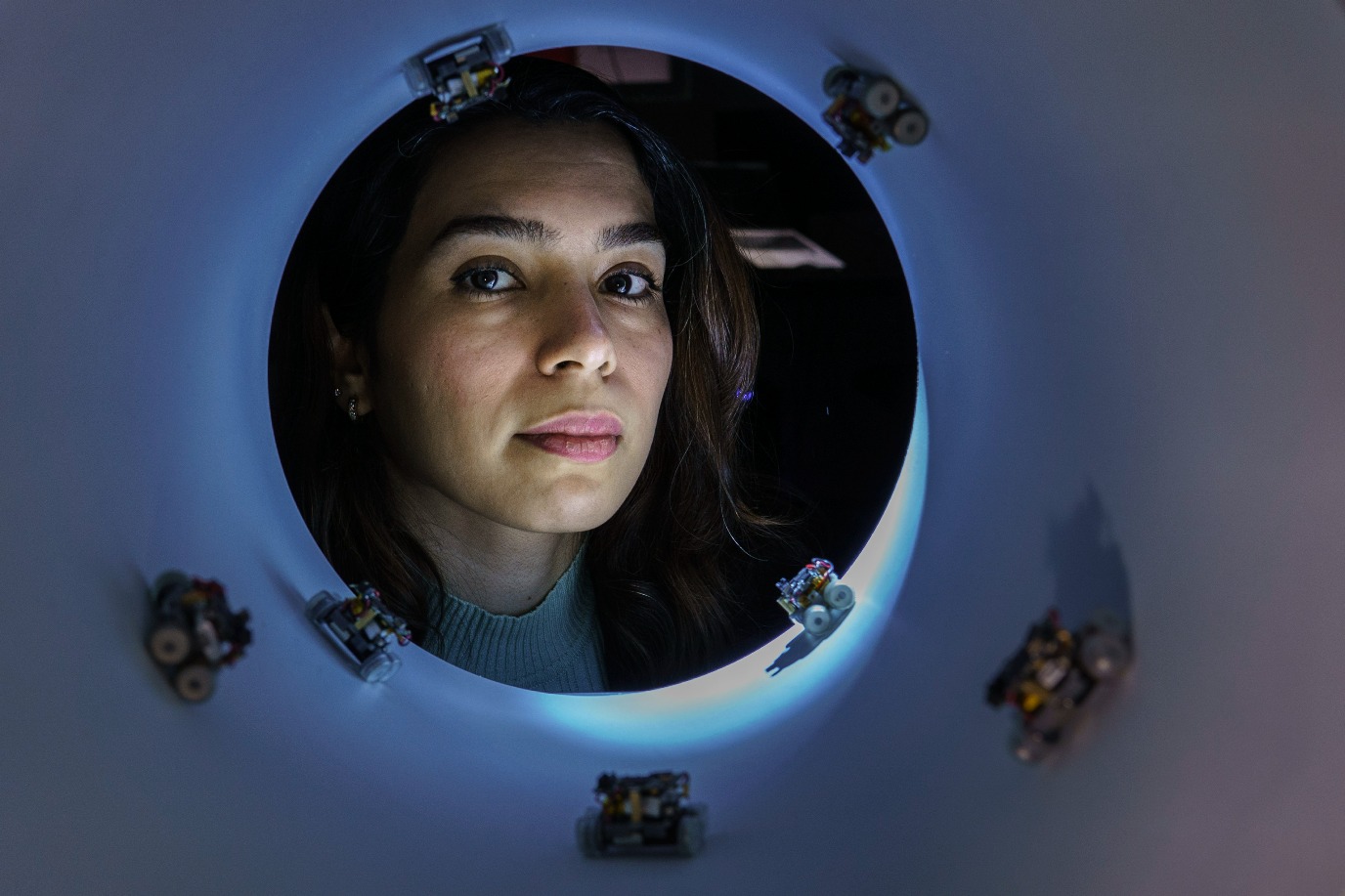
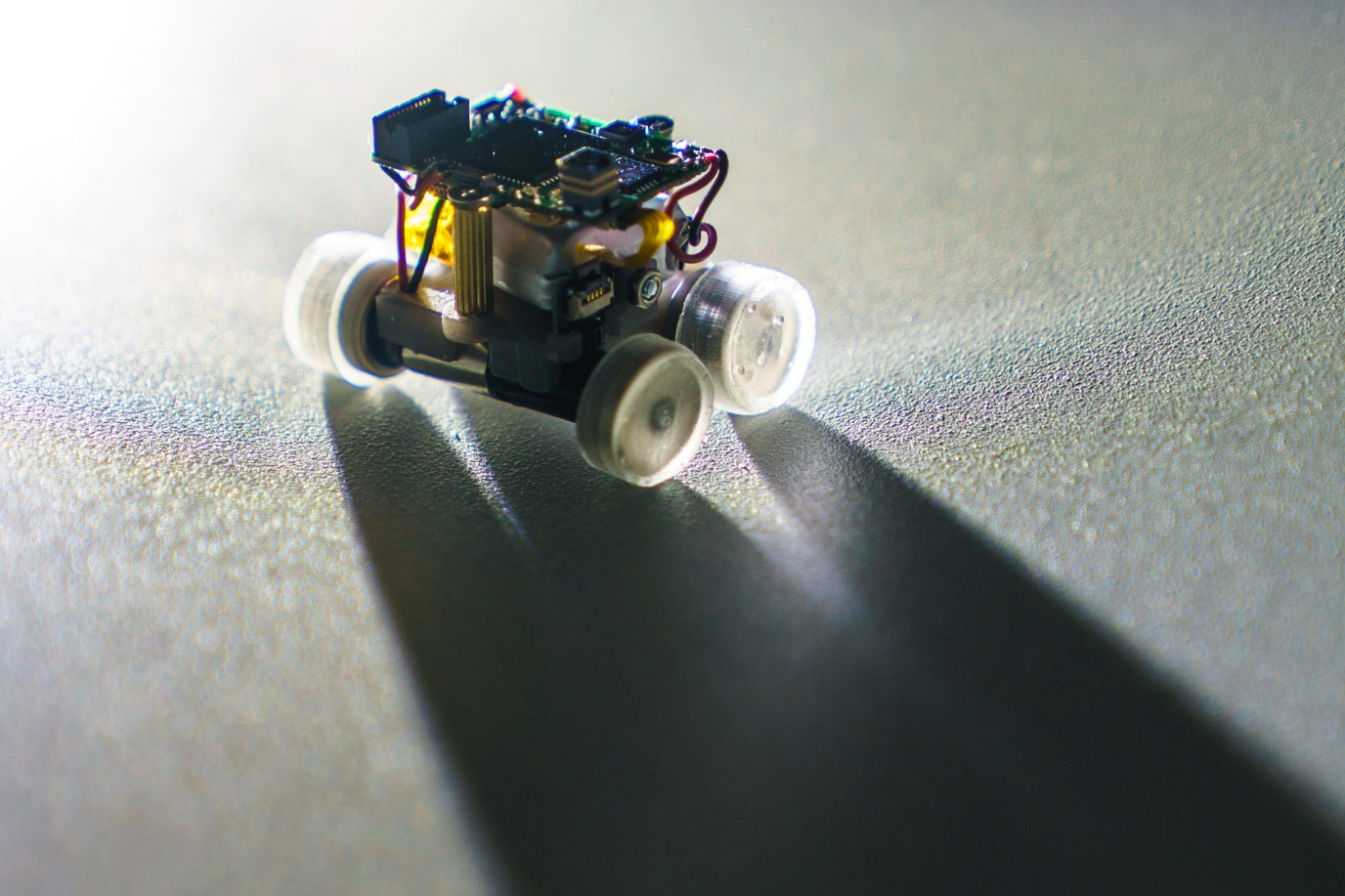
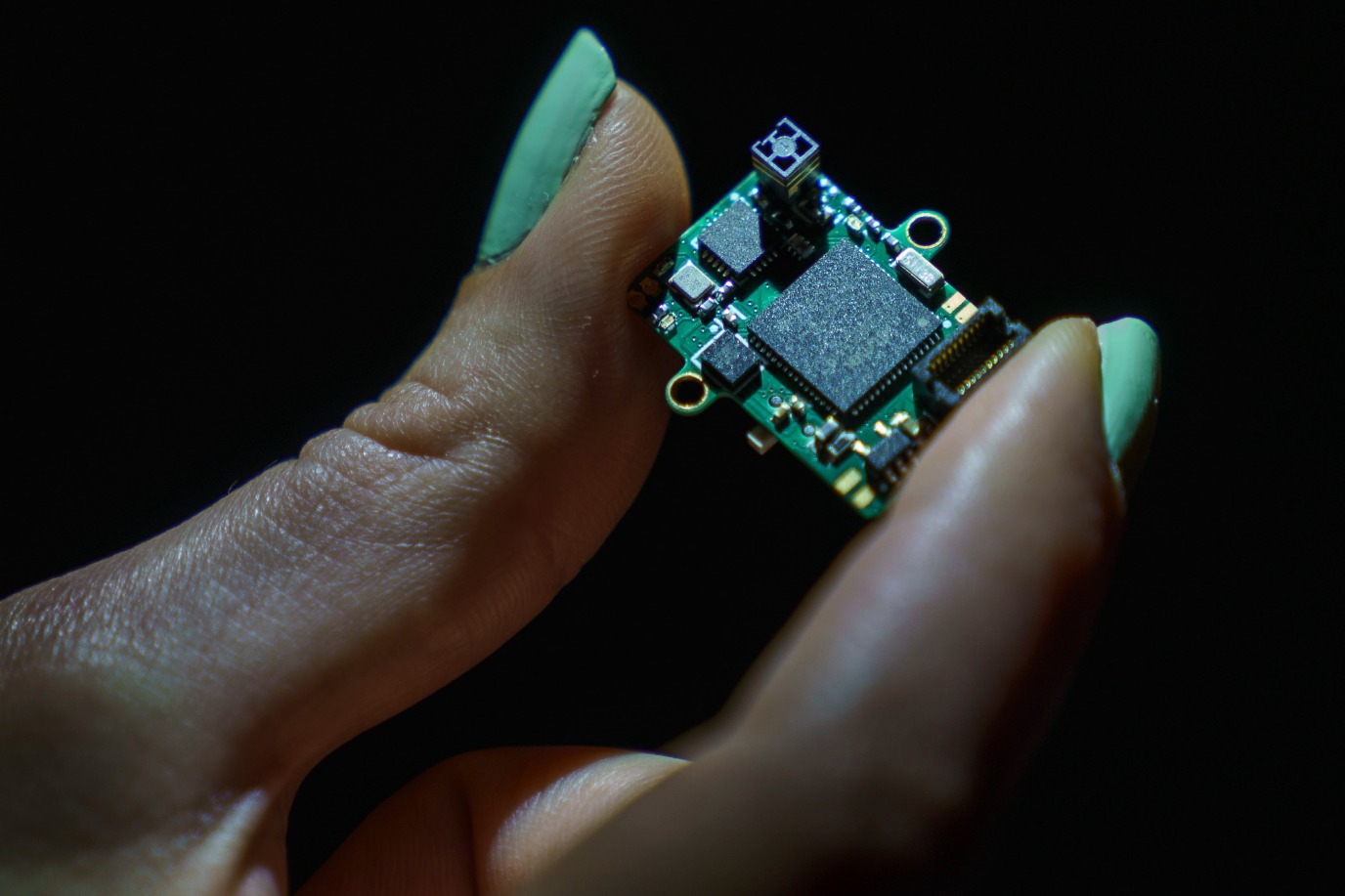
The robots are tiny, just a few square centimeters in size. Magnetic wheels allow them to move inside pipes, and a vibration sensor helps them to locate structural problems. In the lab, they mainly operate on a metal vibration table that can simulate a structural fault. A swarm of up to 50 robots can move across this table, measuring the vibrations until they pinpoint the source.
‘My background is in electrical engineering,’ says Taleb. ‘I completed a PhD in materials engineering at the University of Groningen and went on to work as a research and education officer.’ She supports several PhD and MSc students and is involved in robotics education for undergraduates. Her main role is to design the brain of these tiny swarm robots.
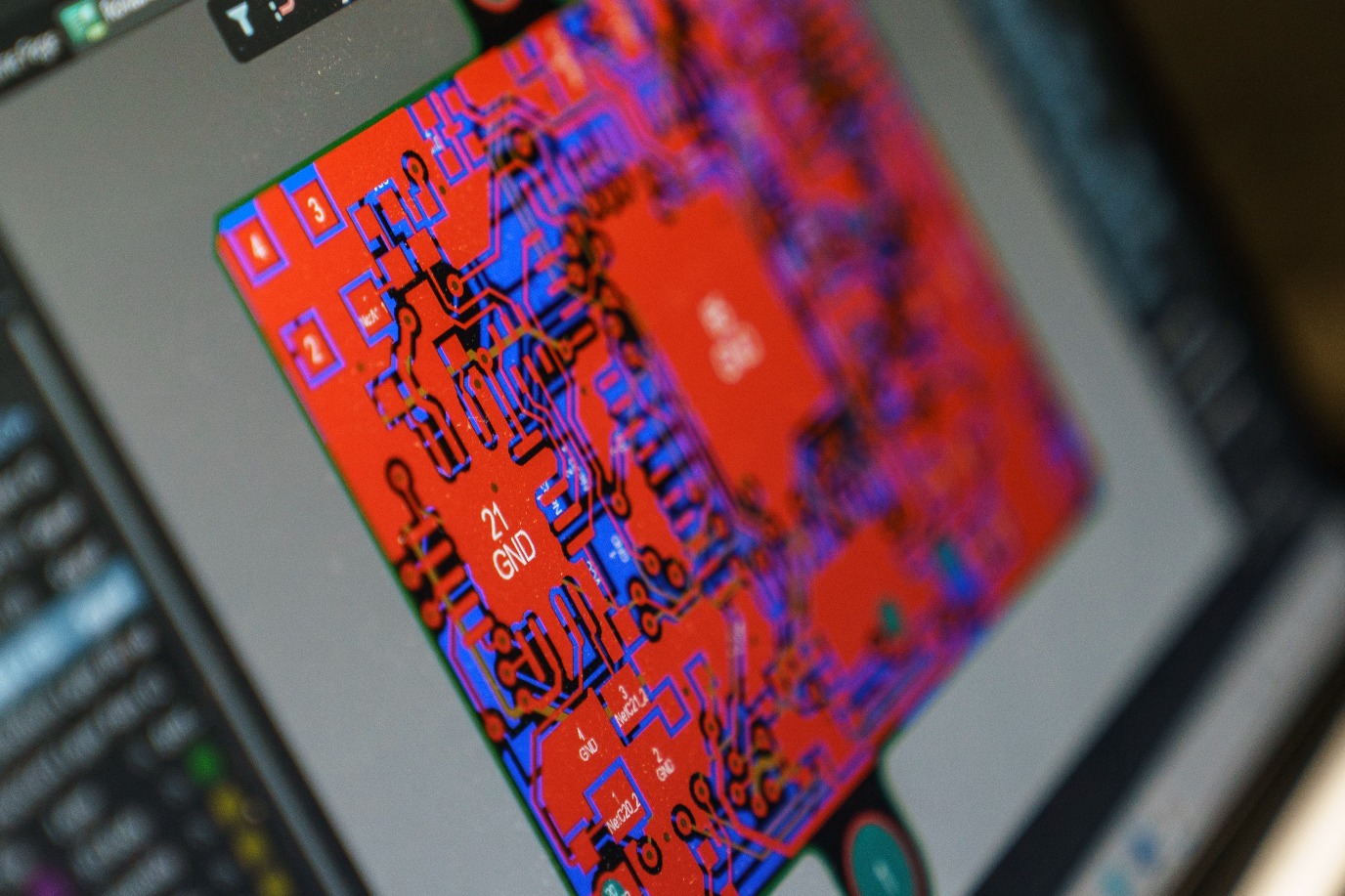
‘I like the design process; it’s a challenging puzzle,’ says Taleb. Her computer screen shows a complex layout of the printed circuit board (PCB). The challenge is not only to find a way to connect all the components on the PCB, but also to integrate the four layers that are stacked on top of each other. ‘Once I’ve finished a design, I send it to a company that produces the PCB. When it arrives, we can test whether the design works as intended, both in terms of hardware and software.’
There are many potential pitfalls. For example, different components can interfere with each other. Or they may use too much power, draining the robot’s tiny battery too quickly. ‘It takes many cycles of testing and redesigning. You need patience for this job.’ Apart from designing the hardware, Taleb also works on the algorithms that allow the robots to move around and communicate with the rest of the swarm and the base station. ‘The most satisfying part is when a robot works well. And the most difficult part is to find out why it doesn’t.’
Text: FSE Science Newsroom | René Fransen
Photos: Reyer Boxem
Every two weeks, UG Makers puts the spotlight on a researcher who has created something tangible, ranging from homemade measuring equipment for academic research to small or larger products that can change our daily lives. This is how UG researchers contribute solutions to the big scientific and societal challenges. Previous portraits for Makers can be found on the overview page .
For decades, engineering teaching and research at the UG has been part of a wide array of strong disciplines, and from a national point of view, our collaboration with the four technical universities is becoming increasingly intensive.
More news
-
-
03 September 2026
Ming Cao reappointed as scientific director of the Jantina Tammes School
-
01 September 2026
Evrim Ursavas appointed scientific director Wubbo Ockels School