
From Ghostbuster to Disaster Researcher

Disaster events often produce long-term impacts that persist well beyond the acute phase. In his research, Michel Dückers explores how exposure to threats and disasters shapes the lives of individuals over time.
Text: Beau Oldenburg, Faculty of Behavioural and Social Sciences / Photos: Henk Veenstra
As a child, Michel Dückers wanted to be a ghostbuster when he grew up. Hunting ghosts with a proton pack on his back — that was the dream. ‘Far from realistic, of course,’ he says with a smile. Funnily enough, though, he does see a surprising parallel with his current job. ‘At a fundamental level, both are centred on managing threats that deeply affect individuals and communities.’
Flash events
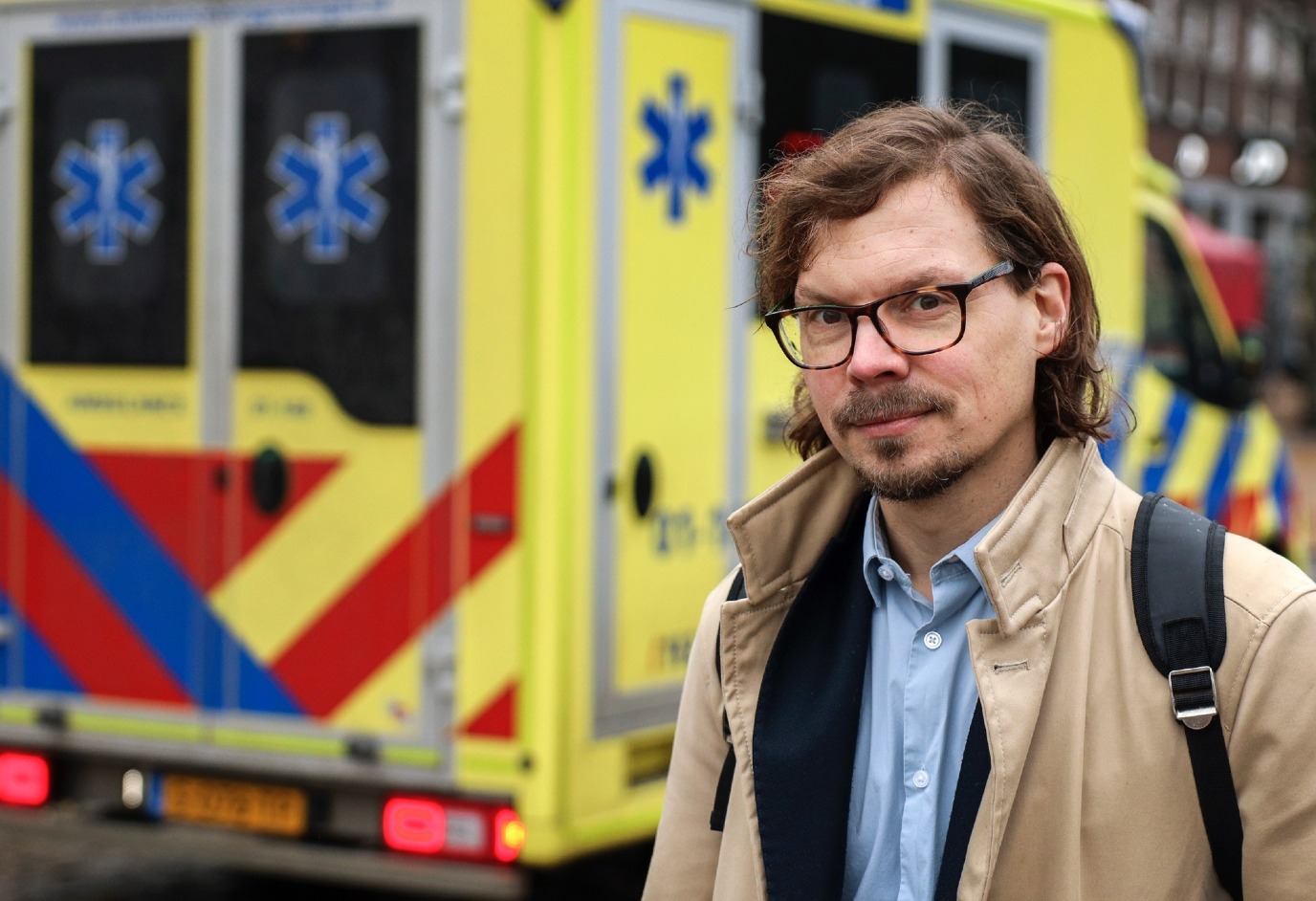
Michel Dückers is a Professor of Crises, Safety, and Health. In his research, he studies the acute and long-term effects of disasters, crises, and other large-scale disruptions on people’s lives. His work focuses not only on the event itself, but also on ways in which citizens, government institutions, and societal organizations can respond more effectively to crises.
In a recent study, Dückers addressed the long-term effects of rapid-onset (‘flash’) events, such as floods, earthquakes, terrorist attacks, or shootings. Together with his team, he analyzed no fewer than 33,000 academic studies.
Twin peaks
‘Our research tells us that victims experiencing mental health issues, such as anxiety, depression, and post-traumatic stress, will typically show improvement in the first few years following a disaster. However, these issues have a tendency to flare up again about ten to twelve years after the event. I call this the “twin peaks” phenomenon.’ Dückers argues that recurring moments of public attention, such as commemorations or anniversary media coverage, serve as a powerful catalyst because they will evoke memories and reawaken the impact of a disaster with renewed intensity.
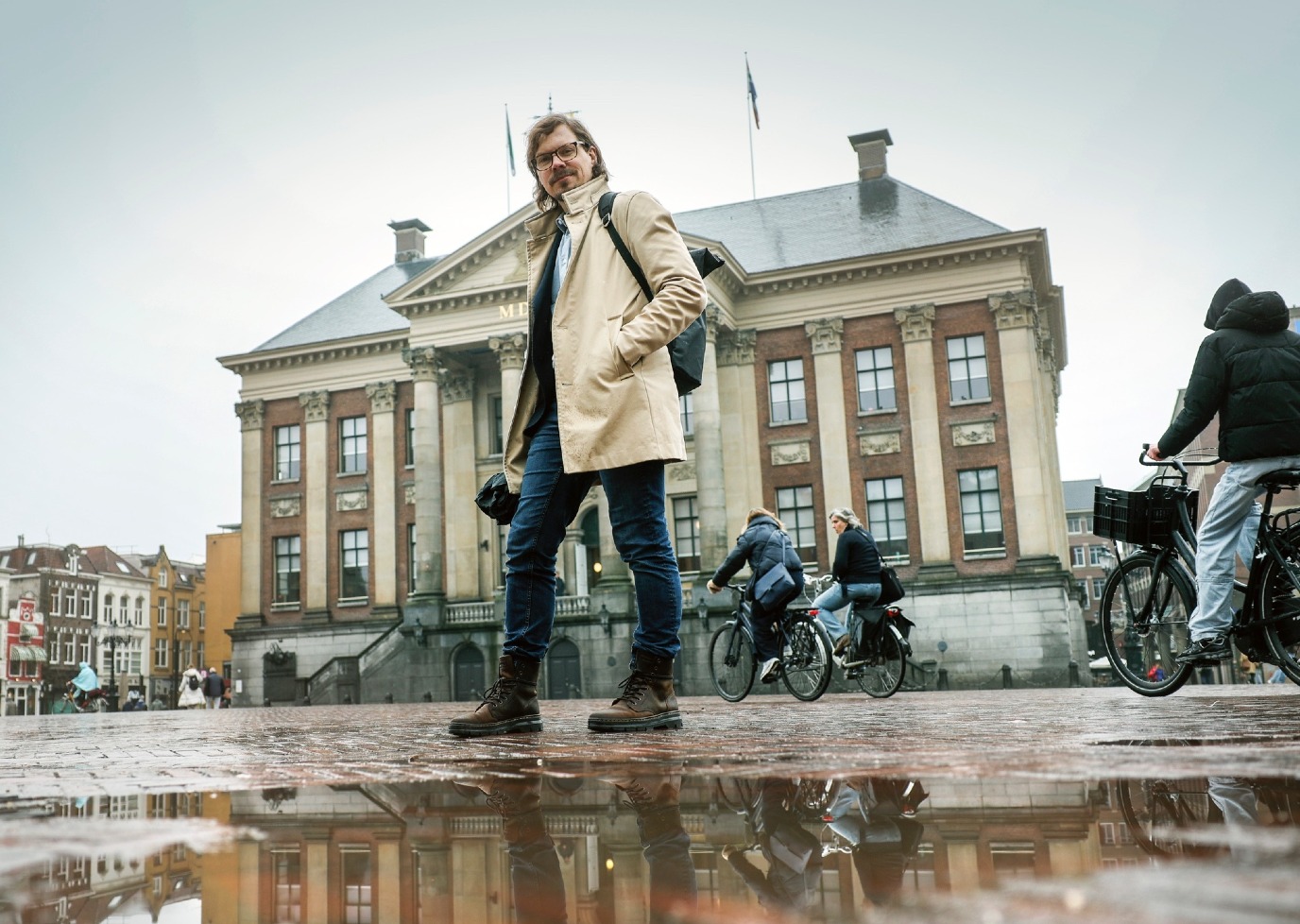
Not every disaster strikes with a flash. In Groningen, a region of the Netherlands where earthquakes induced by natural gas extraction have occurred intermittently for years, Dückers explores how this persistent threat shapes the lives of the local residents. His findings are consistent: the impacts erode trust in the authorities, fellow citizens, and institutions, while also taking a toll on individuals’ mental health.
‘The cumulative effect of these events informs the mindset of the local community,’ Dückers says. ‘Damage to a person’s home deeply unsettles their fundamental feeling of safety and security; this, quite literally, hits close to home. The greater the damage, the deeper the impact. When individuals no longer feel safe in their own homes, the repercussions will reverberate across all aspects of their lives.’
Misdirected focus
Dückers contends that, traditionally, the Dutch authorities — and that includes the national government, civil protection bodies, and emergency response services, have concentrated their efforts mainly on the acute phase of a disaster, prioritizing the immediate actions that are needed to restore safety and stability. ‘Understandable as this may be, for those affected, the real difficulties will start after the crisis authorities have stepped back’. In his research, Dückers deliberately adopts a comprehensive perspective. What is the trajectory of a crisis, from its precursors, through its acute manifestation, to its consequences in the years after? And what steps can be taken to improve victim support services and post-crisis recovery?
Loss and damage
As soon as individuals are affected by a disaster or a crisis, they are inevitably met with a set of predictable challenges that are not always effectively addressed. Dückers: ‘They will almost invariably suffer loss and damage, often in the core domains of life, such as their home, their financial security, or their social position.’ In Groningen, people are navigating the consequences of earthquake damage to their homes, while others in the Netherlands are working to rebuild their lives after wrongful allegations of childcare benefits fraud. Conventional crisis management approaches fail to fully accommodate this dimension.’
And, though conceived with the best of intentions, administrative procedures, recovery measures, and compensation schemes will often force victims to jump through even more hoops. The Gronings Perspectief study has shown time and time again that having to deal with government institutions is a source of stress for many people. ‘The emotional toll, sense of insecurity, and frustration also form an integral part of the lived impact of a crisis,’ Dückers insists. His research reveals similar dynamics in the experiences of victims of administrative injustice and those hit by flash floods.
Acknowledgement
Acknowledgement holds importance on par with other considerations. Victims want to be seen and heard, and they expect to have a voice in the decisions that shape their lives. ‘Nothing about me without me,’ Dückers says. ‘When people have long experienced that their safety was treated as secondary to financial gains, for instance of gas extraction, recognition of their concerns becomes deeply problematic.’ It takes time to restore trust, he adds. ‘Trust takes years to build, seconds to break, and forever to repair.’
Finally, hope and perspective are essential. ‘Individuals should be able to trust that things will get better in the future. But their trust can’t be rebuilt without a sense of safety, acknowledgement of loss and damage, and genuine recognition of their plight. This also requires the level of red tape to be kept to a minimum.’
Dückers argues that individual context is a key factor. Pre-existing victim vulnerability, stemming from economic hardship, health challenges, complex family dynamics, or distrust of government institutions, heightens the likelihood of negative experiences with post-disaster recovery efforts.
Honeymoon phase
But the broader social context matters as well. In the immediate aftermath of a disaster, victims tend to experience an outpouring of support: fundraising, stuffed animals offered as comfort items, and widespread public attention. This is referred to as the honeymoon phase in trauma literature. But this support will dwindle as life returns to normal. Dückers: ‘In its wake, victims are left to fend for themselves, as frustration, dissatisfaction, and a profound sense of isolation take hold.’
Dückers stresses that government institutions should ensure that their promises align with their capacity to deliver. ‘Immediately after a disaster, they have a tendency to overpromise,’ he says. ‘But they should be careful not to raise expectations they can’t meet. Overambitious promises, such as rebuilding homes in short order, will almost inevitably lead to disappointment.’
Dückers credits the mayor of The Hague for skilfully managing public expectations when the city was rocked by a massive explosion of a block of apartments. By being honest and forthright about what the local authorities were able to offer, he dispelled any false hope. ‘What he said was this: “nothing would please me more than to see everyone safely back in their homes as soon as possible, but that’s simply not realistic.” He stood out as the voice of reason and I commend him for it.’
Societal resilience
While Dückers holds academic knowledge in high regard, it is just as important to him to stay attuned to developments in the field. With this in mind, he regularly advises administrators and policy-makers, and shares his expertise through lectures. He also engages with victims of both acute and latent disasters. ‘I don’t want to be an ivory-tower academic. Without direct engagement, it’s difficult to fully comprehend what’s needed or offer support that truly makes a difference.’
Even amid the crises of recent years in the Netherlands, from extraction-induced earthquakes to the unjust treatment of childcare benefits claimants, Dückers also sees evidence of improvements in the Dutch authorities’ disaster response. ‘Long-term disaster recovery is gaining momentum. Admittedly, I’d like things to progress faster, but every step counts. More people are taking an interest in this approach and it’s resonating more widely. And disaster response efforts are increasingly being informed by engagement with the people affected.’
Dückers’ overarching ambition is that his research and insights will help to build a more resilient society. ‘So that we know how to navigate threats more effectively together. So that everyone will become a bit of a ghostbuster,’ he says, smiling. Not armed with a proton pack perhaps, but equipped to recognize threats as they emerge and respond appropriately.
Michel Dückers’ Chair as an Endowed Professor is sponsored by the University of Groningen, the ARQ National Psychotrauma Centre, the Netherlands Institute for Public Safety (NIPV), the Netherlands Institute for Health Services Research (Nivel), and the Dutch National Institute for Public Health and the Environment (RIVM).
More information
-
Michel Dückers
-
Inaugural lecture (in Dutch): De beelden die ons bewegen, de voorspelbaarheid van de rampen die we samen creëren
More news
-
-
24 August 2026
Social media: swimming or drowning?
-