

A major crisis? ‘We are better at change than we think’
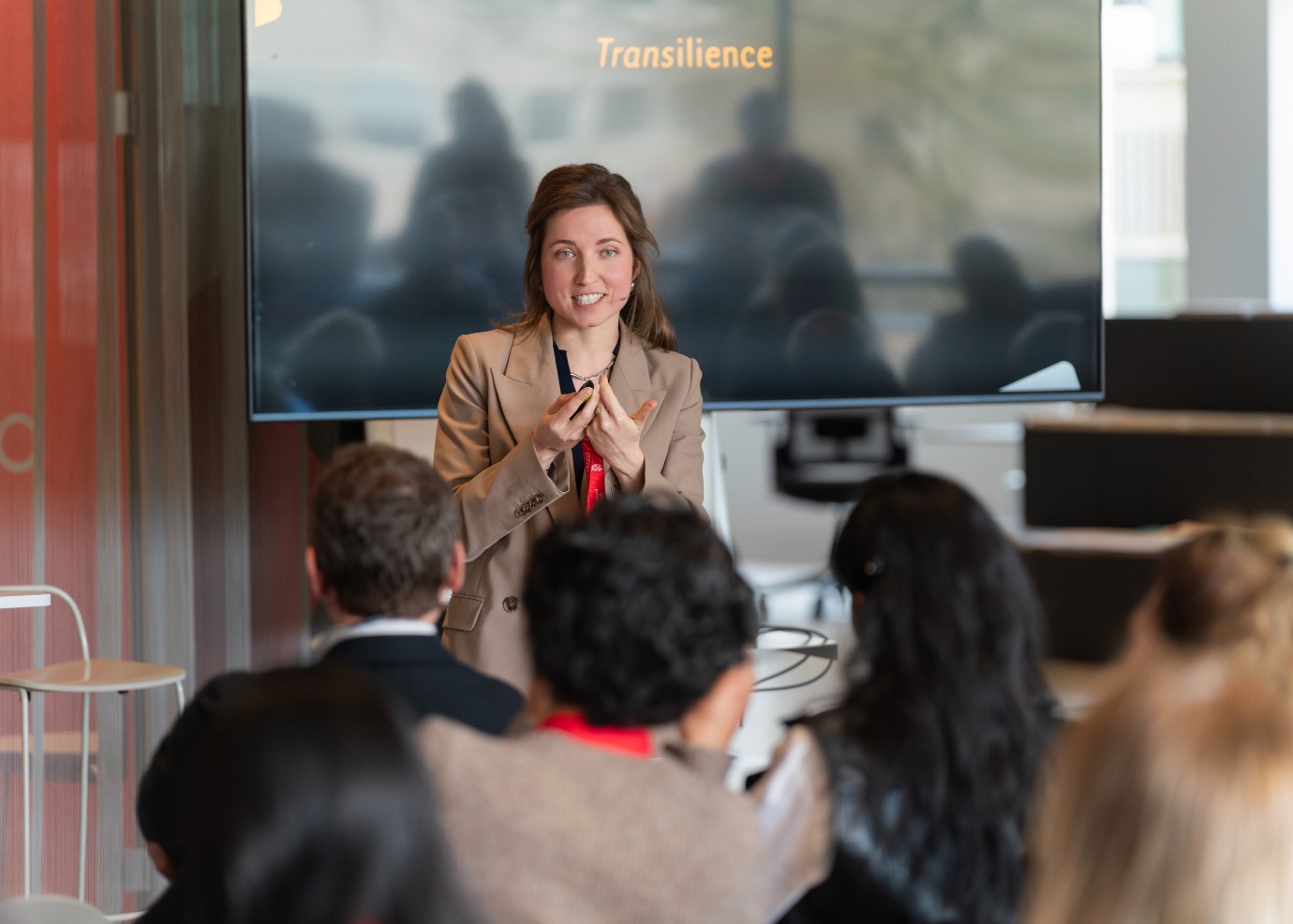
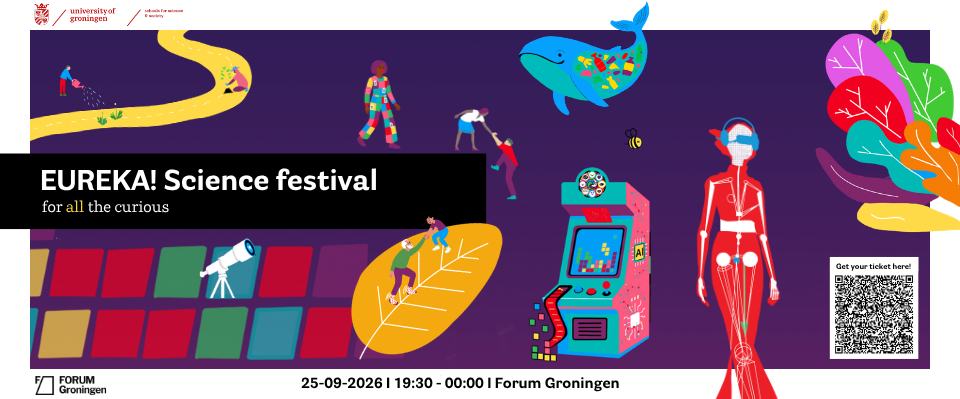
Climate disasters, pandemics and geopolitical upheavals: major crises are piling up these days. These are moments when our world seems to be collapsing, and yet they also offer an opportunity for positive change, emphasizes Valentina Lozano Nasi. You can hear all about it at Eureka!, the science festival by the Schools for Science & Society, taking place on 25 September at Forum Groningen.
Text: Jelle Posthuma
During her PhD research at the University of Groningen, Lozano Nasi studied the climate crisis and the Covid pandemic, major disruptions that turn everyday life upside down. ‘My question was whether people can cope with major changes caused by adversity at a psychological level. This psychological aspect is very important, because often the human aspect is not really taken into account. Yet, humans can be both the biggest obstacle and the biggest resource when it comes to real change.’
In her thesis, she described this psychological capacity of people to adapt as ‘Transilience’ (capitalized because she uses it as the name of her concept). It encompasses three aspects, Lozano Nasi explains: people’s ability to persist, to adapt flexibly, and to positively transform in the face of adversity and disruption. ‘Determination plays a major role. It is also about openness to trying different options. And ultimately, it is about the question of whether people can change for the better.’
Bounce back or change?
Lozano Nasi cites the Covid pandemic as an example. ‘A positive change is the realization that we do not have to go to the office every day. Working from home has improved the quality of life for many people. The pandemic has also, for example, increased our awareness of hygiene.’ These are good examples of Transilience, she says. ‘The main thing is that a disruption gives us the change to rethink things we used to consider normal.’
At the same time, many things returned to the old ways after the Covid pandemic. ‘You could call this resilience: we manage to bounce back to the old. The word resilience comes from the Latin resilire, which literally means to jump back. In some cases, this capacity is valuable, but in a major crisis – such as a pandemic – it is not enough. What if another pandemic comes? We have barely prepared for it. The system has remained the same.’
Seeking comfort in discomfort
During her PhD research, Lozano Nasi developed a Transilience scale. The higher people score on this scale, the more they are able to persist, adapt flexibly and change for the better in the face of a major disruption. ‘What is striking is that many people are very good at change. I also noticed this when I read historical works, for example about periods of climate change in the past, such as the Little Ice Age. People adapted their diets, and even thrived.’
She emphasizes that crises and disruptions are not exceptions: they are a constant in our lives. ‘Challenges are part of life. It is precisely because of them that we can change, which is also hopeful.’ However, it is not easy. ‘Change is uncomfortable. And as one crisis ends, the next one may be looming. The only constant is that there is always change. That is why we need to seek comfort in discomfort. Compare it to a good workout. Your muscles ache after an intense workout, but they come back stronger.’
Personal crisis
She experienced this in her own life as well. ‘After my PhD, I went through a big crisis. I did not continue in the academic world after my defence, but that turned out to be incredibly difficult: my entire identity was tied to being an academic. It was a very difficult period for me, but afterwards, I understood that I, too, had gone through the three steps of Transilience: persisting, adapting flexibly, and changing positively.’
She also emphasizes the importance of not facing challenges alone. ‘During my personal crisis, it was fundamental that I discussed it with other people. Alone, I would not have achieved a positive change. Especially in our Western society, which is highly individualistic, we rarely show this vulnerability. Yet, it can lead to something great when we work together in times of adversity.’
Meanwhile, Lozano Nasi has bid farewell to the academic world, although her scientific work on Transilience is being continued by other researchers. She still uses her insights on Transilience daily in her work. After a TED talk on Transilience, she was approached by various people to apply her work in practice. Through her own practice, she now advises institutional and sustainability leaders on navigating the human dimension of systemic change.
A positive message
Major disruptions will also be central at the science festival Eureka!. Lozano Nasi will engage in conversation with two specialists in the fields of climate change and AI, respectively. She discusses the climate with Lorenzo Squintani, Professor of Energy Law and former director of the Wubbo Ockels School, whilst Michael Wilkinson, theme coordinator for applied AI at the Jantina Tammes School, is her counterpart for the discussion on AI.
Together, they will look for good examples of Transilience. ‘I hope that after the sessions, the audience feels empowered, that they see opportunities for themselves and feel less alone. I also hope that after the science festival, people will look for ways to use disruption and challenges to change the present for the better.’
More news
-
19 October 2026
From research to business: RUG Ventures helps ideas move forward
-
-
03 September 2026
Ming Cao reappointed as scientific director of the Jantina Tammes School