
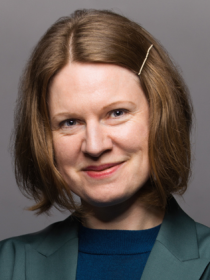
dr. M.C.S. (Muirne) Paap
A computerized adaptive test battery for cognitive complaints (2025-2029)
Together with researchers from the Netherlands Cancer Institute (Antoni van Leeuwenhoek Hospital - AvL), UG, University of Twente, UMC Utrecht, Amsterdam UMC, UvA, and software company Eyra Leap B.V, I have been awarded funding (€1 200 000) by the Dutch Cancer Society (KWF) for the development of an adaptive screening tool for the assessment of cognitive symptoms in patients with cancer. Many cancer patients experience cognitive symptoms, such as those resulting from the treatment they receive. In order to accurately understand these symptoms and provide appropriate care, a comprehensive neuropsychological examination is typically carried out by a neuropsychologist. This time-consuming diagnostic evaluation hampers provision of adequate care to all patients; which poses huge challenges, as an increasing number of patients are living longer with or beyond cancer. Healthcare must therefore be organized in a more efficient way. In this project, we are developing an adaptive screening tool that can be used to identify cognitive symptoms. It is our goal to develop a low-threshold tool comprising tasks that can be completed by patients themselves at home.
Based on an algorithm which has yet to be developed, a recommendation will be given to the patient’s doctor whether or not it is necessary to conduct a full neuropsychological examination of the patient. The tool will be based on the principles of computer adaptive testing (CAT), which offers the advantage of obtaining a score which is as reliable as possible with completing as few tasks as possible in the least amount of time possible. By working closely together with patient representatives of the Dutch Federation of Cancer Patients Organisations (NFK), we want to ensure that the information material, the manual, and the test itself are well aligned with patients’ experiences and wishes. The voices of patients are structurally included in all phases of research and implementation. I am confident that together we can develop and deliver a tool that will make a substantial difference for patients with cancer who experience cognitive symptoms.
The project team is led by Sanne Schagen (AvL) and comprises neuropsychologists Sanne Schagen, Martine van Zandvoort, and Martin Klein, experts in the field of methodology and, in particular, advanced pscyhometric models Muirne Paap, Niek Frans, Bernard Veldkamp, and Joost Agelink van Rentergem, experts in the field of health technology assessment (HTA) and Human-System Interaction Valesca Retèl and Somaya Ben Allouch, and a team of software developers under supervision of Adriënne Mendrik.
SEALS project (2024-2028)
I am co-investigator in the "Screening early and adaptively for language skills" (SEALS) project, which is supported by a grant (€648 000) awarded by the Research Council of Norway to professor Johan Braeken at the University of Oslo. The goal of the project is to provide a solid methodological toolkit that facilitates the evaluation and development of progressive tests in a more systematic manner, in order to support the work of practitioners in the field of education, school psychology, and special needs who conduct diagnostic screenings for developmental delays with children. Progressive tests are characterized by an increasing difficulty of items being presented to the child, as well as a stopping rule that determines when the test administration should be stopped (e.g., after 4 consecutive errors). More often than not, it is unclear how such stopping rules were developed. In this project, we evaluate the impact of various types of stopping rules on the estimated ability scores, and develop methods that can be used to optimize stopping rules for specific assessment goals. More information can be found on the project website.
PersoniCAT project (2019-2022)
In December 2018, I was awarded a personal grant (€800 000; type FRIPRO) by the Research Council of Norway for the project "Supporting specialized psychiatric care in remote areas: A computer adaptive diagnostic interview for personality pathology" (PersoniCAT) . This project has now been succesfully concluded.
The goal of this project was to develop an adaptive instrument for assessing personality disorders. Members of the project group were: Aleksander Heltne (PhD student), Dr Niek Frans (postdoc), Dr Benjamin Hummelen, Dr Sara Germans Selvik, Prof. Johan Braeken, Prof. Bernard Veldkamp, and myself as project leader. Click here for a description of the project.
PhD students
-
Sebastian Lortz (2025-2029). Topic: Models for Computer Adaptive Testing of Cognitive Functions.
-
Antje Janshen (2024-2028). Topic: Grief as a trans-situational process – Phenomenology, assessment, and intervention.
-
dr. Aleksander Heltne (thesis defended in 2024). Thesis title: Personality Disorders on the Spectrum: An examination of how the dimensional model for personality disorders may change PD assessment in clinical practice.
-
dr. Sabrina Soe-Agnie (thesis defended in 2022). Thesis title: The externalizing spectrum model: transdiagnostic assessment of externalizing disordersin addiction care and forensic psychiatry.
-
dr. Marleen Wessels (thesis defended in 2021). Thesis title: Looking at possibilities: research into assessment of people with profound intellectual and multiple disabilities.
Collaboration
-
Dutch-Flemish PROMIS group
-
Helse Nord Trøndelag, Norway
-
Department of Special Needs Education, University of Oslo, Norway
-
Division of Psychosocial Research and Epidemiology, Netherlands Cancer Institute, Amsterdam, The Netherlands
-
Research group for personality disorders, Oslo University Hospital, Norway
-
Regional Kompetansetjeneste for rehabilitering i Helse Sørøst, Sunnaas Sykehus HF, Norway
-
Institute for Social Medicine, Epidemiology and Health, Charité Universitätsmedizin Berlin, Germany
-
The EMGO Institute for Health and Care Research, VU University Medical Center, Amsterdam, The Netherlands
-
Department of Research Methodology, Measurement, and Data-Analysis, University of Twente, The Netherlands
-
Centre of Educational Measurement at the University of Oslo (CEMO), University of Oslo, Norway
-
University of Birmingham, UK
-
Harvard Medical School, USA