
Minor Einstein's Physics: Space-time and Parallel Worlds
In his 1900 address to the British Academy of Sciences Lord Kelvin, a leading scientist at the time and president of the Academy, sketched a gloomy picture of the future of Physics: Physics was complete, and nothing remained to discover other than to measure physical properties with more precision. Only two little "dark clouds" remained ...
These two dark clouds turned out to be harbingers of the two biggest conceptual revolutions in 20th-century physics: the theory of relativity and quantum mechanics. These two theories have completely overthrown our understanding of reality, and resulted in a new and deeper understanding of the universe we live in and its fundamental building blocks. Nowadays, ideas and concepts from the theory of relativity and quantum mechanics pervade our language, culture, and technology.
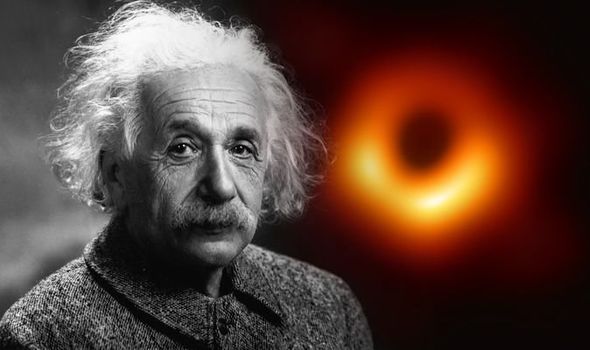
In this 15 ECTS Minor we will explore these exciting fundamentals of modern physics. It consists of three courses, "Living in Einstein's Universe", "The Quantum World", and "Relativity theory", of 5 ECTS each. All courses are taught in period 1a. The courses are taught in English.
This minor can be combined seamlessly with the Minor Astronomy through Space and Time in period 1b.
Aim of the program
At the end of this module the student has a conceptual understanding of the special and general theory of relativity, of quantum mechanics and the building blocks of matter and their interactions. S/he understands their implications and can extrapolate these to other phenomena.
For whom?
This minor is intended for bachelor students outside of the natural sciences: It aims to be “physics for poets and presidents”. The topics are treated in a mostly conceptual manner, with only (light) calculations when necessary. The minor does not require any prerequisites in terms of physics or mathematics.
Content
"Living in Einstein's Universe" The (special and general) theory of relativity and quantum mechanics, the two major pillars of modern physics, have not only revolutionized our scientific understanding of the world, but ideas and concepts, both established and speculative, from these theories also pervade our culture, arts, and langauge: We can rightfully say that we live in Einstein's Universe! In this course we will cover popular topics rooted in relativity and quantum theory (such as superluminal speed, antimatter, parallel worlds, wormholes, time travel, and black holes), and compare the science with the portrayal of the science in the literary or visual arts (or other fields). We will develop both our understanding of how the science is actually done and our awareness of how the science is talked about. The course consists of plenary lectures as well as interactive sessions to engage with the science and the narratives about the science, and to prepare and discuss the reading and writing assignments.
"The Quantum World" In this module we enter the quantum world, which describes how matter behaves at the scale of atoms and electrons. We will see that these particles can behave like waves, can tunnel through barriers, appear to be in multiple places at the same time, pop up out of nowhere and disappear quickly again. In some experiments they influence each other at large distances. We will discuss the place of these phenomena in our current understanding of the universe, and cover some important applications of quantum physics, such as quantum cryptography, and we look forward to the first quantum computer.
"Relativity theory" Relativity theory has profoundly changed the way we think about the world around us. In the course we come to talk and think about concepts such as the constant speed of light, four-dimensional spacetime and the twin paradox. We'll extend the principle of relativity to gravity, resulting in the general theory of relativity with fascinating implications such as time travel, black holes, and gravitational waves. The treatment of both special relativity as well as general relativity in this course is mostly conceptual, involving as little mathematics as possible.
More info
Steven Hoekstra, Daan van Eijk, Kristof de Bruyn