

Okin and Mahmood Walk into a Bar: Feminism, Piety, and the Western Gaze
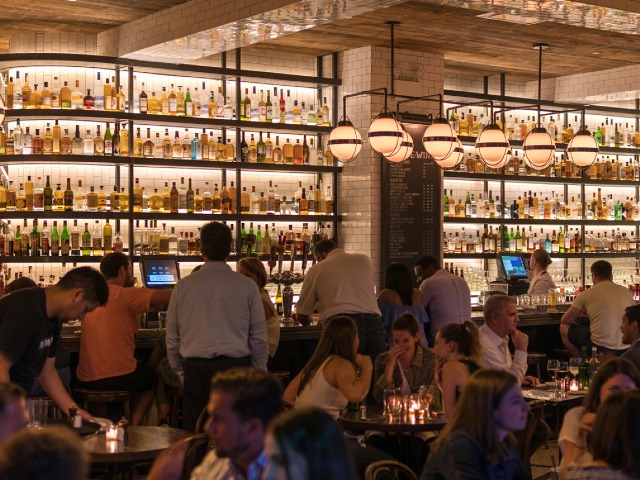
Imagine Okin, a liberal feminist, sitting across from Saba Mahmood, an anthropologist studying religion in modern societies. Picture them in a quiet bar, drinks in hand, jumping into a debate about the "F" word in religion.
Feminism.
Both are scholars who care deeply about women's well-being, but they disagree on what empowerment means. Okin sees religion as inherently oppressive, while Mahmood argues that religious practice can be a meaningful site of agency moulded by cultural traditions. Their debate over religion, tradition, and agency unfolds in rounds, like shots.
Round One: A Shot of Tequila with a Side of "Religion as Oppression".
Okin’s position is clear: religion, particularly in its traditional forms, often reinforces gender inequality. For Okin, protecting cultural and religious practices that promote gender hierarchies and limit women’s autonomy is deeply problematic. She believes in a universal feminism based on individual autonomy, gender equality, and freedom from patriarchal control, regardless of culture or religion (Korra, 2024). To her, traditions that compromise these values should be challenged, even if they are religiously or culturally significant.
Mahmood cautions against assuming all women define freedom as autonomy from tradition. She notes that while some feminists viewed the nuclear family as a source of oppression, many Native and African American feminists understood freedom as the ability to form and sustain families, given histories of slavery, genocide, and racism that had broken them apart (Mahmood, 2001, p. 208). As an anthropologist, Mahmood urges us to question the Western feminist gaze that treats all traditions as oppressive.
Where Okin insists that feminism must have a universal definition, Mahmood warns that such a position erases cultural complexity and imposes Western ideals as the standard. Feminism, Mahmood argues, should be defined by cultural context—that is, regarding the diverse moral, spiritual, and social worlds women inhabit.
Round Two: Make It Another Tequila, This Time with a Side of "Docile Agency".
Anthropologist Janice Boddy (as cited in Mahmood, 2001) studied healing ceremonies where women use Islamic idioms and spirit possession to treat emotional, spiritual, and social distress. To Boddy, these rituals function as quiet resistance, allowing women to express their frustration with male dominance and social restrictions.
But Mahmood pushes back on Boddy's thoughts, especially targeting the perspective through which Boddy analyses the rituals. She critiques what she calls the Western reflex: the assumption that women must always resist power, even if only subtly or unconsciously (Mahmood, 2001). For Mahmood, this need to "find resistance" reveals an inability to see tradition and piety as legitimate sites of agency.
Sometimes, women embrace religious practices, though not because they are oppressed but because they find them meaningful. To understand Mahmood’s argument, we need to pause on two key terms: embodiment—how religious practices are formed through the body, such as veiling, prayer, and modesty, which are acts of self-discipline—and piety, an active process of ethical self-formation in which women seek to live virtuously and align with the divine.
This is what Mahmood calls “docile agency.” Drawing on Michel Foucault’s ideas about how power shapes people through everyday discipline, she questions the assumption that agency must always involve resisting norms. Instead, agency can also be found in inhabiting norms and in pursuing virtue. As she writes, docility implies not passivity but “struggle, effort, exertion, and achievement” (Mahmood, 2001, p. 210). In this view, the body becomes a site of discipline, devotion, and moral growth.
Round Three: Fine, another shot of tequila, but this time with a side of "The Veil".
Lila Abu-Lughod asks in her essay, Do Muslim Women Need Saving?, what it really means to “save” women. She critiques the use of feminist rhetoric to justify military intervention, particularly in the Middle East (Abu-Lughod, 2002). The idea that Western forces were “liberating” Afghan women from their culture, especially from the veil, suggests that freedom is often understood in narrowly Western terms.
Abu-Lughod argues that this saviour narrative is not new and has appeared in earlier political contexts. What is missing, she says, is a commitment to listening to what women want, and recognising that not all women wish to be saved from religion (Abu-Lughod, 2002). This corresponds with Mahmood's message: piety can be empowering. Some women find spiritual, social, and ethical fulfilment in living religious lives, not despite but because of their beliefs (Mahmood, 2001).
After 1980, there was a resurgence of veiling in Egypt; after years of wearing Western clothes, many academics interpreted this reemergence through a secular lens, crediting it to factors such as sexual harassment, a way to protest against Western norms or a way to reduce money spent on clothes. Although the arguments might be valid, Mahmoud argues that this approach ignores the religious and moral meanings these women place on veiling (Mahmood, 2001). Women see veiling as an expression of piety, modesty, and devotion to God; these reasons are commonly underrepresented.
Final round: No winners, only questions. Oh, and a glass of red, thanks.
The bar is quieter now. The weight of the conversation lingered.
The exchange between Okin and Mahmood reveals how religion both shapes and is shaped by public life. Feminism must begin by listening and attending to the many ways women live out agency, tradition, and liberation.
For some, empowerment means unveiling. For others, it means choosing to veil. Not all power is loud. Not all resistance looks like protest.
Rather than asking whether religion is good or bad for women, perhaps the better question is: What do women do with religion, rather than what it does to them?
One more round?
About the author
Elaine Smit is a psychology bachelor’s student at the University of Groningen, originally from Cape Town, South Africa. After starting out in medicine, she decided to follow a different path focused on understanding human behaviour and well-being. She enjoys hiking and exploring topics related to mental health, culture, and belief systems.