
Mladen Popović awarded €2.5 million ERC grant to trace the origins of the Dead Sea Scrolls
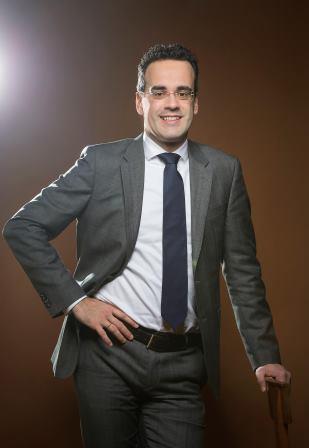
Mladen Popović, professor of the Old Testament and Ancient Judaism at our faculty, has been awarded an ERC Advanced Grant for the project ‘Tracing Scribes and Scrolls’. With the €2.5 million grant, he and his team will spend the next five years working in the laboratory and using AI to trace the origins of the Dead Sea Scrolls.The Dead Sea Scrolls are ancient manuscripts that include the earliest known copies of biblical texts, significantly shaping our understanding of the Old Testament.
About the project
In the ‘Tracing Scribes and Scrolls’ project, the researchers aim to trace the origins and production of the Dead Sea Scrolls using analytical chemistry, artificial intelligence and palaeography (the study of handwriting). In this way, Popović and his team hope to determine where the scrolls were made and written, which can shed new light on their historical and cultural context. The researchers are combining this new knowledge with the expertise in handwriting analysis (palaeography) gained from Popović’s previous ERC project (‘The Hands That Wrote the Bible’). This enables them to place individual scribes in time and identify them geographically. This is how they aim to trace where the authors of the Dead Sea Scrolls carried out their work and identify for the first time very specific locations of literature, creativity and social networks of intellectuals in ancient Judea. This way, they hope to bring to light groups that have been largely overlooked throughout history. This will shed new light on the dissemination of biblical and many other types of texts in ancient Judea and possibly beyond.
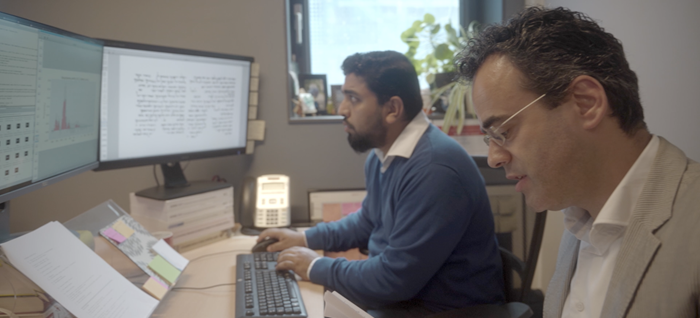
Within the University of Groningen, Maruf Dhali (Faculty of Science and Engineering and Faculty of Religion, Culture and Society) plays a crucial role. He develops and applies the AI approach to cluster all chemical data in its full complexity and to search for patterns of provenance. Dhali and Popović then establish a link between analytical chemistry, AI and the humanities and religious studies by analysing the clusters and patterns for palaeographic, codicological, linguistic and literary characteristics.
About the ERC grant
The European Research Council’s Advanced Grant is specifically designed for established, leading researchers with an exceptional track record. It is a prestigious European grant that gives experienced scientists the freedom to undertake pioneering and groundbreaking research. Principal investigators must demonstrate excellence in terms of the originality and significance of their research contributions.
More news
-
-
06 January 2026
Connecting with history
-