
University of Groningen appoints Andrew Irving Assistant Professor in Religion and Heritage
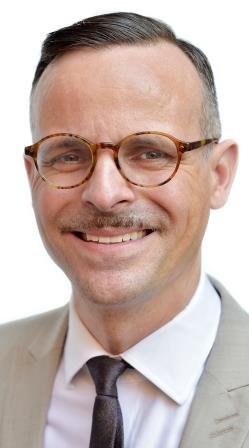
Dr. Andrew Irving has been appointed Assistant Professor in Religion and Heritage in the Faculty of Theology and Religious Studies of the University of Groningen from September 1, 2016. The New Zealand-born liturgical scholar previously held positions at universities in Canada and the United States .
Material and intangible religious heritage
In Groningen, Irving will conduct research on the material culture of Christianity and contribute to the faculty’s teaching profile (BA, MA, thesis supervision) through his expertise, notably in material culture and religion, manuscript studies and liturgical studies. His position will be located in the department of Christianity and the History of Ideas, a multidisciplinary department with a strong focus on cultural heritages. In this position, he is to help the department’s current Institute for Christian Cultural Heritage (ICCE) transition to a more inclusive Centre for Religion and Heritage that will co-ordinate ongoing, and stimulate new, research activities on material and intangible religious heritage.
Expertise and research
Irving’s expertise in research and teaching intersects material culture, manuscript studies and liturgical studies. In his theological training, he specialized in pastoral theology (University of Auckland, New Zealand) and in liturgical studies (University of Notre Dame, USA) before undertaking his doctoral research in Medieval Studies (Medieval Institute, Notre Dame, USA). His dissertation research centered on Gospel books produced at Montecassino in the late eleventh century, a high-point of the Abbey’s cultural and political influence. He has taught liturgy at the University of Notre Dame, Trinity College, Huron University College and Yale University; patristic and medieval church history at The General Theological Seminary in New York; and Latin at Notre Dame.
Irving’s research concerns the relationship between material aspects of manuscripts, their use and the history of Christian worship, and entails detailed physical examination of liturgical books in manuscript libraries across Europe. He is developing a large-scale project to investigate changes across Europe in the design and use of a book of central importance for the celebration of the Mass in the Middle Ages: the ‘missal'. In addition, he is involved in two international digital humanities projects: the Digital Schoolbook on the transmission and reception of the Distichs of Cato, a foundational text in Western education from late Antiquity into the early modern era; and a spectral imaging project on palimpsested manuscripts in the Biblioteca Ambrosiana in Milan.
Excited
Irving comments that “Although my home country is New Zealand, and the countries of my graduate degree and my first teaching positions were in North America (USA and Canada), my research has led me to undertake extensive research in Europe. I am very excited by the increased possibilities in international and inter-disciplinary collaboration in research in my own fields (manuscript studies, liturgical studies and digital humanities) that are intensively fostered in European universities, institutes and academies.” He is particularly eager to work at the University of Groningen: “RUG’s reputation for excellence in research and teaching across disciplines and in particular in the disciplines of Theology and Religion is truly international. I have followed the work of several RUG scholars who are leaders in their fields. During my own training and research I have met many scholars who have visited RUG for conferences, teaching and research, who have had only positive things to say about the University and the city. Many institutions extol the virtues of collaboration, but in practice have found it difficult to remove barriers and disincentives to collaborative work. I am impressed by what a high degree collaboration at RUG (within the faculty, across faculties and across institutions) is not only expected but actively facilitated at every level of teaching and research.”More news
-
-
06 January 2026
Connecting with history
-