
What do art forms like painting, film, music or theatre contribute to societies? Why have humans in every culture and throughout history engaged in activities we categorize as art?
The Master's degree programme in Arts and Culture provides you with the skills needed to investigate the function of the arts in society. It combines in-depth knowledge in a range of specific disciplines with professional and social engagement as well as critical and creative thinking.
The programme's six tracks are devised to reflect the multifaceted forms of the art-world and the cultural sector – from the fine arts and architecture to music, theatre and film, including an emphasis on policy-making, cultural entrepreneurship and cultural heritage. The track of your choice prepares you for a professional position in the art-world and the cultural sector in your area of expertise.
You can choose from the following six tracks:
| Programme options |
|---|
| Art History (track) . Looking to turn your passion for art into a professional career? The track in Art History of the Master's programme in Arts and Culture equips you with the expertise, skills, and experience to succeed.The Art History track of the Master's degree programme in Arts and Culture is an international programme that attracts students from around the world and prepares intellectually rigorous, socially engaged art historians with a strong orientation toward professional practice. The track combines a research-driven curriculum with curatorial experience developed in collaboration with museums, galleries, alternative art spaces, and heritage institutions. Courses address early modern, modern, and contemporary art while emphasising transhistorical and transcultural perspectives. Students also engage with artistic research in collaboration with the art academy and examine current conservation issues, including eco-critical approaches in art history. An international team of specialists teaches the programme in medieval, early modern, and modern and contemporary art, as well as Chinese, South American, and African heritage and museum studies, artistic research, and visual and material culture. Teaching takes place in close dialogue with museums, curators, artists, and other professionals and frequently includes on-site components. All students participate in an academic excursion to a major European city such as Berlin, Paris, Rome, or Venice. In addition to the MA thesis, small research tutorials allow students to work closely with individual professors and develop their academic and professional profiles. Within the one-year Master's track, a group of students is selected after the first semester to undertake a 4-month curatorial internship. This pathway is intended for students who demonstrate strong academic performance and the ability to contribute effectively within collaborative professional environments. Students interested in a research-oriented academic path may, after the first semester, transfer to the Research Master's programme in consultation with their supervisors. Graduates obtain an internationally recognised MA degree that provides a strong foundation for careers in museums, curatorial practice, cultural institutions, or academic research. Our alumni have built successful careers in a wide range of institutions across the art sector. |
| Curatorial Studies (specialization) Integrated into the one-year track Art History, the Curatorial specialization forms a practice-oriented component of the Master's degree programme in Arts and Culture. Within this specialization of the Art History track, a selected group of students has the opportunity, after the first semester, to complete a four-month curatorial internship in collaboration with museums, galleries, and other cultural institutions. The internship is designed to develop professional skills and experience in exhibition-making and institutional work. Please note that it is not possible to apply separately for this Curatorial specialization. Applicants must apply to the Art History track of the Master's degree programme in Arts and Culture and can express their interest in the specialization during the course of their studies. Further information and application details: Master's programme in Arts and Culture and Master's track Art History. |
| Arts in Society (track) The arts are considered to have a wide variety of 'functions' in society.. Not only can they be a means for expressing, representing and even generating individual and collective identities, but they also serve to critical reflect society. In the track Arts in Society of the Master's degree programme in Arts and Culture you will study aspects of the public role of art in today's societies.In the present time, the position of the arts and culture in society is more critical than ever. We witness how culture has become a platform for polarization and conflict, but how it can also serve as an instrument for appeasement. From the realist novel and Brecht's theatre to Pussy Riot and NWA, art has been used as a stage to combat political oppression and to express and negotiate identities. This track looks at the various ways in which artistic practices can contribute to forms of political resistance. The track also foregrounds approaches which illuminate the inter-relations between various arts disciplines. Finally, the MA track studies arts and culture in relation to current developments such as digitization / AI, decolonization, democracy and populism, globalization and its relation to future developments in GenZ. Building on a combination of critical sociology and cultural studies, the Arts in Society track provides tools, in the first semester, to study and interpret these developments whilst developing strategies for strengthening the position of the arts in society. In the second semester you will apply gained insights in practice, in a variety of forms, ranging from taking on a professional placement in a relevant cultural institution, to creating a professional portfolio, and curating a concrete intervention in society.Further information: Master's degree programme in Arts and Culture |
| Film and Contemporary Audiovisual Media (track) From the canonical to the cutting-edge, the profound to the playful: the current film world is as diverse and critically engaging as ever.. So is the track Film and Contemporary Audiovisual Media of the Master's degree programme in Arts and Culture.It equips you to join high-level conversations about timely and fascinating issues. There will always be a “next big thing” in the world of cinema, and we welcome our inspired students to discover it with us.In this one-year Master's track, you will work closely with our international faculty, whose collective expertise includes phenomenological and cognitive film theory, film aesthetics, digital film forensics, queer film studies, post-colonial studies, film festival research, screen acting studies, media anthropology, animation studies, documentary studies and more. Our graduates are ready to leave their mark on the next chapters of film history, both inside and outside of academia.Our track is unique in its combination of research-driven seminars, the rich research resources of the world's Top 100 universities, and the extensive networks of internship opportunities in major film and media institutions. It offers a relevant (inter)national internship network and will therefore be attractive to students who want to deepen their knowledge of film, swiftly transition into the professional world, and pursue a career in the arts and media sector. Please visit our Facebook page or follow our Instagram account for more information on our track, including the current lineup of screenings, talks, and other special events.Further information: Master's degree programme in Arts and Culture |
| History of Architecture and Urbanism (track) . The track History of Architecture and Urbanism of the Master's degree programme in Arts and Culture explores the evolution of cities, villages, and landscape design in Europe within the continuously changing global environment.Cities, neighbourhoods, buildings, parks, and cultural landscapes define the setting of our everyday life. No other human-made artifacts document the evolution of social relations, economic trends, technological innovations, philosophical views on humans and nature, politics, society, and culture more eloquently than architecture and urbanism. Our built heritage connects us to our past and helps us to position ourselves in the world around us. It helps us envision our future. Moreover, the impact of cities and buildings on health is self-evident – urban planners gave us our water management systems, and architects designed functional public housing and healthcare buildings. They are fascinating works of architecture that impact people's mental and physical health, happiness, and well-being. This Master's track provides students with a rich and varied introduction to the history and theory of architecture and urban planning, cultural heritage, and healthy cities. It offers our students a progressive approach to architectural and urban history and theory, fit for our transforming times. Some of the courses we offer are affiliated with the Expertise Center Architecture, Urbanism and Health and give those interested in the health impacts of the built environment opportunities to explore these impacts from the perspective of architectural and urban design. Our master's degree allows students to specialize in architectural history and theory, cultural heritage, the health impacts of architecture and urbanism, or their complex links and connections. All of our graduates find attractive employment in their field immediately after the completion of the degree.Further information: Master's degree programme in Arts and Culture |
| Landschapsgeschiedenis (in Dutch) (track) . De track Landschapsgeschiedenis van de masteropleiding Kunst- en Cultuurwetenschappen is het enige programma in Nederland dat gericht is op verleden, heden en toekomst van het Nederlandse en Europese landschap.Landschap speelt een centrale rol bij de oplossing van belangrijke vraagstukken. In de programma Landschapsgeschiedenis bestudeer je de ontstaanswijze, opbouw en betekenis van het landschap. De kennis die je opdoet, leer je actief inzetten op het gebied van ruimtelijke ordening, erfgoedzorg, landschapsbeleid, landschapsplanning en landschapsbeheer.Landschapsgeschiedenis hanteert een sterk interdisciplinaire aanpak, waarbij diverse benaderingen worden gecombineerd binnen de driehoek aarde, mens en natuur. Zo krijg je een praktische scholing in het analyseren van de opbouw en ontstaansgeschiedenis van het landschap met behulp van bronnen en methoden uit verschillende vakgebieden: Geografische Informatie Systemen (GIS); historisch-geografisch veldwerk; archiefonderzoek; oud schrift (Paleografie); veldbodemkunde; landschapsbelevingsonderzoek; historische kartografie; naamkunde (toponymie); oral history; pollenonderzoek (paleobotanie).De mastertrack biedt je mogelijkheden voor je individuele ontwikkeling en samenwerking met je medestudenten. Naast verplichte vakken over het Nederlandse en Europese landschap zijn er ook een aantal keuzemodules waarin:* je wordt ingevoerd in de wereld van landgoederen en buitenplaatsen;* je in veldpractica en excursies kennis kunt maken met de rijke variatie aan cultuurlandschappen in Nederland;* je tijdens een buitenlandse excursie naar Noordwest-Italië of Zuid-Engeland leert over een aantal hoofdthema's van de Europese landschapsgeschiedenis;* je tijdens een stage in Nederland of in het buitenland ervaring kunt opdoen met de praktijk van het landschapsonderzoek, de landschapsplanning of het landschapsbeheer;* je onder begeleiding van een van onze docenten zelfstandig een goed wetenschappelijke onderzoek leert schrijven door middel van je eigen masterscriptie.Meer informatie: Masteropleiding Kunst- en Cultuurwetenschappen |
| Popular Music and Sonic Cultures (track) The track Popular Music and Sonic Cultures of the Master's degree programme in Arts and Culture examines music and audio cultures within global and local contexts.. Unique in its kind, it combines attention for creative practice and music analysis with a wide array of methodological and theoretical approaches at a World Top 100 university.Students are guided by an internationally recognized faculty of scholars whose specializations and research range from hip hop, R & B, and electronic dance music to jazz, music video, soundscape, video game, dance, and theatrical sound design. These scholars offer insight into the music industry, and the field of music criticism, and from a variety of perspectives which address the key approaches and challenges of our times. In the various courses and internships, students will develop highly relevant and transferable skills that prepare them for a professional future in the popular and contemporary music world.This programme focuses on cutting edge developments in popular music including the impact of new media upon modes of creativity, distribution, and reception. Through applying a range of theoretical approaches, the programme will offer students an in-depth understanding of how such processes affect musicians and the music industries in light of rapidly changing economic, political, and technological structures. Students critically examine the organization, experience, and creative potential of music makers, organizations, audiences, and media cultures today. Concrete topics and approaches may include: contemporary careers in the music industry; popular music criticism (e.g. media platforms and journalism); song writing aesthetics and music genre cultures; gendered, queer, and intersectional identities within performance and reception contexts; ecocriticism of sonic environments; new music media and digital technologies; and urban soundscapes and mobile sound cultures. Engaging with these themes, students deepen their understanding of how musical actors respond to new challenges introduced by perpetually transforming economic, political, and professional worlds. Our programme offers a unique combination of research-driven seminars, a music series with international academics and industry practitioners (Music Matters), and extensive networks for the internship. Therefore, this MA track is attractive to students who want to expand their knowledge of music and apply that within the music sector.Further information: Master's degree programme in Arts and Culture |
| Specific requirements | More information |
|---|---|
| previous education |
For more information on the specific entry requirements for the Master's track of your choice, visit the separate webpages. |
| language test |
Language requirement for English: You must have completed this at VWO level (mark 6 or higher) or obtained one of the following English certificates:
TOEFL iBT tests taken after 21 January 2026 will use TOEFL's new 1 - 6 scoring system. |
Please use this step-by-step guide for more information regarding your eligibility and your specific application procedure.
After you complete your application, the Admissions Board will assess whether your educational/academic background meets the specific programme requirements, and will consider the level and curriculum of your previous studies.
The Admissions Board will then determine whether:
| Type of student | Deadline | Start course |
|---|---|---|
| Dutch students | 15 August 2027 | 01 September 2027 |
| EU/EEA students | 01 May 2027 | 01 September 2027 |
| non-EU/EEA students | 01 May 2027 | 01 September 2027 |
| Specific requirements | More information |
|---|---|
| previous education |
For more information on the specific entry requirements for the Master's track of your choice, visit the separate webpage. |
| language test |
Language requirement for English: You must have completed this at VWO level (mark 6 or higher) or obtained one of the following English certificates:
TOEFL iBT tests taken after 21 January 2026 will use TOEFL's new 1 - 6 scoring system. |
Please use this step-by-step guide for more information regarding your eligibility and your specific application procedure.
After you complete your application, the Admissions Board will assess whether your educational/academic background meets the specific programme requirements, and will consider the level and curriculum of your previous studies.
The Admissions Board will then determine whether:
| Type of student | Deadline | Start course |
|---|---|---|
| Dutch students | 15 August 2027 | 01 September 2027 |
| EU/EEA students | 01 May 2027 | 01 September 2027 |
| non-EU/EEA students | 01 May 2027 | 01 September 2027 |
The programme prepares students for programming and curatorial functions, journalistic and publishing positions, educational positions in schools, universities and policy functions, management of art institutions and heritage foundations, and as founders of art-related companies and cultural entrepreneurs.
During their internship students were working for institutions and companies such as Kunst & Cultuur (Groningen and Drenthe), the Curaçao Ministry of Culture, the cultural departments of various embassies, UNESCO, theatre and dance companies, national and international film festivals such as IDFA or the Montréal film festivals, local authorities, many large and small museums in the Netherlands as well as museums abroad (i.e Groeninge Museum Brugge, Kunsthistorisches Museum Vienna), the Dutch Council for Culture, Fund for the Performing Arts, EYE Filmmuseum, Sound and Vision, IDTV, the Fund Cultural Participation and local authorities in the North of the Netherlands.
The Research Centre Arts in Society (AiS) brings together research on the arts and their societal engagement and impact, both past and present. It hosts a multitude of disciplines including literature studies, art history, architecture and landscape, film studies, musicology, and theatre and performance studies. Research within AiS is focused at the transformative, changing nature of the arts in society throughout history until present day. It does so both in fundamental and applied, empirical and theoretical research. Apart from their work as academic researchers, members of the AiS are involved in cultural life on local, national and international level in for example museums or cultural and educational institutions.
The Research Centre Arts in Society currently hosts seven theme groups:
The AiS theme groups reflect ongoing, innovative, and sustainable research-interests by the academic staff, PhDs and postdocs. Theme groups can be disciplinary or interdisciplinary and are all open to all PhDs throughout the faculty and beyond to enable academic exchange and support for specific research questions.
Na mijn bachelor Natuur- en Landschapstechniek wilde ik mij meer verdiepen in het landschap van Nederland. Je komt dan al snel uit bij de mastertrack Landschapsgeschiedenis. Hier krijg je naast de theorie over het Nederlandse landschap, veel handvatten aangereikt om zelf fundamenteel of toegepast onderzoek te doen.
De theoretische kennis komt onder andere terug in het vak Landschappen van Nederland, waar je uitgebreid leert hoe alle landschappen in ons land zijn opgebouwd en ontstaan. Eén van de onderzoeksmethodes die je leert is paleografie: het leren lezen van oude handschriften. Daarnaast krijg je uitgebreide kennis van historische cartografie en GIS-software.
Al deze vakken gebruik in mijn dagelijkse werk nog steeds erg veel. Want mijn werk bestaat voor een groot deel uit toegepast onderzoek. Eerst als zzp'er, tegenwoordig als Projectleider Cultuurhistorie bij Cultuurland Advies. Bij dit adviesbureau ben ik verantwoordelijk voor de cultuurhistorische tak. Wij zetten het toegepast onderzoek om in een kansrijk product. Je moet dan denken aan een cultuurhistorische waardenkaart voor een gemeente, een kansencatalogus voor een landschapsontwerper of een visie voor een lokale vereniging.
Het leuke daaraan is dat ik niet alleen bezig ben met het daadwerkelijke onderzoek, maar ook intensief bezig ben met het proces. Van het bedenken van het product tot het analyseren van beleid en van het leiden van een discussie tot het geven van een presentatie. Dat maakt dat niet alleen het Nederlandse landschap veel variatie in mijn werk biedt, maar zeker ook alle zaken daaromheen.
Na mijn studie werd ik gedwongen om creatief te zijn, want binnen de kunstsector is het hard werken om een baan te vinden. Toch ben ik blij dat ik kunsthistoricus ben geworden, want het is een waardevolle studie.
Binnen de mastertrack Kunstgeschiedenis koos ik voor de specialisatie Oude Kunst. Ik vind het namelijk zeer interessant dat al die kunstwerken, vele eeuwen oud, vandaag de dag nog in de spotlights staan. Deze kunstwerken hebben ons nog steeds veel te vertellen en daar wilde ik meer van weten!
Eén van de vakken die ik binnen voor deze richting heb gevolgd is Toepassing en Overdracht. Tijdens dit vak ontwikkelde ik de vaardigheden om de intenties van kunstenaar en opdrachtgevers te achterhalen met behulp van technieken zoals visuele analyse en literatuuronderzoek. Met het bestuderen van een kunstwerk komt heel verrassend de tijd waarin het is ontstaan weer tot leven.
Op dit moment werk ik samen met een kunsthistorica Moderne Kunst aan een project waarbij we de kunst in de openbare ruimte in vele gemeenten onder de aandacht willen brengen. Wij willen kunstliefhebbers en toevallige voorbijgangers ter plekke aanknopingspunten geven bij het bekijken van een kunstwerk. In weer en wind naar kunst kijken is anders dan in een museum. Buiten worden meer zintuigen aangesproken dan alleen de ogen en daar leer je als kijker veel van.
Het heeft veel pluspunten om ondernemer te zijn, ik bepaal zelf wat ik interessant vind en waar ik me mee bezig houd. En wat is er nou leuker dan kunst!?
I am fascinated by cities and urban development. During a city trip to Paris, I made the decision to actually do something with my fascination. The links between people, buildings and the complexity of infrastructure like the city's metro network intrigued me enormously. That's really why I started a Master's track in History of Architecture and Town Planning at the University of Groningen.
During my studies I did a placement at AIR architecture centre in Rotterdam. I worked on a project in which I used timelines to chart a number of locations in the centre of Rotterdam. With the help of archives I searched for stories and illustrations, and one of the things I was able to show was why there are still empty spaces in the middle of Rotterdam without any plans for them.
I completed my degree in Prague, where I wrote my Master's thesis on 'The development and preservation of nineteenth-century neighbourhoods in post-Communist Prague'. I researched how actors such as property developers, designers, architects, officials and citizens influence the preservation of the historical fabric of the city, the city's typology and the importance of historical buildings and monuments during the design and construction of new complexes in and around the nineteenth-century neighbourhoods of Prague.
I am currently working as a volunteer for Platform GRAS, the architecture and urban planning platform here in Groningen. I am organizing events such as the Architecture Day and Open Monument Day. I also write texts for the Big Groningen Building Questionnaire. I'm really enjoying it and would love to keep working here. I would also like to do something with urban development or architecture with a municipality or province.
If you're looking to study Film from a multidisciplinary
perspective aided by expert teachers challenging you to develop
your own ideas, I can highly recommend the Film and Media Studies
specialisation in Groningen. I highly valued the interaction
between students and staff. In my experience, the staff was most
approachable and helped me to develop my own ideas, elevating them
to a level I had previously not thought possible.
As with any Art degree, finding a job in your field of expertise is
very challenging. Luckily, the Film and Media Studies
specialisation in Groningen encourages students to pursue an
internship. I would highly recommend future students to complete an
internship as it will complement your theoretical knowledge with
some indispensable practical skills you will need when you start
your job hunt. And of course, getting your foot in the door is half
the battle!
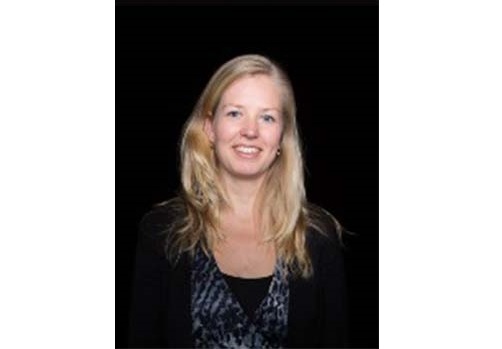
Na mijn bachelor Kunstgeschiedenis heb ik gekozen voor de mastertrack Conservatorenopleiding. Inmiddels werk ik bij het Groninger Museum als Stichting Beringer Hazewinkel conservator in opleiding en word ik de komende twee jaar klaargestoomd voor het vak
Ik maak deel uit van het conservatorenteam van het Groninger Museum en werk van concept tot realisatie aan tentoonstellingen, doe onderzoek naar de collectie en schrijf mee aan publicaties. Zo heb ik bijvoorbeeld in de afgelopen maanden meegewerkt met de tentoonstelling H.N. Werkman (1882-1945): Leven & Werk. Hiervoor heb ik in samenwerking met de gastconservator van deze tentoonstelling het concept verder uitgewerkt, bruiklenen aangevraagd en alles rondom de logistiek en opbouw van de tentoonstelling geregeld. Ik waardeer met name de veelzijdigheid in mijn werk. De ene dag ben je op zaal bezig met de opbouw van een tentoonstelling, de volgende dag ben je bezig met onderzoek naar de collectie.’
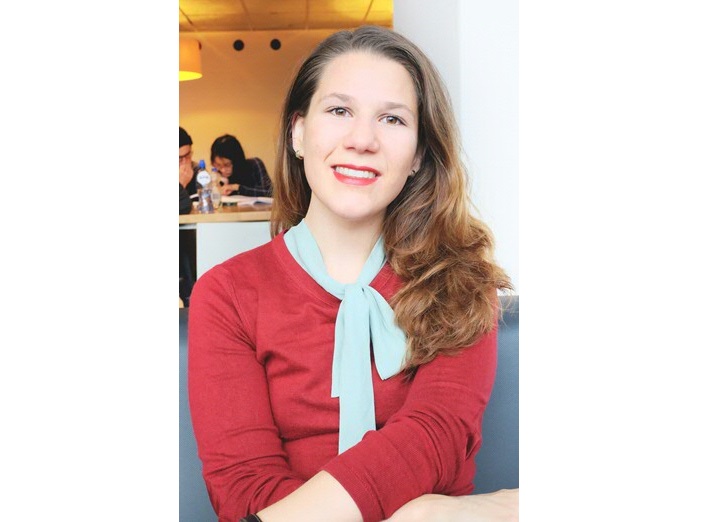
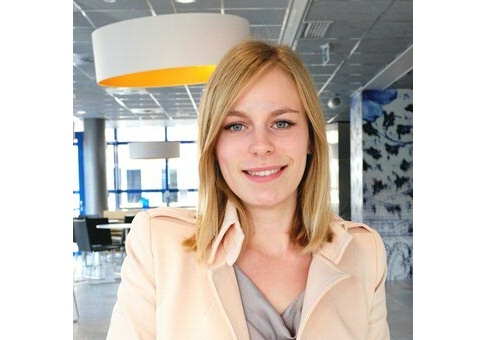
Since I have always been interested in film, arts in general, culture, and history, the choice to study film at the Arts, Culture and Media department at the University of Groningen was an easy one to make. This track is unique in The Netherlands because it provides a multi- and interdisciplinary perspective on the study of arts and its contexts. The Film and Media Studies specialization within the Arts, Culture and Media track offers the opportunity to broaden and deepen your knowledge of film acquired during the Bachelor, and to study it within a specific professional framework – either Arts Analysis and Criticism, Arts Policy and Marketing, or Arts Education.
If you didn’t go on an exchange in the third year of your Bachelor, then you will get another chance to do so in your Master. In the second semester of my Master, I went on an Erasmus exchange with Université Paris 1 Panthéon-Sorbonne for six months. I can highly recommend taking part in an exchange programme because it is an extremely valuable experience and gives you the possibility to study your art form or discipline in another country.
Are you interested in a research oriented career? Please also check our Research Master's Programme of Arts & Culture.
